
油气藏评价与开发 ›› 2026, Vol. 16 ›› Issue (1): 128-140.doi: 10.13809/j.cnki.cn32-1825/te.2024496
王能昊1( ), 连威2,3(), 李军1,2,3, 李佳琦4
收稿日期:2024-11-04
发布日期:2026-01-07
出版日期:2026-01-26
通讯作者:
连威(1990—),男,博士,副教授,从事井筒完整性与CO2地质封存方面的研究。地址:新疆克拉玛依市克拉玛依区安定路355号,邮政编码:834000。E-mail:lianweidyx@163.com作者简介:王能昊(2000—),男,在读博士研究生,从事CO2地质封存方面的研究。地址:北京市昌平区府学路18号,邮政编码:102249。E-mail:2025310144@student.cup.edu.cn
基金资助:
WANG Nenghao1(), LIAN Wei2,3(), LI Jun1,2,3, LI Jiaqi4
Received:2024-11-04
Online:2026-01-07
Published:2026-01-26
摘要:
CO2长期封存中的羽流演变会使地层孔隙压力发生变化,严重时导致盖层完整性失效,使其存在泄漏的风险。目前对CO2羽流演变规律与储盖层完整性的研究多基于单一的工程和地质参数,缺乏对CO2泄漏率、羽流演变、储盖层完整性的影响因素研究。以鄂尔多斯陆上咸水层封存项目为例,结合实际工程、地质参数,建立了CO2长期封存羽流演变与地层压力分析模型,以CO2气体饱和度、泄漏率、孔隙压力和莫尔-库仑(Mohr-Coulomb)准则作为评价羽流演变与储盖层完整性的依据,并采用控制变量法对注入参数及储盖层物性参数进行了敏感性分析,厘清了影响羽流演变与储盖层完整性的主要因素。结果表明:羽流的横向、纵向运移范围的主要影响因素分别为注入速率、盖层渗透率,低于0.01×10⁻³ μm2的良好盖层可有效防止CO2持续纵向运移;储层渗透率主要影响羽流运移的速度,40×10-3 μm2的相对高渗储层能让CO2羽流在15 a内达到稳态运移范围。影响CO2沿盖层渗漏的主要因素为盖层渗透率,其超过1.25×10⁻³ μm2将导致泄漏率超过联合国政府间气候变化专门委员会(Intergovernmental Panel on Climate Change,简称IPCC)规定的1%。储层渗透率低于5×10⁻³ μm2或注入速率高于30×104 t/a时,储层岩石存在破坏风险。储盖层完整性是保证地质封存项目长期稳定运行的关键,良好的储盖层组合及合适的注入方案,可使泄漏率低于1%、压力累积减小50%左右。研究结论可为中国地质封存项目的目标层位选择及注入方案设计提供参考。
中图分类号:
WANG Nenghao,LIAN Wei,LI Jun, et al. Study on plume evolution and influencing factors of reservoir and caprock integrity in CO2 deep saline aquifer storage: A case study of Shenhua CCS project[J]. Petroleum Reservoir Evaluation and Development, 2026, 16(1): 128-140.
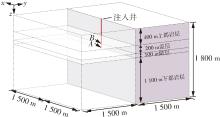
图1
三维模型示意图注:A、B点分别为CO2注入过程中位于储层注入点中心和盖层底部中心的分析节点。"
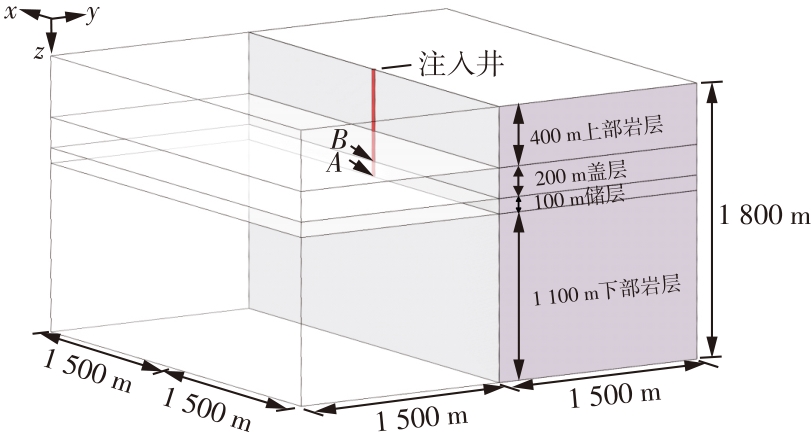
图2
模型剖分示意图"
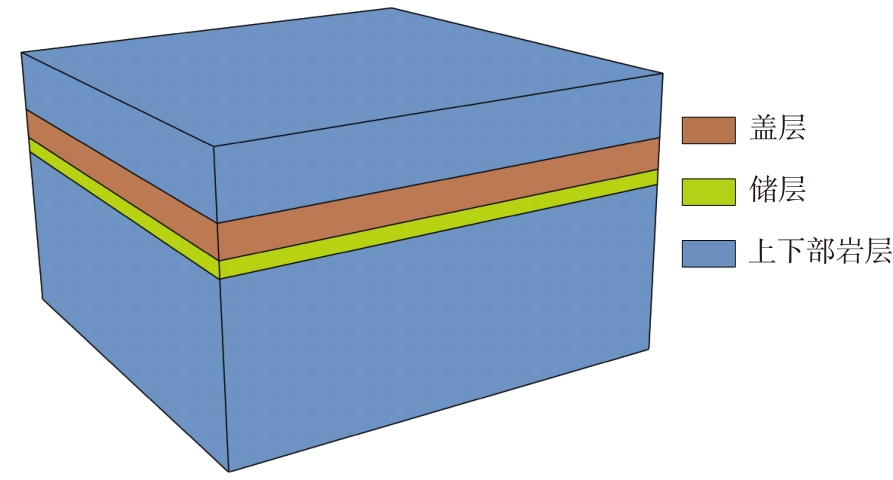

表1
数值模型中使用的主要参数"
| 储盖组合 | 岩石密度/(kg/m3) | 盐度/% | 孔隙度/% | 渗透率/10-3 μm2 | 相对渗透率参数 | 毛管压力参数 | ||||||
|---|---|---|---|---|---|---|---|---|---|---|---|---|
| 0.01 | ||||||||||||
| 20 | ||||||||||||
| 0.10 | ||||||||||||
表2
变量设置"
| 持续注入速率/(104 t/a) | 间歇注入周期 | 盖层渗透率/10-3 μm2 | 储层渗透率/10-3 μm2 | |
|---|---|---|---|---|
| 注入/d | 停注/d | |||
| 10 | 7 | 15 | 0.01 | 5 |
| 20 | 7 | 20 | 0.10 | 10 |
| 30 | 7 | 25 | 1.00 | 20 |
| 40 | 5 | 25 | 10.00 | 40 |
图3
注入速率为10×104 t/a时羽流运移"
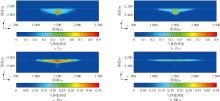
图4
注入速率为30×104 t/a时羽流运移"
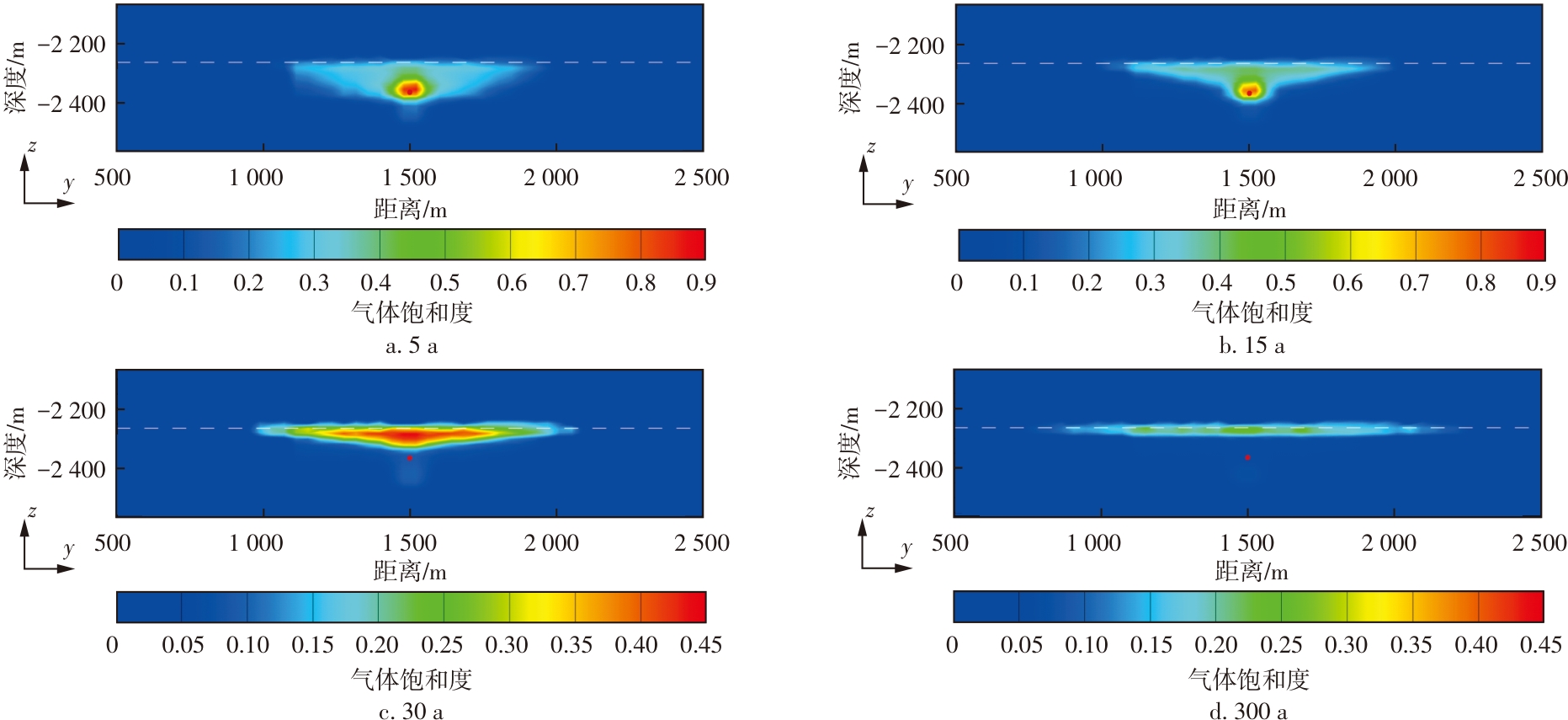
图5
不同盖层渗透率条件下羽流运移(300 a)"
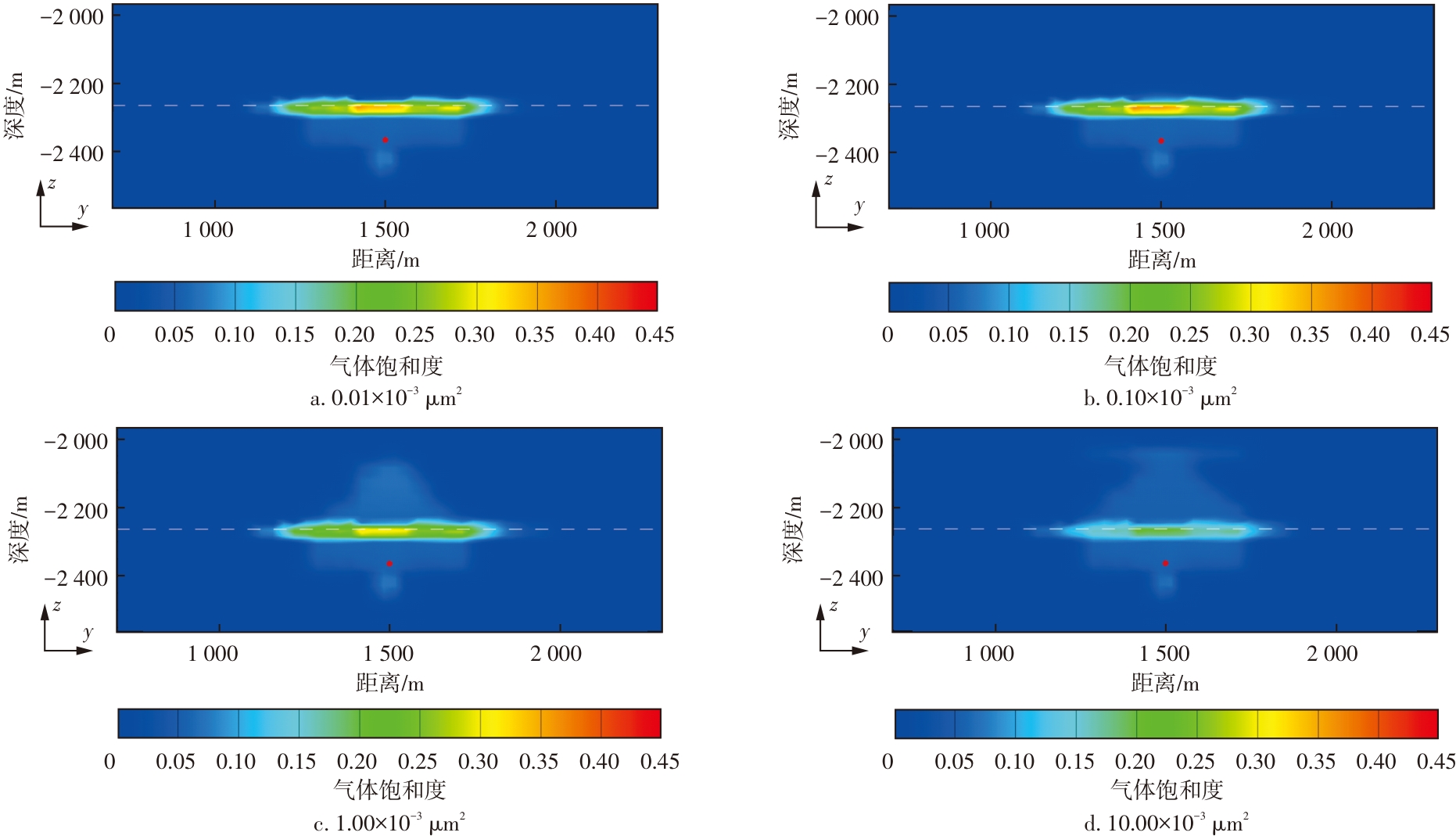
图6
储层渗透率为5×10⁻³ μm2时羽流运移"
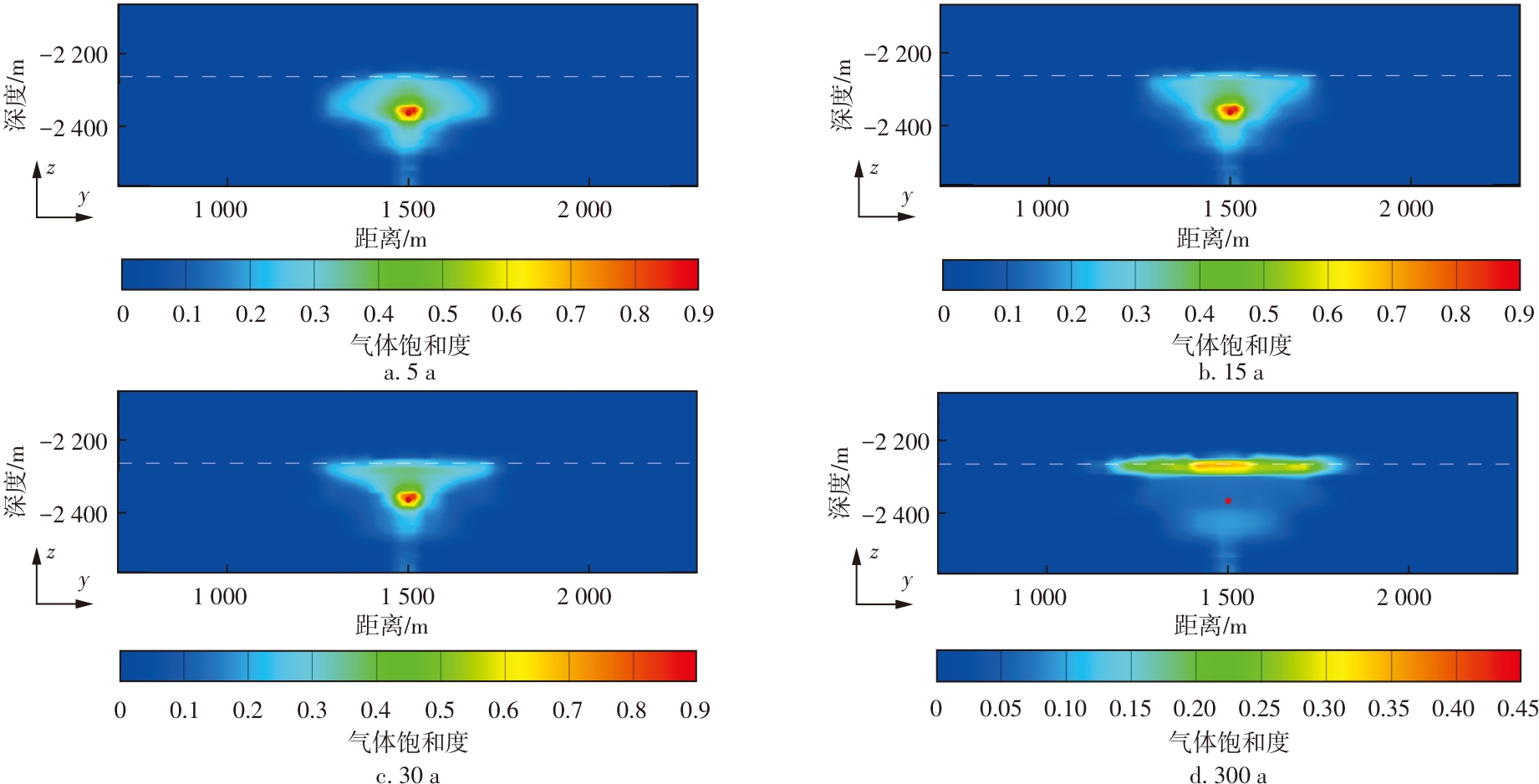
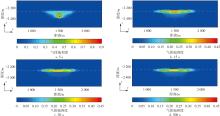
图7
储层渗透率为40×10-3 μm2时羽流运移"
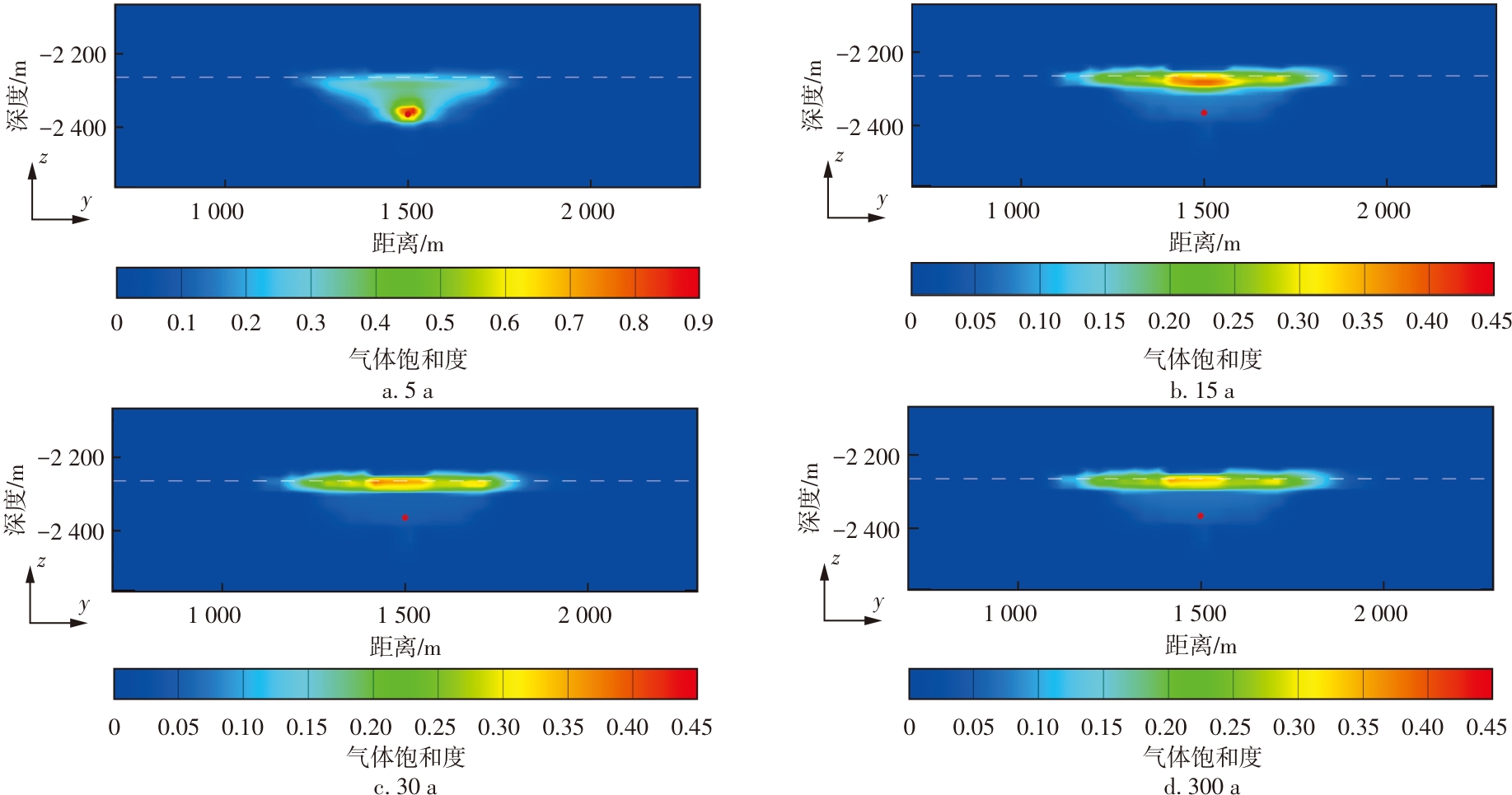
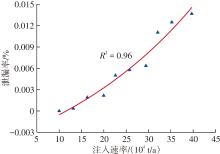
图8
不同注入速率下CO2泄漏率"

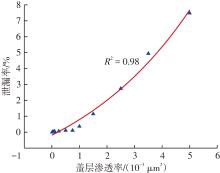
图9
不同盖层渗透率下CO2泄漏率"
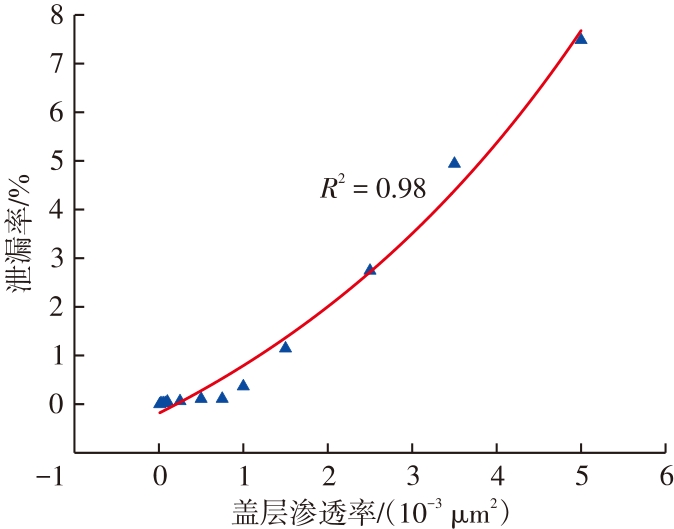
图10
不同储层渗透率下CO2泄漏率"
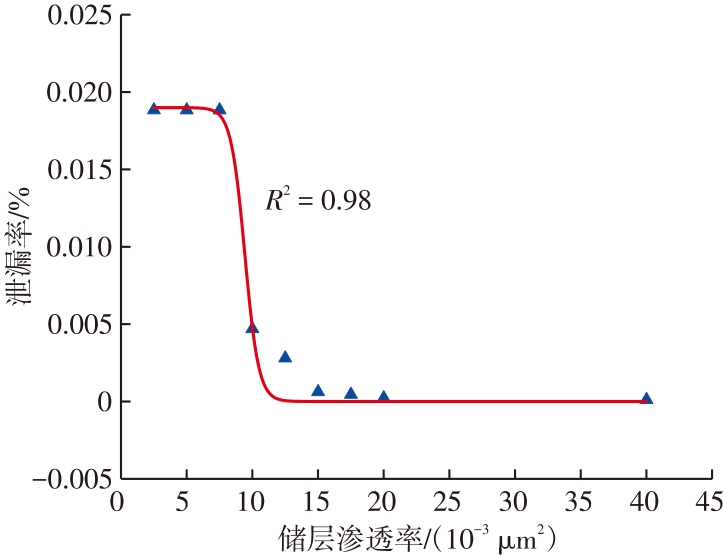
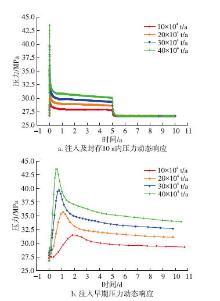
图11
不同注入速率下A点压力变化规律"
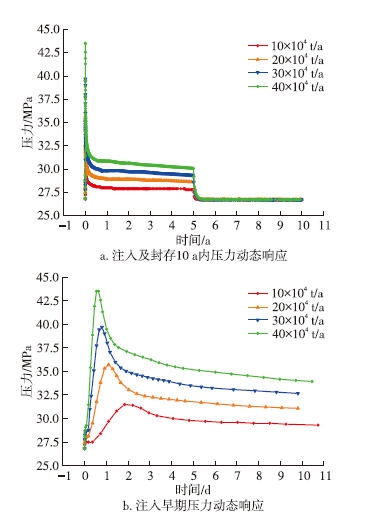
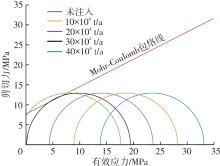
图12
不同注入速率下A点应力及Mohr圆状态"
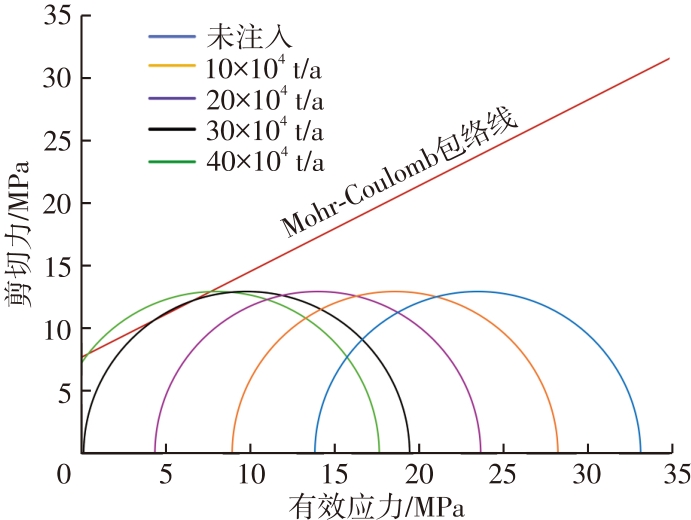
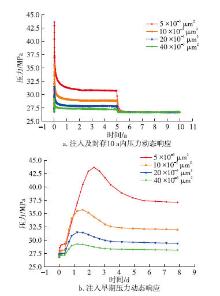
图13
不同储层渗透率下A点压力变化规律"
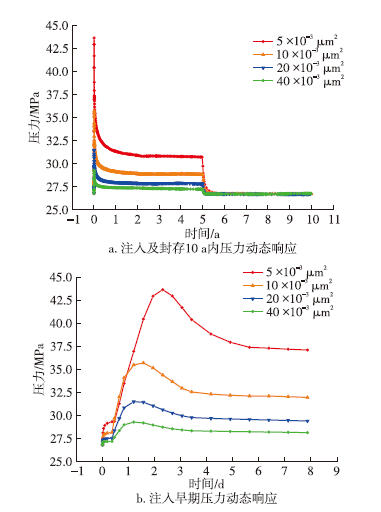
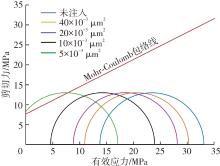
图14
不同储层渗透率下A点应力及Mohr圆状态"
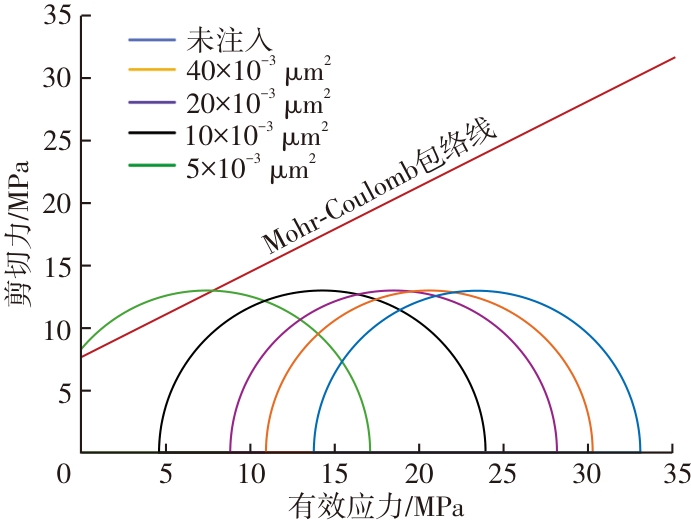
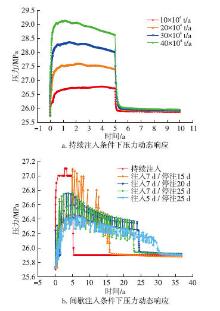
图15
不同注入方式下B点压力变化规律"
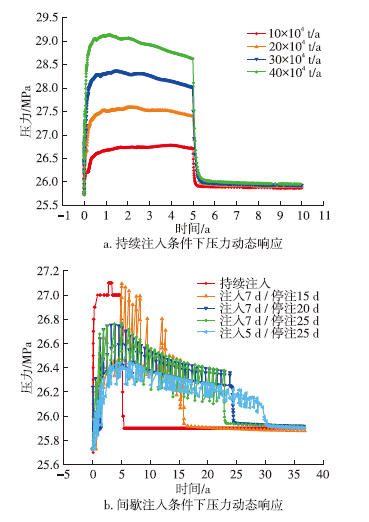
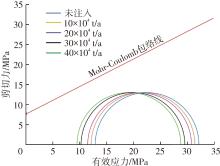
图16
不同注入速率下B点应力及Mohr圆状态"
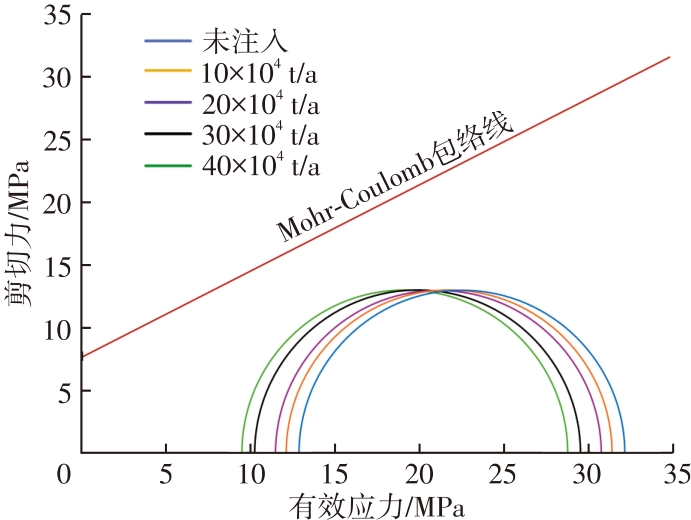
图17
不同盖层渗透率下B点应力及Mohr圆状态"
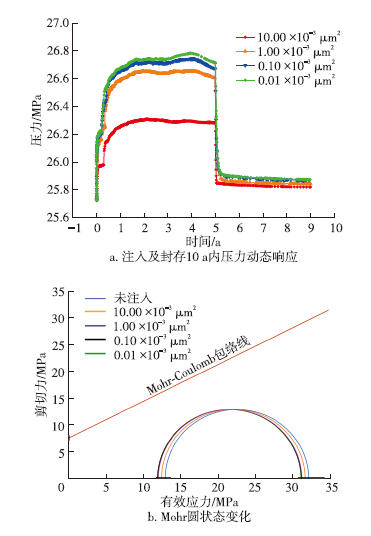
图18
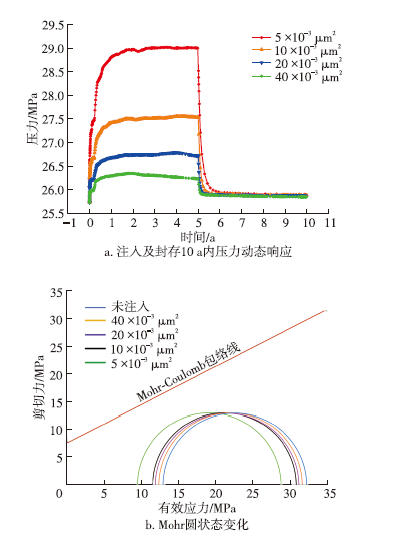
不同储层渗透率下B点应力及Mohr圆状态"
| [1] | 清华大学碳中和研究院. 2024全球碳中和年度进展报告[R]. 北京: 清华大学碳中和研究院, 2024. |
| Institute for Carbon Neutrality of Tsinghua University. 2024 global carbon neutrality annual progress report[R]. Beijing: Institute for Carbon Neutrality of Tsinghua University, 2024. | |
| [2] | 吕昊东, 鲁玺, 张贤. 碳中和目标下CCUS技术部署在公正转型中的协同效益[J]. 洁净煤技术, 2024, 30(10): 138-146. |
| Haodong LYU, LU Xi, ZHANG Xian. Synergistic benefits of CCUS technology in the just transition towards carbon neutrality[J]. Clean Coal Technology, 2024, 30(10): 138-146. | |
| [3] | 杨川, 余才焌, 石庆, 等. CCUS井水泥环腐蚀预测模型及影响因素[J]. 石油与天然气化工, 2024, 53(3): 86-91. |
| YANG Chuan, YU Caijun, SHI Qing, et al. Prediction model and influencing factors of cement sheath corrosion in CCUS wells[J]. Chemical Engineering of Oil & Gas, 2024, 53(3): 86-91. | |
| [4] | 张传宝, 李宗阳, 张东, 等. CO2驱油藏工程研究进展及展望[J].油气地质与采收率, 2024, 31(5): 142-152. |
| ZHANG Chuanbao, LI Zongyang, ZHANG Dong, et al.Research progress and prospects of reservoir engineering by CO2 flooding[J].Petroleum Geology and Recovery Efficiency, 2024, 31(5): 142-152. | |
| [5] | 谭新, 罗大清, 宋欣和.考虑驱油与碳减排双重效益的CCUS-EOR经济性及发展模式分析与探讨[J].油气地质与采收率, 2024, 31(2): 70-78. |
| TAN Xin, LUO Daqing, SONG Xinhe.Analysis and discussion of CCUS-EOR economy and development model considering benefits of oil displacement and carbon reduction[J].Petroleum Geology and Recovery Efficiency, 2024, 31(2): 70-78. | |
| [6] | 姚红生, 邱伟生, 周德华, 等. 苏北盆地复杂断块油藏CCUS-EOR关键技术与实践[J]. 天然气工业, 2025, 45(9): 212-222. |
| YAO Hongsheng, QIU Weisheng, ZHOU Dehua, et al. Key technologies and practices of CCUS-EOR in complex fault-block reservoirs in the Subei Basin[J]. Natural Gas Industry, 2025, 45(9): 212-222. | |
| [7] | 葛世荣, 刘淑琴, 樊静丽, 等. 低碳化现代煤基能源开发关键技术体系[J]. 煤炭学报, 2024, 49(7): 2949-2972. |
| GE Shirong, LIU Shuqin, FAN Jingli, et al. Key technologies for low-carbon modern coal-based energy[J]. Journal of China Coal Society, 2024, 49(7): 2949-2972. | |
| [8] | 骆灵, 李义常, 魏立尧. 元宇宙技术群与量子计算赋能CCUS研究现状及趋势[J]. 新疆石油天然气, 2023, 19(3): 86-94. |
| LUO Ling, LI Yichang, WEI Liyao. Use of metaverse technology clusters and quantum computing in CCUS: Research status and trends[J]. Xinjiang Oil & Gas, 2023, 19(3): 86-94. | |
| [9] | 潘家华, 陈梦玫, 刘保留. 净零碳转型的主要路径及其优化集成[J]. 中国人口·资源与环境, 2023, 33(11): 1-12. |
| PAN Jiahua, CHEN Mengmei, LIU Baoliu. Main paths of the net-zero carbon transition and optimal integration[J]. China Population, Resources and Environment, 2023, 33(11): 1-12. | |
| [10] | 熊鹏飞, 方小宇, 乐文喜, 等. 北部湾盆地涠西南凹陷咸水层CO2地质封存储盖优选及潜力评估[J]. 煤炭学报, 2024, 49(5): 2405-2413. |
| XIONG Pengfei, FANG Xiaoyu, LE Wenxi, et al. Reservoir-cap combination optimization and potential evaluation of CO2 geological storage in saline aquifer, in Wenxinan sag of Beibu Gulf Basin[J]. Journal of China Coal Society, 2024, 49(5): 2405-2413. | |
| [11] | 董利飞, 董文卓, 张旗, 等. 咸水层中CO2溶解性能预测方法优选[J]. 油气藏评价与开发, 2024, 14(1): 35-41. |
| DONG Lifei, DONG Wenzhuo, ZHANG Qi, et al. Optimal prediction method for CO2 solubility in saline aquifers[J]. Petroleum Reservoir Evaluation and Development, 2024, 14(1): 35-41. | |
| [12] | 李万伦, 陈晶, 贾凌霄, 等. 玄武岩CO2地质封存研究进展[J]. 地质论评, 2022, 68(2): 648-657. |
| LI Wanlun, CHEN Jing, JIA Lingxiao, et al. Research progress of CO2 geological sequestration in basalts[J]. Geological Review, 2022, 68(2): 648-657. | |
| [13] | 李小春, 方志明. 中国CO2地质埋存关联技术的现状[J]. 岩土力学, 2007, 28(10): 2229-2233. |
| LI Xiaochun, FANG Zhiming. Status quo of connection technologies of CO2 geological storage in China[J]. Rock and Soil Mechanics, 2007, 28(10): 2229-2233. | |
| [14] | 吴秀章. 中国二氧化碳捕集与地质封存首次规模化探索[M]. 北京: 科学出版社, 2013. |
| WU Xiuzhang. Carbon dioxide capture and geological storage the first massive exploration in China[M]. Beijing: Science Press, 2013. | |
| [15] | 连威, 王能昊, 李军, 等. CO2地质封存泄漏机理与井筒完整性研究进展[J]. 华南师范大学学报(自然科学版), 2024, 56(5): 1-15. |
| LIAN Wei, WANG Nenghao, LI Jun, et al. Research progress on CO2 geological storage leakage mechanism and wellbore integrity[J]. Journal of South China Normal University (Natural Science Edition), 2024, 56(5): 1-15. | |
| [16] | 柯怡兵, 李义连, 张炜, 等. 岩盐沉淀对咸水层二氧化碳地质封存注入过程的影响: 以江汉盆地为例[J]. 地质科技情报, 2012, 31(3): 109-115. |
| KE Yibing, LI Yilian, ZHANG Wei, et al. Impact of halite precipitation on CO2 injection into saline aquifers: A case study of Jianghan Basin[J]. Geological Science and Technology Information, 2012, 31(3): 109-115. | |
| [17] | ZHANG K N, XIE J, LI C, et al. A full chain CCS demonstration project in northeast Ordos Basin, China: Operational experience and challenges[J]. International Journal of Greenhouse Gas Control, 2016, 50: 218-230. |
| [18] | 程丽媛, 贾小宝, 刘燕海. 基于储层多参数同时预测的煤层CO2运移监测方法研究[J]. 石油物探, 2025, 64(5): 970-978. |
| CHENG Liyuan, JIA Xiaobao, LIU Yanhai. Monitoring method of CO2 migration in coal seam based on simultaneous prediction of reservoir multi-parameters[J]. Geophysical Prospecting for Petroleum, 2025, 64(5): 970-978. | |
| [19] | RAHMAN M J, FAWAD M, MONDOL N H. Integrated containment risks assessment for subsurface CO2 storage: Overburden analysis and top seal integrity study, offshore Norway[J]. International Journal of Coal Geology, 2024, 282: 104440. |
| [20] | 牟建业, 闫骁伦, 张士诚, 等. 二氧化碳在致密储层基质中的作用距离研究[J]. 新疆石油天然气, 2024, 20(3): 64-71. |
| MOU Jianye, YAN Xiaolun, ZHANG Shicheng, et al. Research on CO2 matrix penetration distance in tight reservoirs[J]. Xinjiang Oil & Gas, 2024, 20(3): 64-71. | |
| [21] | 成建梅, 赵静, 张可霓, 等. 深部咸含水层CO2注入下压力抬升与流体迁移的大尺度模拟研究: 以松辽盆地为例[J]. 地质科技情报, 2012, 31(5): 162-170. |
| CHENG Jianmei, ZHAO Jing, ZHANG Keni, et al. Large-scale modeling of CO2 storage in deep saline aquifer of Songliao Basin: Pressure buildup and CO2 plume migration[J]. Geological Science and Technology Information, 2012, 31(5): 162-170. | |
| [22] | 雷宏武, 李佳琦, 许天福, 等. 鄂尔多斯盆地深部咸水层二氧化碳地质储存热-水动力-力学(THM)耦合过程数值模拟[J]. 吉林大学学报(地球科学版), 2015, 45(2): 552-563. |
| LEI Hongwu, LI Jiaqi, XU Tianfu, et al. Numerical simulation of coupled thermal-hydrodynamic-mechanical(THM) processes for CO2 geological sequestration in deep saline aquifers at Ordos Basin, China[J]. Journal of Jilin University (Earth Science Edition), 2015, 45(2): 552-563. | |
| [23] | 胡叶军, 王蔚, 任杰, 等. 深部咸水层CO2地质封存对地层压力环境的影响[J]. 河海大学学报(自然科学版), 2016, 44(6): 512-518. |
| HU Yejun, WANG Wei, REN Jie, et al. Effect of CO2 geological sequestration in deep saline aquifer on formation pressure environment[J]. Journal of Hohai University (Natural Sciences), 2016, 44(6): 512-518. | |
| [24] | WANG F G, PING S F, YUAN Y L, et al. Effects of the mechanical response of low-permeability sandstone reservoirs on CO2 geological storage based on laboratory experiments and numerical simulations[J]. Science of the Total Environment, 2021: 796. |
| [25] | BIRKHOLZER J T, ZHOU Q, CORTIS A, et al. A sensitivity study on regional pressure buildup from large-scale CO2 storage projects[J]. Energy Procedia, 2011, 4: 4371-4378. |
| [26] | PAVAN T N V, GOVINDARAJAN S K. Numerical investigations on performance of sc-CO2 sequestration associated with the evolution of porosity and permeability in low-permeable saline aquifers[J]. Geoenergy Science and Engineering, 2023, 225: 211681. |
| [27] | VILARRASA V, CARRERA J, OLIVELLA S. Two-phase flow effects on the CO2 injection pressure evolution and implications for the caprock geomechanical stability[J]. E3S Web of Conferences, 2016, 9: 04007. |
| [28] | LIU D Q, LI Y L, SONG S Y, et al. Simulation and analysis of lithology heterogeneity on CO2 geological sequestration in deep saline aquifer: A case study of the Ordos Basin[J]. Environmental Earth Sciences, 2016, 75(11): 962. |
| [29] | 张杰城, 杜鑫芳, 赫文豪, 等. 热-流耦合与热-流-固耦合作用下的水气交替及间歇注入对咸水层CO2溶解封存的影响[J]. 华南师范大学学报(自然科学版), 2024, 56(1): 9-17. |
| ZHANG Jiecheng, DU Xinfang, HAO Wenhao, et al. Impact of water alternating gas and intermittent injection on CO2 dissolution during CO2 sequestration in saline aquifers considering thermal-hydraulic coupling and thermal-hydraulic-mechanical coupling effects[J]. Journal of South China Normal University (Natural Science Edition), 2024, 56(1): 9-17. | |
| [30] | 徐付桥, 成建梅, 罗伟, 等. VG模型参数选择对咸水层CO2封存的影响研究[J]. 地质科技情报, 2014, 33(4): 185-190. |
| XU Fuqiao, CHENG Jianmei, LUO Wei, et al. Numerical study of the impacts of Van Genuchten model’s parameters selection on the CO2 sequestration in saline aquifers[J]. Geological Science and Technology Information, 2014, 33(4): 185-190. | |
| [31] | WEI X C, LI Q, LI X Y, et al. Impact indicators for caprock integrity and induced seismicity in CO2 geosequestration: Insights from uncertainty analyses[J]. Natural Hazards, 2016, 81: 1-21. |
| [32] | 刘漪雯, 付美龙, 王长权, 等. CO2驱不同注入方式对低渗透储层渗流能力的影响[J].油气地质与采收率, 2024, 31(2): 79-85. |
| LIU Yiwen, FU Meilong, WANG Changquan, et al.Influence of different injection methods of CO2 flooding on flow capacity of low permeability reservoirs[J].Petroleum Geology and Recovery Efficiency, 2024, 31(2): 79-85. | |
| [33] | GAO Y, LIN Q Y, BIJELJIC B, et al. Pore-scale dynamics and the multiphase Darcy law[J]. Physical Review Fluids, 2020, 5: 013801. |
| [34] | ASKAROVA A, MUKHAMETDINOVA A, MARKOVIC S, et al. An overview of geological CO2 sequestration in oil and gas reservoirs[J]. Energies, 2023, 16(6): 2821. |
| [35] | CIOTTA M, TASSINARI C C G. Defining geological viability criteria for CO2 and hydrogen storage in depleted oil and gas fields[J]. Research, Society and Development, 2024, 13(8): e5513846130. |
| [36] | KAMPMAN N, BUSCH A, BERTIER P. Observational evidence confirms modelling of the long-term integrity of CO2-reservoir caprocks[J]. Nature Communications, 2016, 7: 12268. |
| [37] | 陈勉, 金衍, 张广清. 石油工程岩石力学[M]. 北京: 科学出版社, 2008. |
| CHEN Mian, JIN Yan, ZHANG Guangqing. Rock mechanics on petroleum engineering[M]. Beijing: Science Press, 2008. | |
| [38] | 文冬光, 郭建强, 张森琦, 等. 中国二氧化碳地质储存研究进展[J]. 中国地质, 2014, 41(5): 1716-1723. |
| WEN Dongguang, GUO Jianqiang, ZHANG Senqi, et al. The progress in the research on carbon dioxide geological storage in China[J]. Geology in China, 2014, 41(5): 1716-1723. | |
| [39] | 甘满光, 雷宏武, 张力为, 等. 基于数值模拟的CO2地质封存项目井筒泄漏风险定量化评价方法[J]. 工程科学与技术, 2024, 56(1): 195-205. |
| GAN Manguang, LEI Hongwu, ZHANG Liwei, et al. Quantitative evaluation method of wellbore leakage risk of CO2 geological storage project based on numerical simulation[J]. Advanced Engineering Sciences, 2024, 56(1): 195-205. | |
| [40] | 周新桂, 张林炎, 范昆, 等. 鄂尔多斯盆地现今地应力测量及其在油气开发中的应用[J]. 西安石油大学学报(自然科学版), 2009, 24(3): 7-12. |
| ZHOU Xingui, ZHANG Linyan, FAN Kun, et al. Measurement of the present earth stress of Ordos Basin and its applications in oil and gas exploitation[J]. Journal of Xi’an Shiyou University (Natural Science Edition), 2009, 24(3): 7-12. | |
| [41] | 俞忠宝, 庄严, 何亚斌, 等. 鄂尔多斯盆地F区力学特征及地应力分析[J]. 科学技术与工程, 2020, 20(5): 1805-1811. |
| YU Zhongbao, ZHUANG Yan, HE Yabin, et al. Mechanical characteristics and crustal stress analysis of F block in Ordos Basin[J]. Science Technology and Engineering, 2020, 20(5): 1805-1811. | |
| [42] | FAN Z Q, EICHHUBL P, NEWELL P. Basement fault reactivation by fluid injection into sedimentary reservoirs: Poroelastic effects[J]. Journal of Geophysical Research: Solid Earth, 2019, 124(7): 7354-7369. |
| [43] | 陈小璐, 张雨菲, 罗伟疆, 等. 水平井体积压裂套管变形预测方法与防控措施[J]. 新疆石油天然气, 2025, 21(1): 61-68. |
| CHEN Xiaolu, ZHANG Yufei, LUO Weijiang, et al. Prediction method and prevention measures for casing deformation of horizontal well in volume fracturing[J]. Xinjiang Oil & Gas, 2025, 21(1): 61-68. | |
| [44] | BACHU S, ADAMS J J. Sequestration of CO2 in geological media in response to climate change: Capacity of deep saline aquifers to sequester CO2 in solution[J]. Energy Conversion and Management, 2003, 44(20): 3151-3175. |
| [45] | 凌璐璐, 许雅琴, 王永胜, 等. 数值模拟在CO2地质封存示范项目中的应用[J]. 岩土力学, 2013, 34(7): 2017-2022. |
| LING Lulu, XU Yaqin, WANG Yongsheng, et al. Application of numerical simulation to pilot project of CO2 geological sequestration[J]. Rock and Soil Mechanics, 2013, 34(7): 2017-2022. | |
| [46] | 贾善坡, 张辉, 林建品, 等. 含水层储气库泥质岩盖层封气能力定量评价研究: 以里坦凹陷D5区二叠系含水层构造为例[J]. 水文地质工程地质, 2016, 43(3): 79-86. |
| JIA Shanpo, ZHANG Hui, LIN Jianpin, et al. Quantitative assessment of the gas-sealing capacity of the Permian claystone caprock for the D5 aquifer gas storage in the Litan sag[J]. Hydrogeology & Engineering Geology, 2016, 43(3): 79-86. |
| [1] | 林千果, 王冀星. CO2地质封存泄漏迁移转化模拟研究综述与展望 [J]. 油气藏评价与开发, 2026, 16(1): 11-22. |
| [2] | 杨龙, 许寻, 郭立强, 张艺钟, 王坤, 郑晶晶. 深部咸水层CO2地质封存相平衡参数修正模型 [J]. 油气藏评价与开发, 2026, 16(1): 61-73. |
| [3] | 赵勇, 冯勤, 孙鑫, 王庆. 东海西湖凹陷X区块CO2地质封存诱发地震危险性探讨 [J]. 油气藏评价与开发, 2026, 16(1): 23-33. |
| [4] | 李经纬, 彭勃, 王泽滕, 陈晓倩, 张正昊, 刘金栋, 刘双星, 李晓枫. 油气藏CO2封存潜力评估模型与实践进展 [J]. 油气藏评价与开发, 2026, 16(1): 141-152. |
| [5] | 杨术刚, 任金蔓, 蔡明玉, 刘浩童, 刘双星, 薛明, 张坤峰. 气田采出水回注地层CO2封存赋存状态研究 [J]. 油气藏评价与开发, 2025, 15(4): 656-663. |
| [6] | 孙东升, 张顺康, 王智林, 葛政俊, 林波. 苏北断块型圈闭基于安全性CO2地质封存能力计算方法研究 [J]. 油气藏评价与开发, 2025, 15(4): 641-645. |
| [7] | 李士伦,汤勇,段胜才,秦佳正,陈一诺,刘雅昕,郑鹏,赵国庆. CO2地质封存源汇匹配及安全性评价进展 [J]. 油气藏评价与开发, 2023, 13(3): 269-297. |
|
||
