
Petroleum Reservoir Evaluation and Development ›› 2026, Vol. 16 ›› Issue (1): 96-106.doi: 10.13809/j.cnki.cn32-1825/te.2024523
• Methodological Theory • Previous Articles Next Articles
HAO Feng( ), DU Shuai, YANG Xuefeng, WANG Kexin, GAO Dongliang, HUANG Da
Received:2024-11-08
Online:2026-01-06
Published:2026-01-26
CLC Number:
HAO Feng,DU Shuai,YANG Xuefeng, et al. Study on stress state and integrity of cement sheath in well cementing of CCS pilot well in block A, East China Sea[J]. Petroleum Reservoir Evaluation and Development, 2026, 16(1): 96-106.
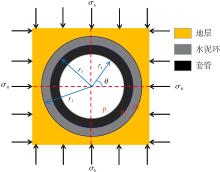
Fig.1
Physical model of casing-cement sheath-formation combination"
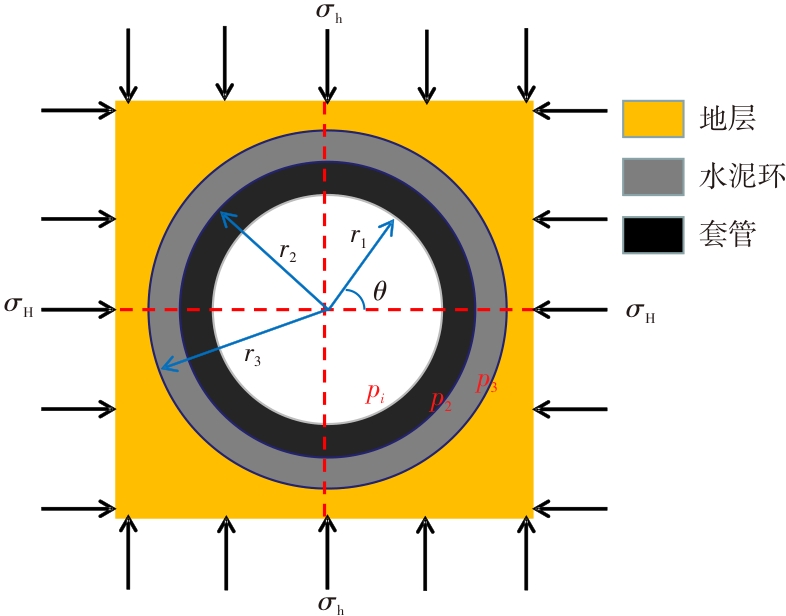
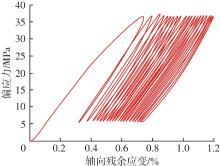
Fig.2
Axial residual strain test results of cement under cyclic loading conditions"
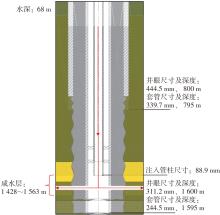
Fig.3
Schematic diagram of CCS pilot test well structure"
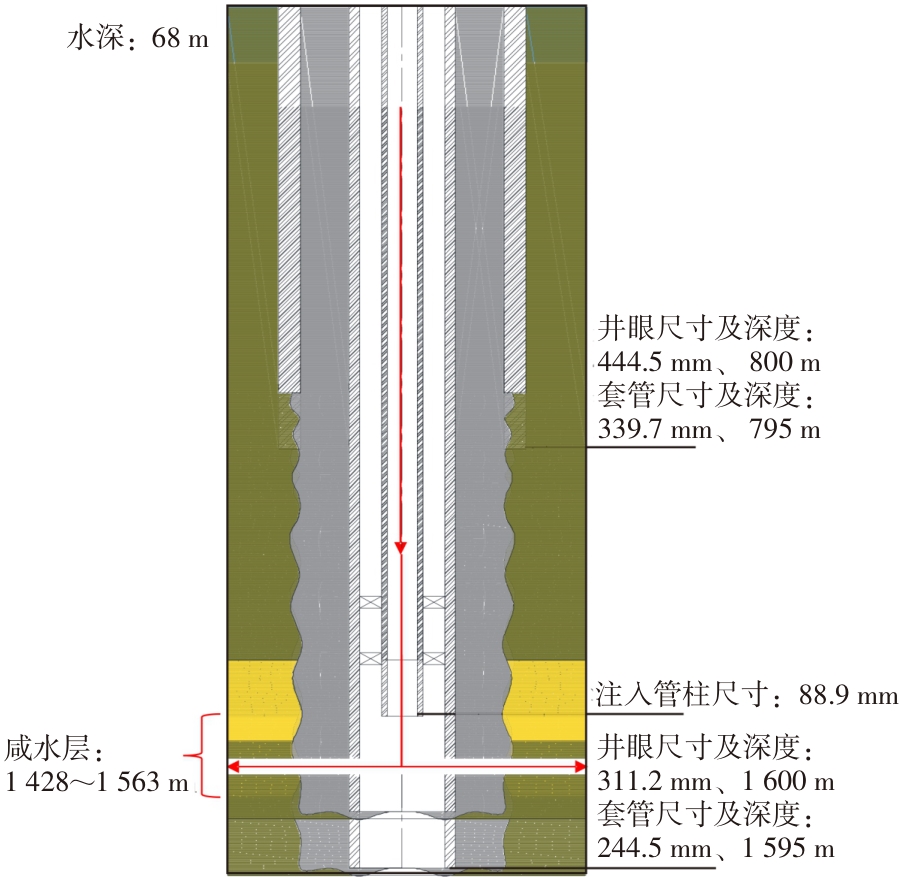
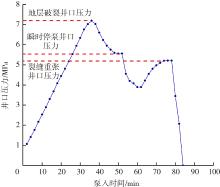
Fig.4
Whole-process leakage experiment curve"
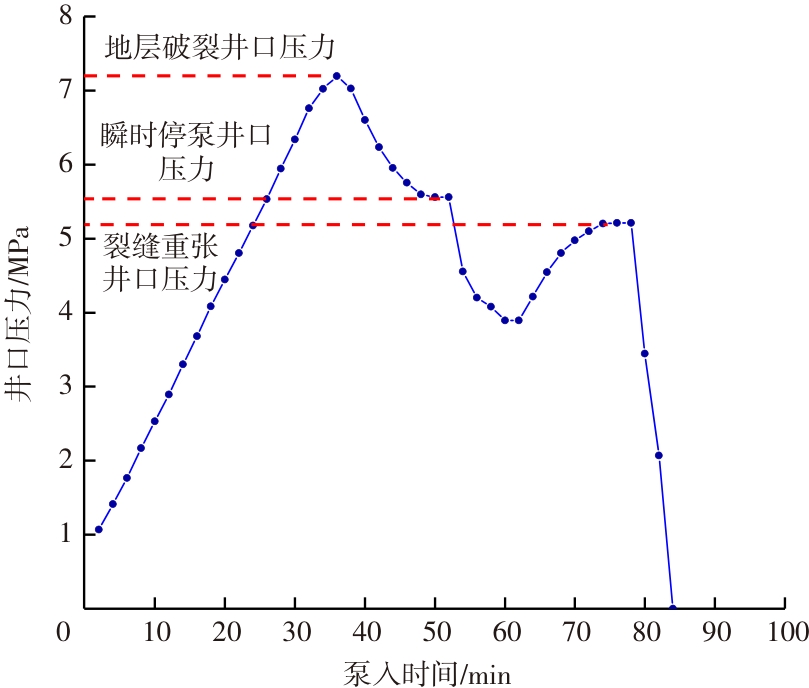
Fig.5
Stress state of cement sheath at injection pressure of 12 MPa (ε=0)"
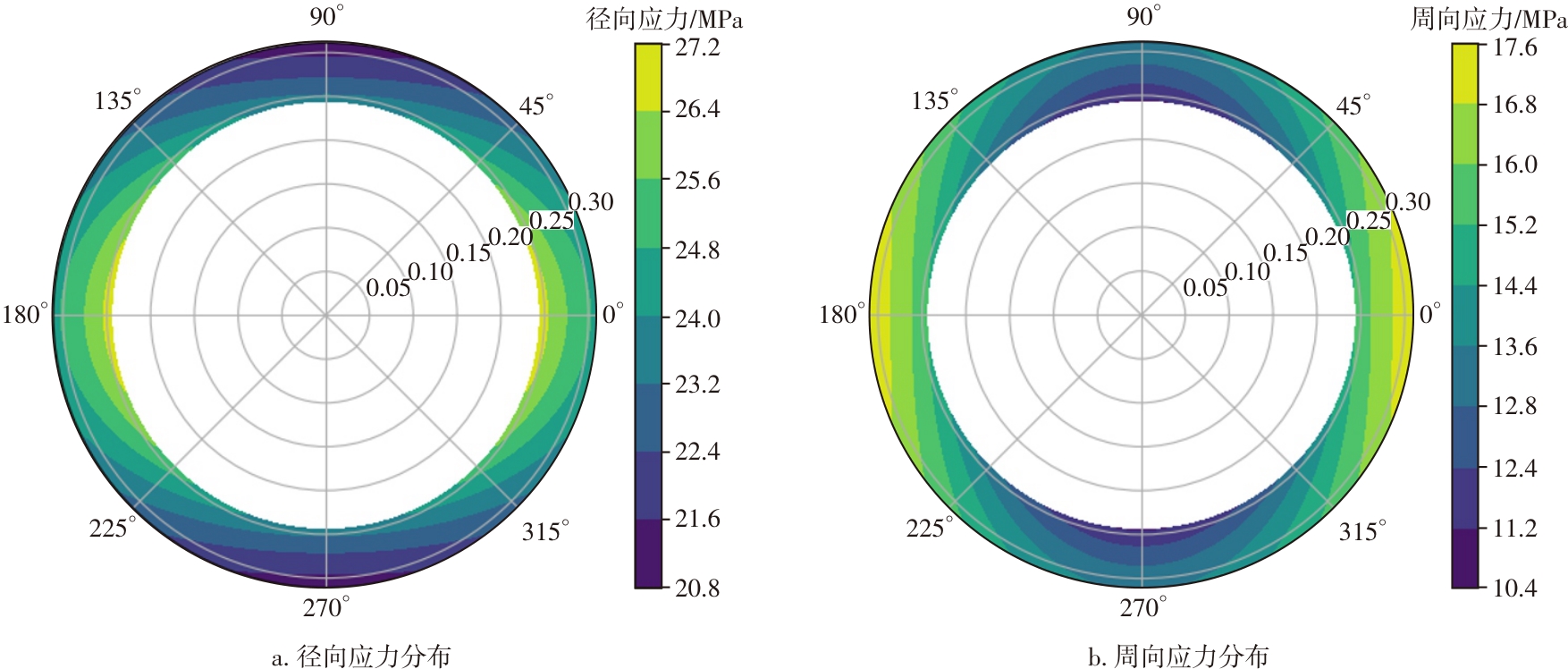
Fig.6
Integrity evaluation results of cement sheath at injection pressure of 12 MPa (ε=0)"
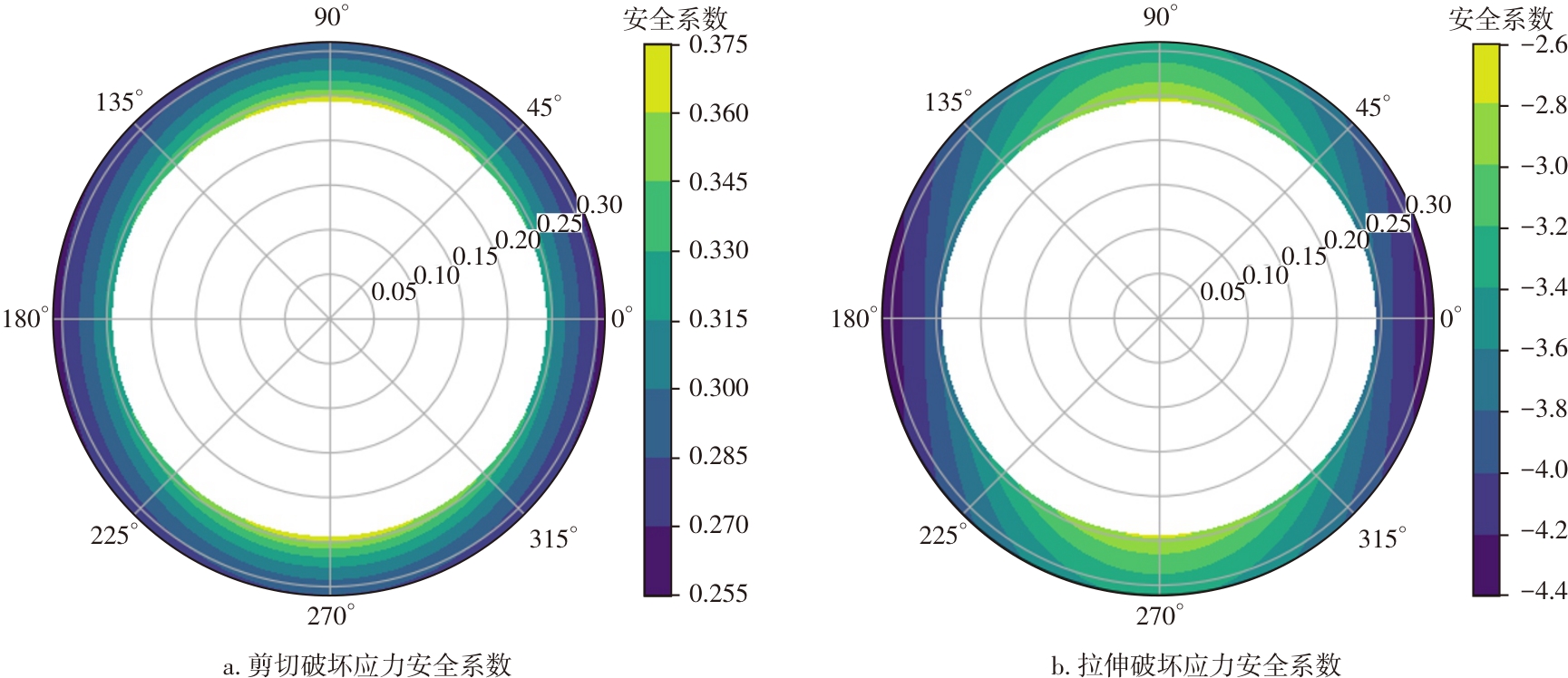
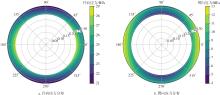
Fig.7
Stress state of cement sheath at injection pressure of 12 MPa (ε=0.003)"

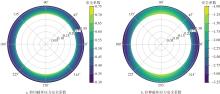
Fig.8
Integrity evaluation results of cement sheath at injection pressure of 12 MPa (ε=0.003)"

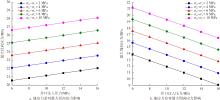
Fig.9
Influence of in-situ stress difference on cement sheath stress state under different injection pressures (σh=20 MPa)"
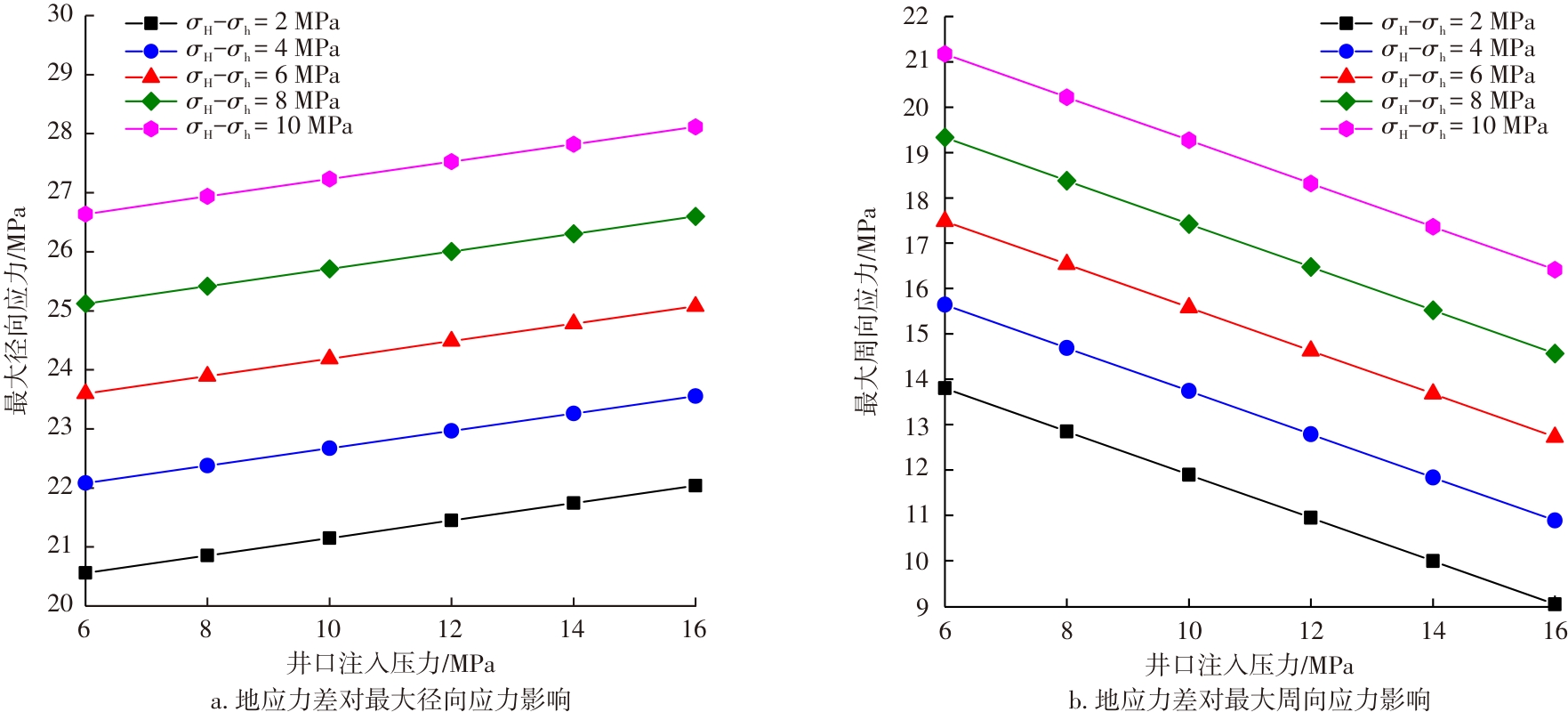
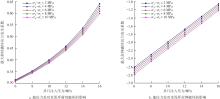
Fig.10
Evaluation results of cement sheath integrity under influence of in-situ stress difference (σh=20 MPa)"
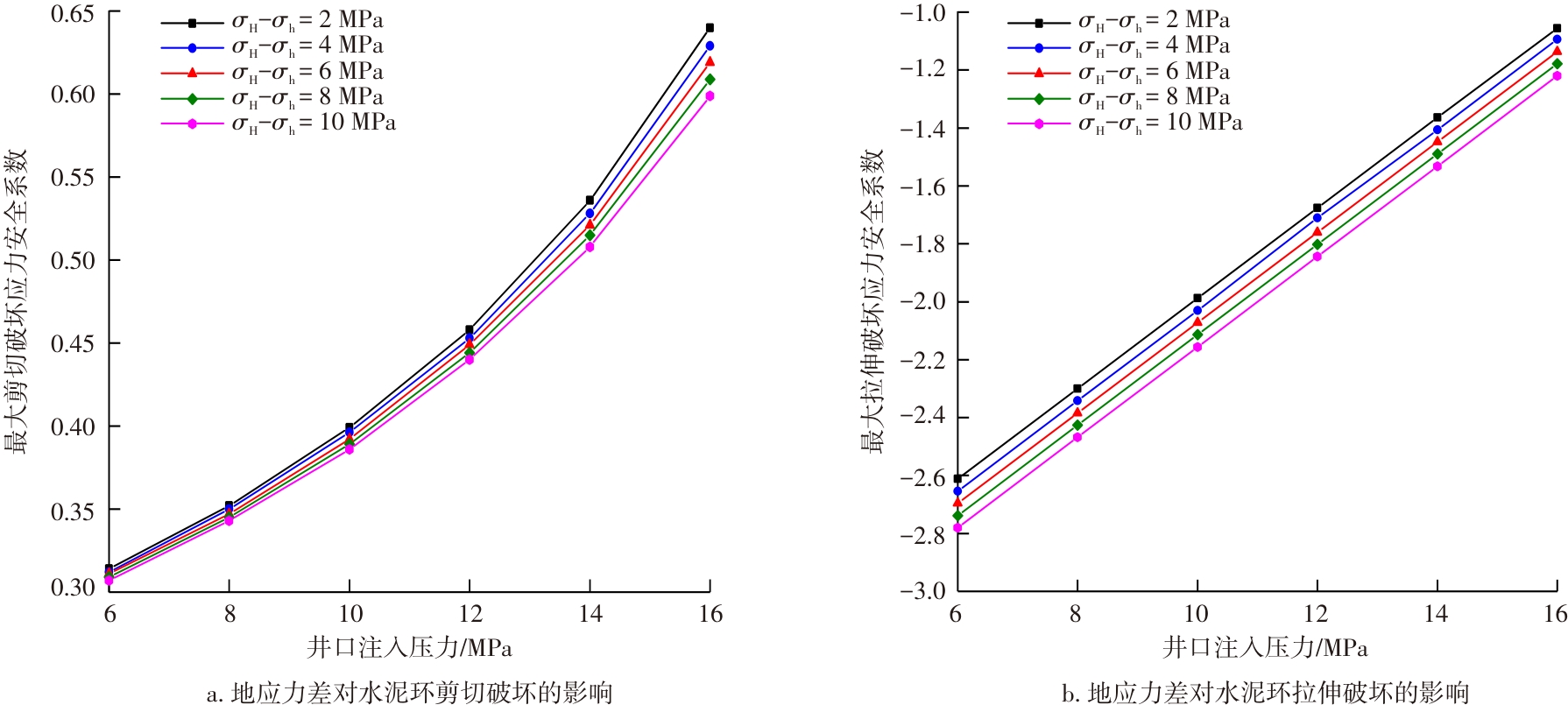
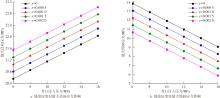
Fig.11
Influence of residual strain on stress state of cement sheath under different injection pressures"

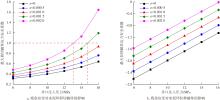
Fig.12
Evaluation results of cement sheath integrity under influence of residual strain"

Fig.13
Influence of elastic modulus on stress state of cement sheath under different injection pressures"
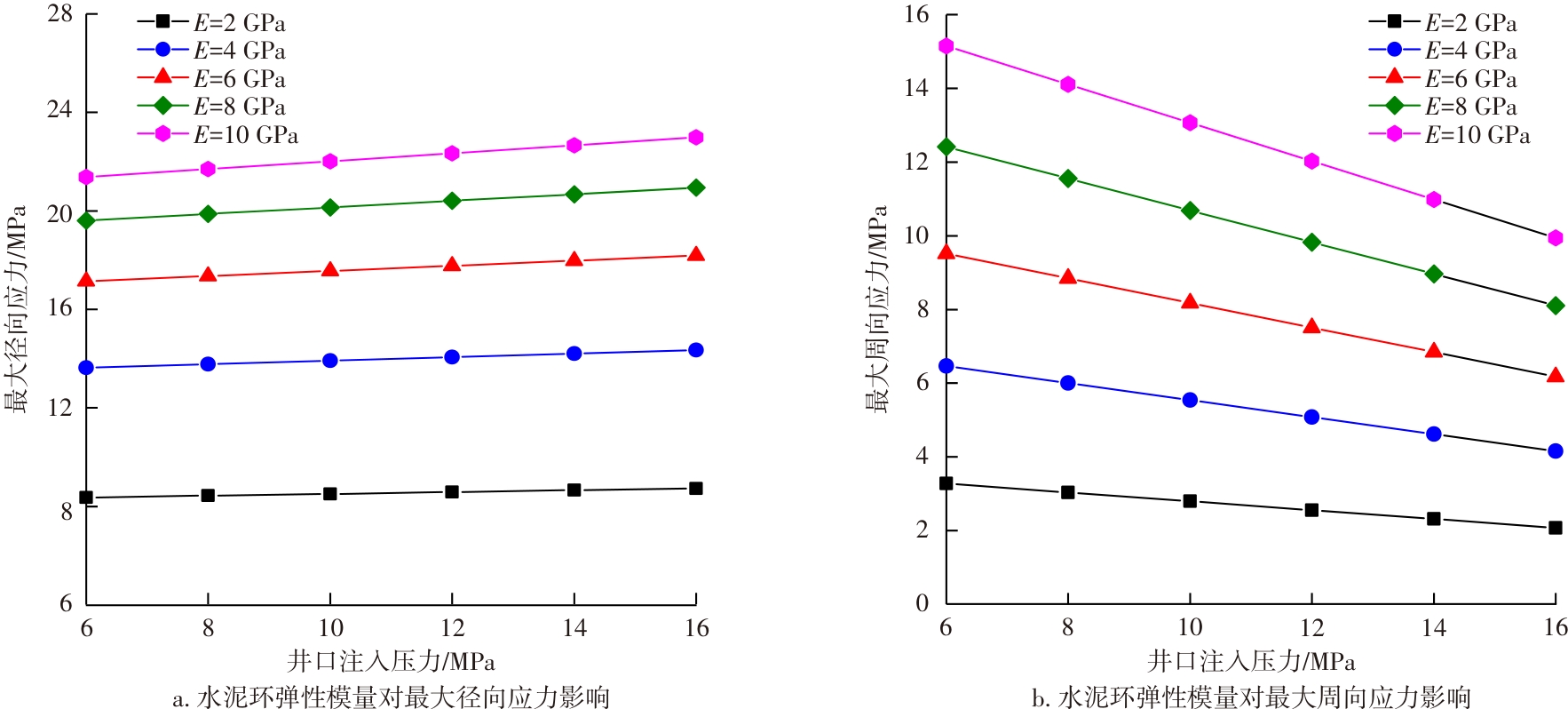
Fig.14
Evaluation results of cement sheath integrity under influence of elastic modulus"
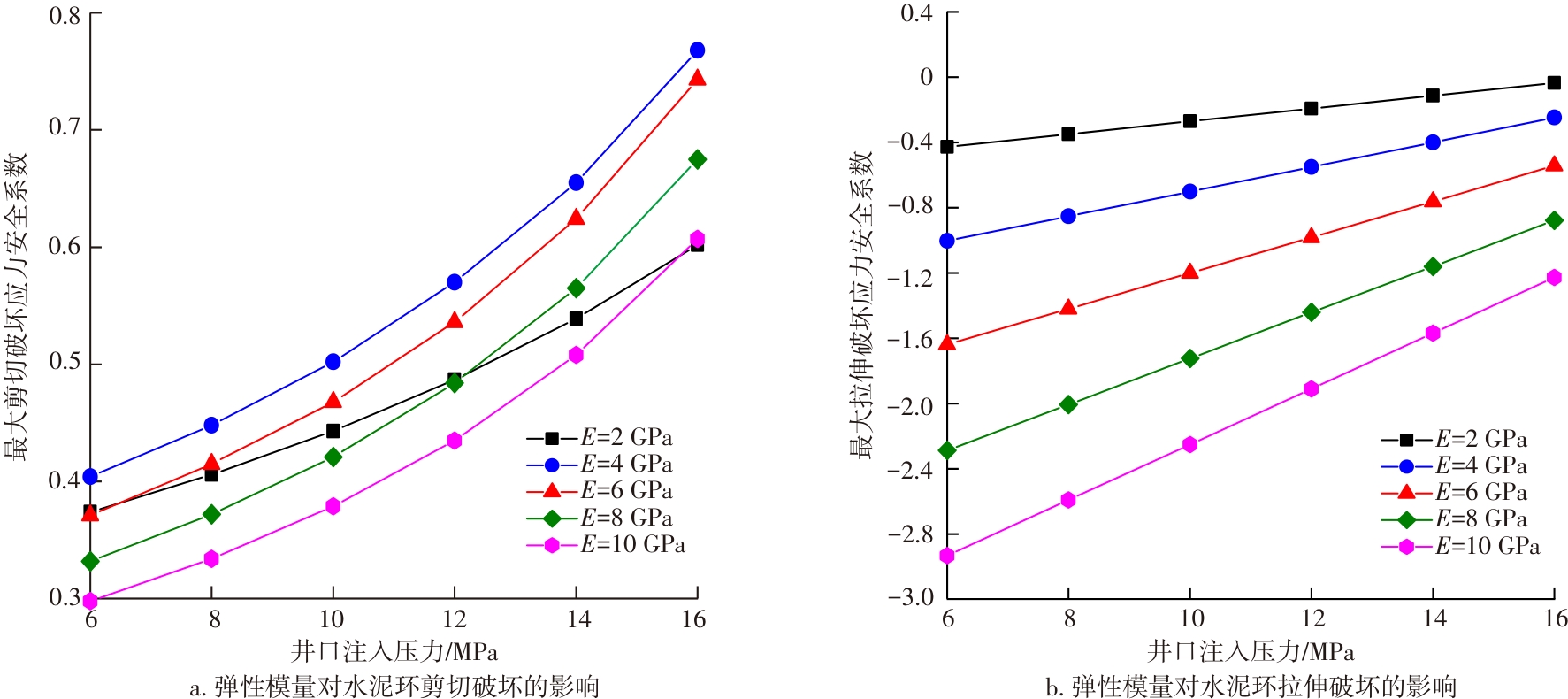
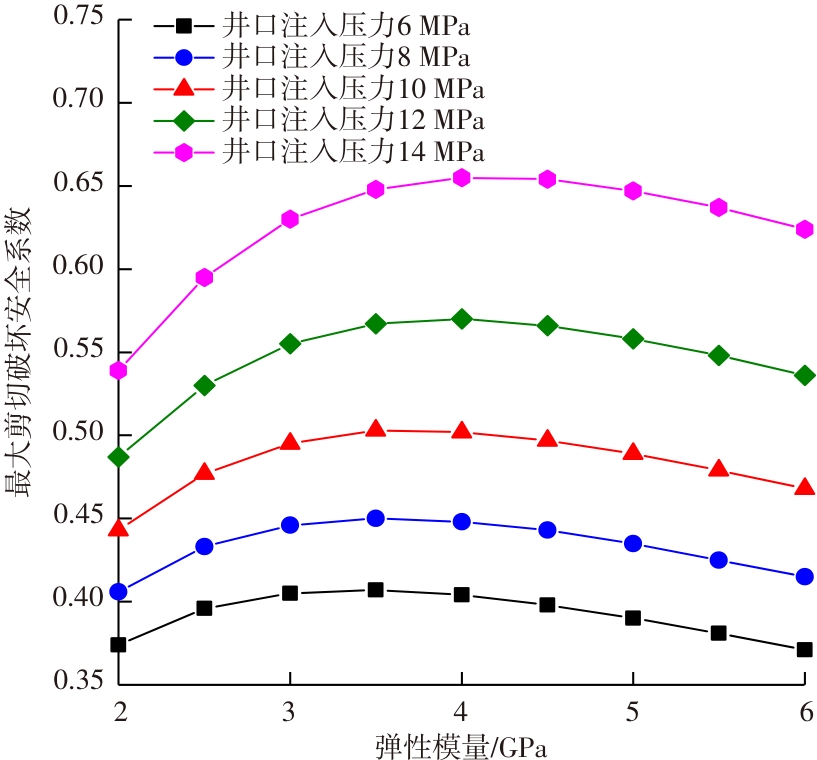
Fig.15
Variation patterns of maximum shear failure safety factor of cement sheath with elastic modulus under different injection pressures"
| [1] | FABIO P, FEDERICO C, DANIELE F, et al. A cutting-edge approach in cement testing for carbon capture and storage applications[C]// Paper OMC-2023-380 presented at the OMC Med Energy Conference and Exhibition, Ravenna, Italy, October 2023. |
| [2] | KIRAN R, TEODORIU C, DADMOHAMMADI Y, et al. Identification and evaluation of well integrity and causes of failure of well integrity barriers(a review)[J]. Journal of Natural Gas Science and Engineering, 2017, 45: 511-526. |
| [3] | WU X, LI Z, HOU Z, et al. Analytical perspectives on cement sheath integrity: A comprehensive review of theoretical research[J]. ACS Omega, 2024, 9: 17741-17759. |
| [4] | TAKASE K, BARHATE Y, HASHIMOTO H, et al. Cement-sheath wellbore integrity for CO2 injection and storage wells[C]//Paper SPE-127422-MS presented at the SPE Oil and Gas India Conference and Exhibition, Mumbai, India, January 2010. |
| [5] | 赵坤, 李泽阳, 刘娟丽, 等. 吉木萨尔页岩油井区CO2前置压裂工艺参数优化及现场实践[J]. 油气藏评价与开发, 2024, 14(1): 83-90. |
| ZHAO Kun, LI Zeyang, LIU Juanli, et al. Parameter optimization and field practice of CO2 pre-fracturing process in Jimsar shale oil block[J]. Petroleum Reservoir Evaluation and Development, 2024, 14(1): 83-90. | |
| [6] | 张志升, 吴向阳, 吴倩, 等. CO2驱油封存泄漏风险管理系统及应用研究[J]. 油气藏评价与开发, 2024, 14(1): 91-101. |
| ZHANG Zhisheng, WU Xiangyang, WU Qian, et al. Risk management system and application of CO2 flooding and sequestration leakage[J]. Petroleum Reservoir Evaluation and Development, 2024, 14(1): 91-101. | |
| [7] | BYBEE K. Effects of long-term exposure to ultrahigh temperature on the mechanical parameters of cement[J]. Journal of Petroleum Technology, 2007, 59: 68-71. |
| [8] | 郝锋, 李基伟, 唐登宇, 等. 海上CCS井固井关键技术探讨[J]. 当代石油石化, 2023, 31(6): 33-38. |
| HAO Feng, LI Jiwei, TANG Dengyu, et al. Discussion on key cementing technology of offshore CCS wells[J]. Petroleum & Petrochemical Today, 2023, 31(6): 33-38. | |
| [9] | 苗禾垚, 张军建, 杨斌, 等. 巨野煤田深部煤层CO2地质封存潜力评价及有利区优选[J]. 山东科技大学学报(自然科学版), 2025, 44(3): 56-67. |
| MIAO Heyao, ZHANG Junjian, YANG Bin, et al. CO2 geological storage potential evaluation and optimization of favorable areas in deep coal seams of Juye Coalfield[J]. Journal of Shandong University of Science and Technology(Natural Science), 2025, 44(3): 56-67. | |
| [10] | KUTCHKO B G, STRAZISAR B R, HUERTA N, et al. CO2 reaction with hydrated class H well cement under geologic sequestration conditions: Effects of flyash admixtures[J]. Environmental Science & Technology, 2009, 43(10): 3947-3952. |
| [11] | KUTCHKO B G, STRAZISAR B R, DZOMBAK D A, et al. Degradation of well cement by CO2 under geologic sequestration conditions[J]. Environmental Science & Technology, 2007, 41(13): 4787-4792. |
| [12] | CAREY J W, WIGAND M, CHIPERA S J, et al. Analysis and performance of oil well cement with 30 years of CO2 exposure from the SACROC Unit, West Texas, USA[J]. International Journal of Greenhouse Gas Control, 2007, 1(1): 75-85. |
| [13] | SANTRA A, SWEATMAN R. Understanding the long-term chemical and mechanical integrity of cement in a CCS environment[J]. Energy Procedia, 2011, 4: 5243-5250. |
| [14] | NYGAARD R, SALEHI S, WEIDEMAN B, et al. Effect of dynamic loading on wellbore leakage for the wabamun area CO2-sequestration project[J]. Journal of Canadian Petroleum Technology, 2014, 53(1): 69-82. |
| [15] | 杨川, 余才焌, 石庆, 等. CCUS井水泥环腐蚀预测模型及影响因素[J]. 石油与天然气化工, 2024, 53(3): 86-91. |
| YANG Chuan, YU Caijun, SHI Qing, et al. Prediction model and influencing factors of cement sheath corrosion in CCUS wells[J]. Chemical Engineering of Oil & Gas, 2024, 53(3): 86-91. | |
| [16] | THIERCELIN M, BAUMGARTE C, GUILLOT D. A soil mechanics approach to predict cement sheath behavior[C]//Paper SPE-47375-MS presented at the SPE/ISRM Rock Mechanics in Petroleum Engineering, Trondheim, Norway, July 1998. |
| [17] | TEODORIU C, UGWU I, SCHUBERT J. Estimation of casing-cement-formation interaction using a new analytical model[C]//Paper SPE-131335-MS presented at the SPE EUROPEC/EAGE Annual Conference and Exhibition, Barcelona, Spain, June 2010. |
| [18] | HAIDER M G, SANJAYAN J, RANJITH P G. Modeling of a well-bore composite cylinder system for cement sheath stress analysis in geological sequestration of CO2 [C]//Paper ARMA-2012-369 presented at the 46th U.S. Rock Mechanics / Geomechanics Symposium, Chicago, Illinois, 2012. |
| [19] | LI B, GUO B, LI H, et al. An analytical solution to simulate the effect of cement/formation stiffness on well integrity evaluation in carbon sequestration projects[J]. Journal of Natural Gas Science and Engineering, 2015, 27: 1092-1099. |
| [20] | LI B, LI H, ZHOU F, et al. Effect of cement sheath induced stress on well integrity assessment in carbon sequestration fields[J]. Journal of Natural Gas Science and Engineering, 2017, 46: 132-142. |
| [21] | ZHANG Z, WANG H. Effect of thermal expansion annulus pressure on cement sheath mechanical integrity in HPHT gas wells[J]. Applied Thermal Engineering, 2017, 118: 600-611. |
| [22] | 范明涛, 李社坤, 李军, 等. 多级压裂水泥环界面密封失效数值模拟[J]. 科学技术与工程, 2019, 19(24): 107-112. |
| FAN Mingtao, LI Shekun, LI Jun, et al. Numerical simulation of interface seal failure of cement sheath during multi-stage fracturing[J]. Science Technology and Engineering, 2019, 19(24): 107-112. | |
| [23] | DENG K, XIE P, YUE Y, et al. Study on the effect of interface failure between casing and cement sheath on casing stress under non-uniform in-situ stress[J]. Applied Mathematical Modelling, 2021, 91: 632-652. |
| [24] | MENG M, LUKE F, CAREY J W, et al. Predicting cement-sheath integrity with consideration of initial state of stress and thermoporoelastic effects[J]. SPE Journal, 2021, 26(6): 3505-3528. |
| [25] | 刘奎, 丁士东, 周仕明, 等. 套管内压周期变化水泥环应力计算与失效分析[J]. 石油机械, 2021, 49(5): 1-8. |
| LIU Kui, DING Shidong, ZHOU Shiming, et al. Stress calculation and failure analysis of cement sheath experiencing periodic variation of casing internal pressure[J]. China Petroleum Machinery, 2021, 49(5): 1-8. | |
| [26] | 刘奎, 丁士东, 初永涛, 等. 页岩气井压裂交变载荷水泥环密封能力研究[J]. 石油机械, 2023, 51(11): 79-86. |
| LIU Kui, DING Shidong, CHU Yongtao, et al. Study on sealing ability of cement sheath under cyclic loading in shale gas well fracturing[J]. China Petroleum Machinery, 2023, 51(11): 79-86. | |
| [27] | 尹奥博, 李军, 连威, 等. 页岩气水平井套管变形机理及控制方法研究进展[J]. 新疆石油天然气, 2025, 21(1): 50-60. |
| YIN Aobo, LI Jun, LIAN Wei, et al. Research progress on the mechanisms and control methods of casing deformation in shale gas horizontal wells[J]. Xinjiang Oil & Gas, 2025, 21(1): 50-60. | |
| [28] | GHOLAMI R, AADNOY B, FAKHARI N. A thermo-poroelastic analytical approach to evaluate cement sheath integrity in deep vertical wells[J]. Journal of Petroleum Science and Engineering, 2016, 147: 536-546. |
| [29] | 陶谦, 刘仍光, 周仕明, 等. 固井水泥石徐变实验与分析[J]. 钻采工艺, 2016, 39(6): 5-6. |
| TAO Qian, LIU Rengguang, ZHOU Shiming, et al. Effect of creeping on long-term sealing of cement sheath[J]. Drilling & Production Technology, 2016, 39(6): 5-6. | |
| [30] | 杨广国, 刘奎, 曾夏茂, 等. 页岩气井套管内压周期变化对水泥环密封失效的实验研究[J]. 科学技术与工程, 2021, 21(13): 5311-5317. |
| YANG Guangguo, LIU Kui, ZENG Xiamao, et al. Experimental analysis and discussion on cement sheath failure caused by the varied casing internal pressure in shale gas wells[J]. Science Technology and Engineering, 2021, 21(13): 5311-5317. | |
| [31] | 陈勉, 金衍, 张广清. 石油工程岩石力学[M]. 北京: 科学出版社, 2008. |
| CHEN Mian, JIN Yan, ZHANG Guangqing. Rock mechanics of petroleum engineering[M]. Beijing: Science Press, 2008. |
| [1] | QIU Kang, WANG Lihua, CUI Qiang, WANG Ying, WANG Xiaoshan, XIONG Zhenyu. Study on formation pressure distribution patterns of block 64/07, Lingshui structure, Qiongdongnan Basin [J]. Petroleum Reservoir Evaluation and Development, 2026, 16(1): 206-215. |
| [2] | WEI Bo, YANG Shuguang, LI Xin, TANG Zhuyun, ZHANG Na, WANG Bo, ZHAO Chen, LI Jinru, ZHAO Zhengwei, FENG Shuo, JIA Chao. Current status and development directions of surface and in-situ low-carbon development and utilization technologies for oil-rich coal in Xinjiang [J]. Petroleum Reservoir Evaluation and Development, 2025, 15(6): 959-971. |
| [3] | CHEN Mingjun, TANG Xingyu, WANG Yubin, KANG Yili, GUO Zhidong, YAN Maoling, CHEN Xueni. Sensitivity experimental study of low-pressure tight sandstone gas reservoirs in eastern margin of Ordos Basin [J]. Petroleum Reservoir Evaluation and Development, 2025, 15(6): 983-994. |
| [4] | LU Hongjun, DA Yinpeng, ZHAO Zhengguang, LI Lei, BAI Xiaohu, LI JianhuI, TIAN Yibo. Quantitative evaluation of refracturing effectiveness using microseismic-event-based continuous fracture network and apparent stress [J]. Petroleum Reservoir Evaluation and Development, 2025, 15(5): 872-880. |
| [5] | CHEN Yuye, TANG Yuanshuang, ZHOU Hong, WANG Han, ZHENG Xin, WANG Yuheng, LU Kaichen, TANG Huiying. Geomechanical modeling and integrity evaluation of gas storage rebuilt from depleted carbonate gas reservoir [J]. Petroleum Reservoir Evaluation and Development, 2025, 15(5): 912-920. |
| [6] | LI Meng, WANG Wendong, SU Yuliang, ZHANG Jian, FAN Zhenning, LIANG Haining. Simulation of shale oil flow patterns considering rock and fluid properties [J]. Petroleum Reservoir Evaluation and Development, 2025, 15(4): 694-703. |
| [7] | ZHAO Haifeng, WANG Chengwang, XI Yue, WANG Chaowei. Study on dynamic stress field of fracturing in horizontal wells of deep coal seams: A case study of Daning-Jixian block in Ordos Basin [J]. Petroleum Reservoir Evaluation and Development, 2025, 15(2): 310-323. |
| [8] | CHAI Nina, LI Jiarui, ZHANG Liwen, WANG Junjie, LIU Yapeng, ZHU Lun. Experimental study on hydraulic fracture propagation in interbedded continental shale oil reservoirs [J]. Petroleum Reservoir Evaluation and Development, 2025, 15(1): 124-130. |
| [9] | DU Peng. Structural assessment of an offshore oil and gas jacket platform with cracks based on engineering critical assessment (ECA) [J]. Petroleum Reservoir Evaluation and Development, 2025, 15(1): 161-166. |
| [10] | CHEN Hongju, LIU Qiang, SUN Lili, YU Hang. Status and prospects of low carbon development in offshore oil and gas industry [J]. Petroleum Reservoir Evaluation and Development, 2024, 14(6): 981-989. |
| [11] | ZHENG Xin, ZHAO Yuchao, ZHAO Zihan, TANG Huiying, ZHAO Yulong. Mechanism investigation on in-situ stress characteristics and mechanical integrity of fracture-cavity carbonate underground gas storage reservoir [J]. Petroleum Reservoir Evaluation and Development, 2024, 14(5): 814-824. |
| [12] | WANG Jiawei, ZHANG Bohu, HU Yao, HE Zhengyi, HU Xinxin, CHEN Wei, LUO Chao. Inversion of multiphase tectonic stress field and fracture evolution in shale gas reservoirs [J]. Petroleum Reservoir Evaluation and Development, 2024, 14(4): 560-568. |
| [13] | CHENG Hai, ZHANG Yiqun, WANG Yin, LIU Chao. Progress and understanding on geology-drilling engineering-mechanics coupling mechanism of ultra-deep directional wells [J]. Petroleum Reservoir Evaluation and Development, 2024, 14(4): 593-599. |
| [14] | DUAN Hongliang, SHEN Tingshan, SUN Jing, HONG Yafei, LI Sichen, LU Xianrong, ZHANG Zhengyang. Experimental study of oil matrix and fracture flow capacity of shale oil in Subei Basin [J]. Petroleum Reservoir Evaluation and Development, 2024, 14(3): 333-342. |
| [15] | ZHAO Haifeng, WANG Tengfei, LI Zhongbai, LIANG Wei, ZHANG Tao. Study on dynamic stress field for fracturing in horizontal well group of shale oil [J]. Petroleum Reservoir Evaluation and Development, 2024, 14(3): 352-363. |
|
||
