
Petroleum Reservoir Evaluation and Development ›› 2026, Vol. 16 ›› Issue (1): 162-173.doi: 10.13809/j.cnki.cn32-1825/te.2024318
• Comprehensive Research • Previous Articles Next Articles
LI Chuhua( )
)
Received:2024-09-02
Online:2026-01-06
Published:2026-01-26
CLC Number:
LI Chuhua. Genetic types and evolution models of abnormally high porosity in deep field of first member of Funing Formation, Gaoyou Sag, Subei Basin[J]. Petroleum Reservoir Evaluation and Development, 2026, 16(1): 162-173.
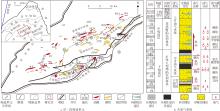
Fig.1
Tectonic units and oil-gas systems in Gaoyou Sag, Subei Basin"
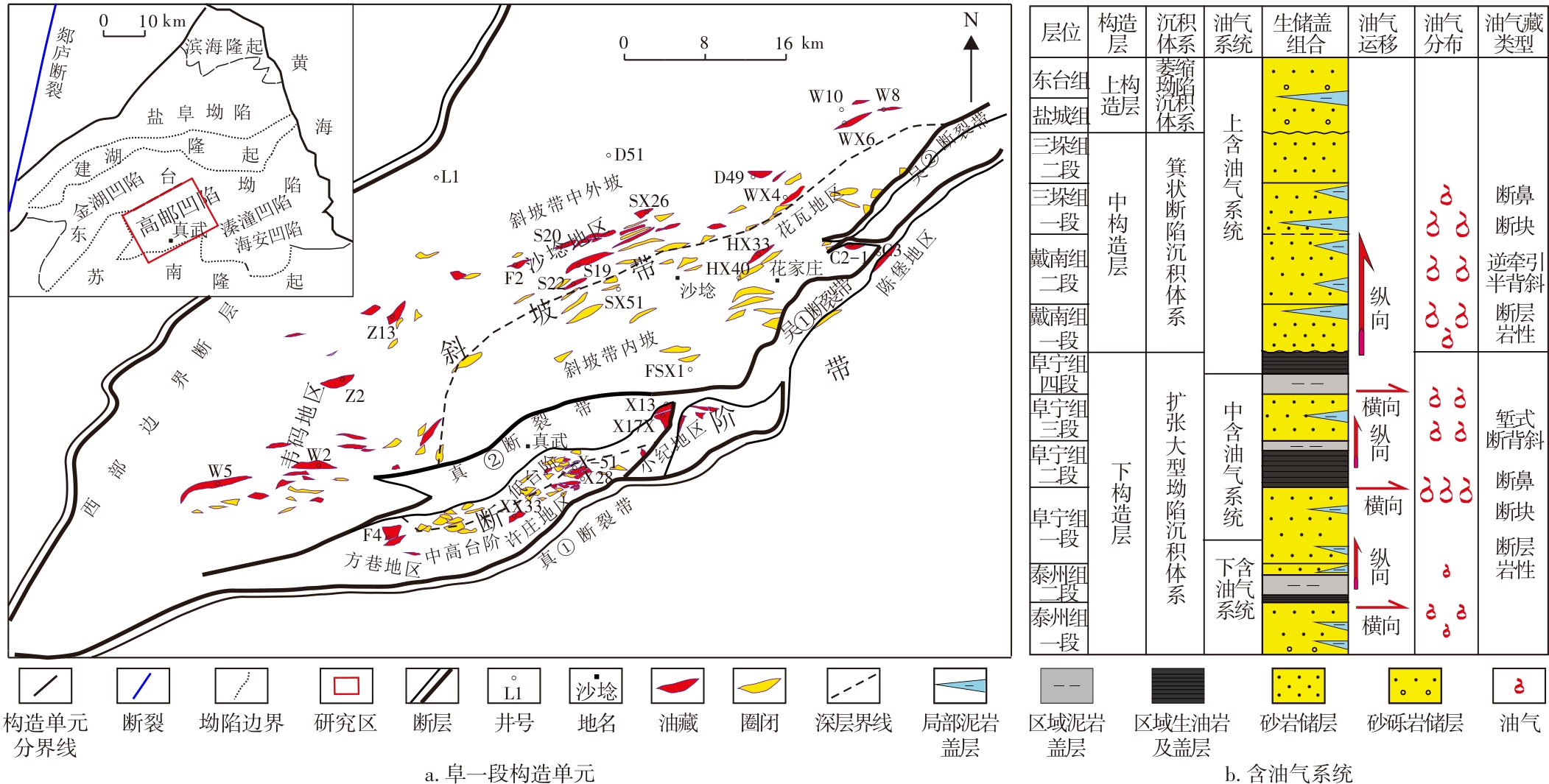
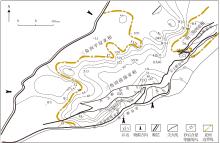
Fig.2
Distribution of sandstone content and sedimentary facies of first sub-member of E1f1 in Gaoyou Sag, Subei Basin"

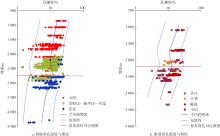
Fig.3
Relationship between porosity and burial depth of slope and fault zones of E1f1 in Gaoyou Sag, Subei Basin"
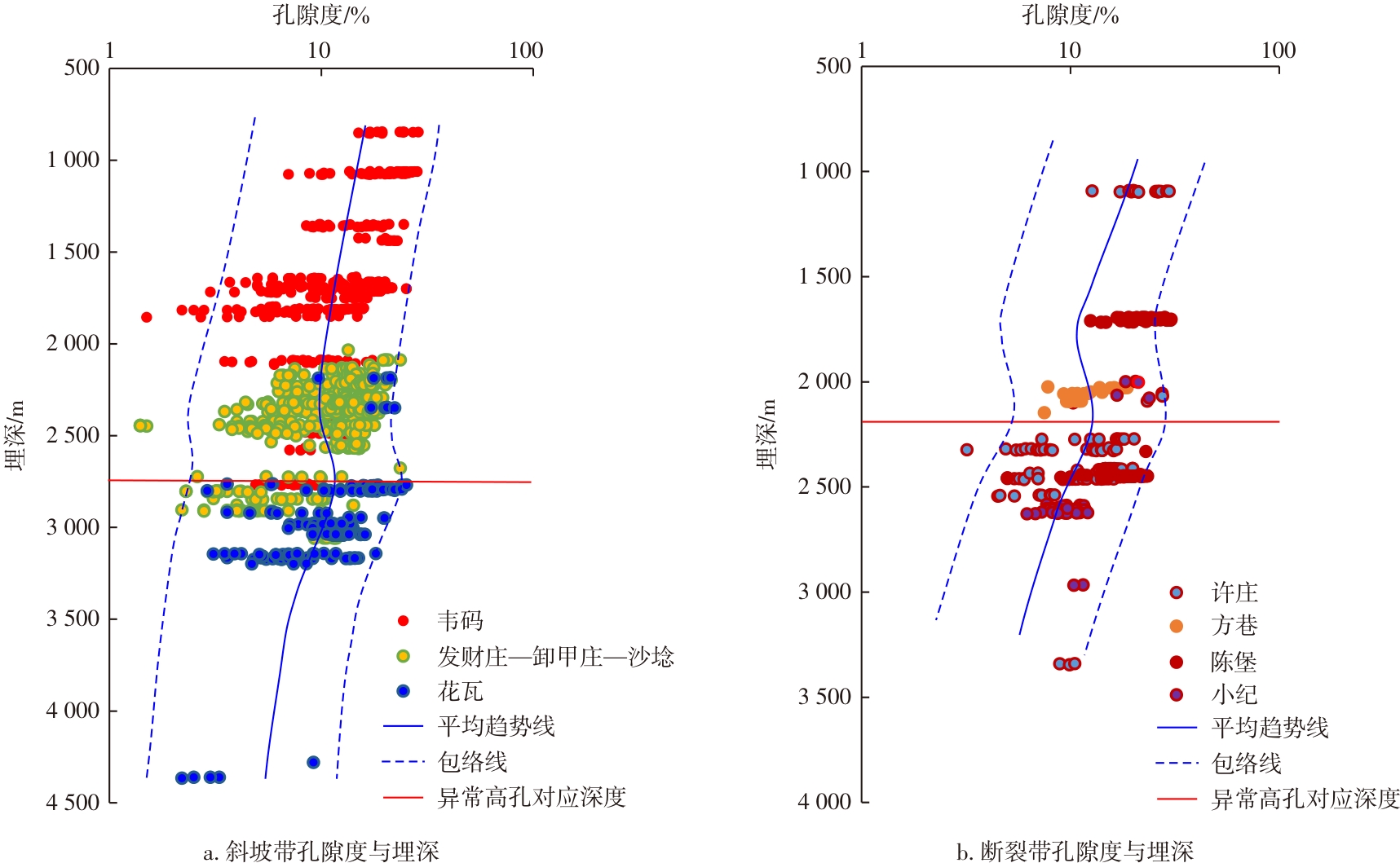

Table 1
Relationship between reservoir burial depth and average porosity in different areas of Gaoyou Sag"
| 地区 | 斜坡带 | 断阶带 | ||||||
|---|---|---|---|---|---|---|---|---|
| 韦码地区 | 沙埝地区 | 花瓦地区 | 斜坡带内坡 | 方巷地区 | 许庄地区 | 小纪地区 | 陈堡地区 | |
| 埋深/m | 800~2 200 | 1 900~3 400 | 2 500~3 200 | 3 000~4 300 | 2 000~2 400 | 2 250~2 400 | 2 600~2 700 | 1 655~2 700 |
| 平均孔隙度/% | 16.90 | 13.80 | 10.90 | 2.10 | 10.66 | 13.60 | 9.34 | 18.86 |
Fig.4
Relationship between porosity and burial depth of E1f1 and stripped Yancheng Formation in Gaoyou Sag, Subei Basin"

Fig.5
Porosity development distribution of E1f1 in Gaoyou Sag, Subei Basin"
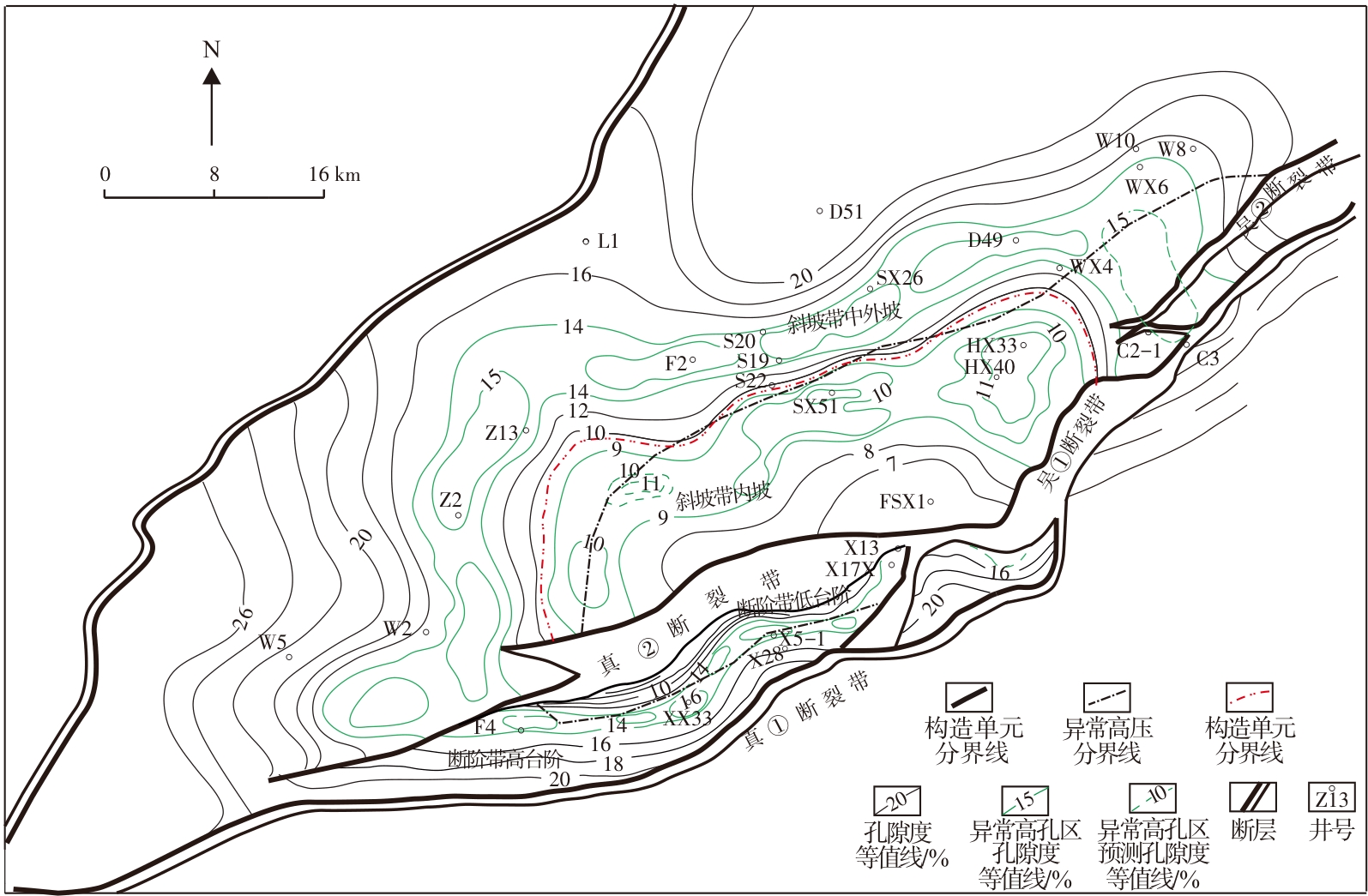
Table 2
Impact of diagenesis on porosity of deep reservoirs in normal pressure areas of E1f1, Gaoyou Sag, Subei Basin"
| 原始孔隙度 | 压实作用 | 早期胶结作用 | 交代作用 | 溶蚀作用 | 晚期胶结作用 | |
|---|---|---|---|---|---|---|
| 成岩作用后孔隙度/% | 37.3 | 18.8 | 7.6 | 8.2 | 15.4 | 5.3 |
| 平均影响孔隙度/% | 无影响 | 减16.5 | 减13.2 | 增0.6 | 增7.2 | 减10.1 |
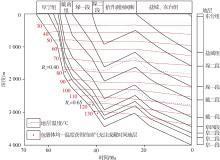
Fig.6
Burial history, hydrocarbon generation history, and oil-gas accumulation stages of well FSX1"


Fig.7
Pore preservation and cementation inhibition by early oil and gas charging in E1f1 of Gaoyou Sag, Subei Basin"

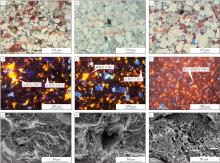
Fig.8
Diagenetic phenomena including cementation and dissolution in E1f1 deep reservoirs, Gaoyou Sag, Subei Basin"

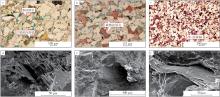
Fig.9
Diagenetic phenomena of cementation, dissolution, and fracturing in E1f1 deep reservoirs of abnormally high pressure areas of formations"

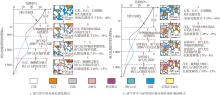
Fig.10
Pore evolution model of E1f1 deep reservoirs in Gaoyou Sag, Subei Basin"

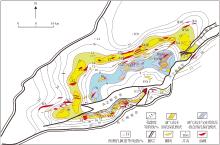
Fig.11
Overlays of pore development zones with abnormally high pressure areas, oil reservoirs, and traps of E1f1 in Gaoyou Sag, Subei Basin"

| [1] | 何治亮, 马永生, 朱东亚, 等. 深层-超深层碳酸盐岩储层理论技术进展与攻关方向[J]. 石油与天然气地质, 2021, 42(3): 533-546. |
| HE Zhiliang, MA Yongsheng, ZHU Dongya, et al. Theoretical and technological progress and research direction of deep and ultra-deep carbonate reservoirs[J]. Oil & Gas Geology, 2021, 42(3): 533-546. | |
| [2] | 段宏亮, 孙雅雄, 杨保良. 苏北盆地高邮凹陷古近系阜宁组二段页岩油富集主控因素[J]. 石油实验地质, 2024, 46(3): 441-450. |
| DUAN Hongliang, SUN Yaxiong, YANG Baoliang. Main controlling factors of shale oil enrichment in second member of Paleogene Funing Formation in Gaoyou Sag of Subei Basin[J]. Petroleum Geology & Experiment, 2024, 46(3): 441-450. | |
| [3] | 毛凤鸣, 戴靖. 复杂小断块石油勘探开发技术[M]. 北京: 中国石化出版社, 2005. |
| MAO Fengming, DAI Jing. Oil exploration and development technology of complex small fault block[M]. Beijing: China Petrochemical Press, 2005. | |
| [4] | 严泽宇, 梁兵, 孙雅雄, 等. 苏北盆地高邮凹陷阜宁组二段深层页岩储层地应力方向及主控因素[J]. 石油实验地质, 2024, 46(6): 1187-1197. |
| YAN Zeyu, LIANG Bing, SUN Yaxiong, et al. In-situ stress orientation and main controlling factors of deep shale reservoirs in the second member of Paleogene Funing Formation in Gaoyou Sag, Subei Basin[J]. Petroleum Geology & Experiment, 2024, 46(6): 1187-1197. | |
| [5] | 夏祥, 马晓东, 胡文瑄, 等. 苏北盆地溱潼凹陷沙垛1井侵入岩岩石学特征及其储集性与含油性研究[J]. 石油实验地质, 2024, 46(1): 87-97. |
| XIA Xiang, MA Xiaodong, HU Wenxuan, et al. Petrological characteristics, reservoir property and oil-bearing potential of intrusive rocks in well Shaduo 1, Qintong Sag, Subei Basin[J]. Petroleum Geology & Experiment, 2024, 46(1): 87-97. | |
| [6] | 施振飞, 张振城, 叶绍东, 等. 苏北盆地高邮凹陷阜宁组储层次生孔隙成因机制探讨[J]. 沉积学报, 2005, 23(3): 429-436. |
| SHI Zhenfei, ZHANG Zhencheng, YE Shaodong, et al. The mechanism of secondary pores in the reservoir of Funing Formation in Gaoyou depression of Subei Basin[J]. Acta Sedimentologica Sinica, 2005, 23(3): 429-436. | |
| [7] | 戴祉平, 陈勇, 于雯泉. 高邮凹陷阜宁组一段储层成岩环境演化的流体包裹体证据[J]. 山东科技大学学报(自然科学版), 2013, 32(5): 53-60. |
| DAI Zhiping, CHEN Yong, YU Wenquan. Evolution of diagenesis environment of the 1st member Funing Formation in Gaoyou Sag: Evidence from fluid inclusions[J]. Journal of Shandong University of Science and Technology (Natural Science), 2013, 32(5): 53-60. | |
| [8] | 纪友亮, 高崇龙, 刘玉瑞, 等. 高邮凹陷阜一段油气充注对储层物性演化的影响[J]. 同济大学学报(自然科学版), 2015, 43(1): 133-139. |
| JI Youliang, GAO Chonglong, LIU Yurui, et al. Influence of hydrocarbon charging to the reservoir property in 1st member of Funning Formation in Gaoyou Depression[J]. Journal of Tongji University (Natural Science), 2015, 43(1): 133-139. | |
| [9] | 纪友亮, 王艳艳, 刘玉瑞, 等. 高邮凹陷阜一段差异成岩作用及成因[J]. 同济大学学报(自然科学版), 2014, 42(3): 474-479. |
| JI Youliang, WANG Yanyan, LIU Yurui, et al. Differential diagenesis and its genetic analysis of 1st member of Funning Formation in Gaoyou Depression[J]. Journal of Tongji University (Natural Science), 2014, 42(3): 474-479. | |
| [10] | 陆梅娟, 于雯泉, 王路, 等. 高邮凹陷阜一段含油砂岩成岩作用特征[J]. 复杂油气藏, 2013, 6(4): 11-15. |
| LU Meijuan, YU Wenquan, WANG Lu, et al. Diagenetic character of oil-bearing sandstone in the first member of Funing Formation in Gaoyou Sag[J]. Complex Hydrocarbon Reservoirs, 2013, 6(4): 11-15. | |
| [11] | 于雯泉. 致密砂岩储层成因类型分析: 以苏北盆地高邮凹陷阜一段为例[J]. 复杂油气藏, 2018, 11(4): 1-6. |
| YU Wenquan. Analysis of genetic type of tight sandstone reservoirs: A case study of the first member of Funing Formation in Gaoyou Sag[J]. Complex Hydrocarbon Reservoirs, 2018, 11(4): 1-6. | |
| [12] | 于雯泉. 致密砂岩储层成因类型与致密化过程差异性: 以高邮凹陷阜一段为例[J]. 沉积学报, 2023, 41(4): 1271-1280. |
| YU Wenquan. Genetic type analysis of tight sandstone reservoirs: A case study of the first member of the Funing Formation in Gaoyou Sag, China[J]. Acta Sedimentologica Sinica, 2023, 41(4): 1271-1280. | |
| [13] | 于雯泉, 陈勇, 杨立干, 等. 酸性环境致密砂岩储层石英的溶蚀作用[J]. 石油学报, 2014, 35(2): 286-293. |
| YU Wenquan, CHEN Yong, YANG Ligan, et al. Dissolution of quartz in tight sandstone reservoirs in an acidic environment[J]. Acta Petrolei Sinica, 2014, 35(2): 286-293. | |
| [14] | 尹开贵, 陈刚, 钱恪然, 等. 高邮凹陷阜一段一、二亚段沉积相及有利砂体分布[J]. 复杂油气藏, 2009, 2(3): 20-24. |
| YIN Kaigui, CHEN Gang, QIAN Keran, et al. Sedimentary facies and sandbody distribution of the 1st and 2nd sub-members in first member of Funing Formation in Gaoyou Sag[J]. Complex Hydrocarbon Reservoirs, 2009, 2(3): 20-24. | |
| [15] | 能源, 杨桥, 张克鑫, 等. 苏北盆地高邮凹陷晚白垩世—新生代构造沉降史分析与构造演化[J]. 沉积与特提斯地质, 2009, 29(2): 25-32. |
| NENG Yuan, YANG Qiao, ZHANG Kexin, et al. Tectonic subsidence and evolution of the Gaoyou depression in northern Jiangsu Basin during the Late Cretaceous to the Cenozoic[J]. Sedimentary Geology and Tethyan Geology, 2009, 29(2): 25-32. | |
| [16] | 刘东鹰. 苏北-南黄海盆地的构造演化分析[J]. 石油天然气学报, 2010, 32(6): 27-31, 527. |
| LIU Dongying. Analysis on structural evolution of northern Jiangsu-south Yellow Sea Basin[J]. Journal of Oil and Gas Technology, 2010, 32(6): 27-31, 527. | |
| [17] | 薛一帆, 文志刚, 黄亚浩, 等. 深层—超深层走滑断裂带储层流体来源与油气成藏过程研究: 以塔里木盆地富满油田为例[J]. 油气藏评价与开发, 2024, 14(4): 549-559. |
| XUE Yifan, WEN Zhigang, HUANG Yahao, et al. Study on reservoir fluid source and hydrocarbon accumulation process in deep to ultra-deep strike-slip fault zone: A case study of Fuman Oilfield, Tarim Basin[J]. Petroleum Reservoir Evaluation and Development, 2024, 14(4): 549-559. | |
| [18] | 傅强, 陈海洲. 苏北盆地高邮凹陷古近系阜宁组储层成岩相特征[J]. 成都理工大学学报(自然科学版), 2008, 35(3): 225-231. |
| FU Qiang, CHEN Haizhou. Reservoir diagenetic facies characteristics of Paleogene Funing Formation in the Gaoyou sag of Subei Basin, China[J]. Journal of Chengdu University of Technology (Science & Technology Edition), 2008, 35(3): 225-231. | |
| [19] | 熊亮, 庞河清, 赵勇, 等. 威荣深层页岩气储层微观孔隙结构表征及分类评价[J]. 油气藏评价与开发, 2021, 11(2): 20-29. |
| XIONG Liang, PANG Heqing, ZHAO Yong, et al. Micropore structure characterization and classification evaluation of reservoirs in Weirong Deep Shale Gas Field[J]. Reservoir Evaluation and Development, 2021, 11(2): 20-29. | |
| [20] | 孙雅雄, 朱相羽, 邱旭明,等. 苏北盆地高邮凹陷阜宁组二段页岩裂缝特征分析[J]. 油气藏评价与开发, 2024, 14(3): 414-424. |
| SUN Yaxiong, ZHU Xiangyu, QIU Xuming, et al. Characteristics of shale fractures in the second member of Funing Formation in Gaoyou Sag of Subei Basin[J]. Petroleum Reservoir Evaluation and Development, 2024, 14(3): 414-424. | |
| [21] | 李储华, 于雯泉, 丁建荣. 加权断层泥比率法(WSGR)定量判别断层封闭性: 以苏北盆地高邮凹陷永安地区为例[J]. 石油实验地质, 2024, 46(1): 158-165. |
| LI Chuhua, YU Wenquan, DING Jianrong. Quantitative evaluation of fault sealing by weighted shale gouge ratio(WSGR): A case study of Yongan area in Gaoyou Sag, Subei Basin[J]. Petroleum Geology & Experiment, 2024, 46(1): 158-165. | |
| [22] | 李昂, 吴柠羽, 张丽艳, 等. 页岩储层不同尺度断裂识别方法[J]. 新疆石油天然气, 2024, 20(3): 30-36. |
| LI Ang, WU Ningyu, ZHANG Liyan, et al. Faults at various scales identification techniques in shale reservoirs[J]. Xinjiang Oil & Gas, 2024, 20(3): 30-36. | |
| [23] | 李超, 罗涛, 黄亚浩, 等. 苏北盆地高邮凹陷花页1井古近系阜宁组裂缝脉体流体演化及其对页岩油充注过程的指示意义[J]. 石油实验地质, 2024, 46(2): 228-237. |
| LI Chao, LUO Tao, HUANG Yahao, et al. Fluid evolution of fracture veins of Paleogene Funing Formation in well HY1 in Subei Basin and implications for shale oil filling[J]. Petroleum Geology & Experiment, 2024, 46(2): 228-237. | |
| [24] | 严焕榕, 詹泽东, 李亚晶, 等. 致密砂岩气藏高产富集规律研究: 以川西坳陷新场: 合兴场须家河组二段气藏为例[J]. 油气藏评价与开发, 2024, 14(4): 541-548. |
| YAN Huanrong, ZHAN Zedong, LI Yajing, et al. High yield enrichment law for tight sandstone gas reservoir: A case study of the second member of Xujiahe Formation gas reservoir in Xinchang-Hexinchang gas field of western Sichuan Depression[J]. Petroleum Reservoir Evaluation and Development, 2024, 14(4): 541-548. | |
| [25] | 李锦锋, 杨连如, 张凤博, 等. 下寺湾油田延长组长8段致密油富集主控因素及“甜点”模式[J]. 油气藏评价与开发, 2019, 9(6): 1-9. |
| LI Jinfeng, YANG Lianru, ZHANG Fengbo, et al. Main controlling factors of enrichment and sweet spot mode of tight sandstone oil reservoir in Chang-8 Member of Yanchang Formation in Xiasiwan Oilfield[J]. Reservoir Evaluation and Development, 2019, 9(6): 1-9. | |
| [26] | 王占国. 异常高压对储层物性的影响[J]. 油气地质与采收率, 2005, 12(6): 31-33. |
| WANG Zhanguo. Influence of abnormal high pressure on physical properties of reservoirs[J]. Petroleum Geology and Recovery Efficiency, 2005, 12(6): 31-33. | |
| [27] | 代金友, 张一伟, 熊琦华, 等. 成岩作用对储集层物性贡献比率研究[J]. 石油勘探与开发, 2003, 30(4): 54-55. |
| DAI Jinyou, ZHANG Yiwei, XIONG Qihua, et al. Effects of diagenesis on reservoir property and quality, a case study of the Cainan Oilfield in east of Zhun Ga'er Basin[J]. Petroleum Exploration and Development, 2003, 30(4): 54-55. | |
| [28] | 杨博伟, 石万忠, 张晓明, 等. 黔南地区下石炭统打屋坝组页岩气储层孔隙结构特征及含气性评价[J]. 岩性油气藏, 2024, 36(1): 45-58. |
| YANG Bowei, SHI Wanzhong, ZHANG Xiaoming, et al. Pore structure characteristics and gas-bearing properties of shale gas reservoirs of Lower Carboniferous Dawuba Formation in southern Guizhou[J]. Lithologic Reservoirs, 2024, 36(1): 45-58. | |
| [29] | 王小娟, 陈双玲, 谢继容, 等. 川西南地区侏罗系沙溪庙组致密砂岩成藏特征及主控因素[J]. 岩性油气藏, 2024, 36(1): 78-87. |
| WANG Xiaojuan, CHEN Shuangling, XIE Jirong, et al. Accumulation characteristics and main controlling factors of tight sandstone of Jurassic Shaximiao Formation in southwestern Sichuan Basin[J]. Lithologic Reservoirs, 2024, 36(1): 78-87. | |
| [30] | 代金友, 李建霆, 赵晨晖, 等. 长岭气田登娄库组致密砂岩储层特征及孔隙演化[J]. 石油地质与工程, 2014, 28(6): 29-32. |
| DAI Jinyou, LI Jianting, ZHAO Chenhui, et al. Tight sandstone reservoir characteristics and pore evolution of Denglouku formation in Changling gas field[J]. Petroleum Geology and Engineering, 2014, 28(6): 29-32. | |
| [31] | 冯旭, 刘洛夫, 李朝玮, 等. 碎屑岩孔隙演化定量计算方法的改进和应用[J]. 石油与天然气地质, 2017, 38(6): 1198-1207. |
| FENG Xu, LIU Luofu, LI Chaowei, et al. Improvement and application of quantitative calculation of porosity evolution of clastic rocks[J]. Oil & Gas Geology, 2017, 38(6): 1198-1207. | |
| [32] | 钱诗友, 郑元财, 吴峰, 等. 高邮凹陷北斜坡阜宁组异常高压发育特征[J]. 复杂油气藏, 2018, 11(2): 31-37. |
| QIAN Shiyou, ZHENG Yuancai, WU Feng, et al. Development characteristics of abnormal high-pressure in Funing Formation of northern slope in Gaoyou Sag[J]. Complex Hydrocarbon Reservoirs, 2018, 11(2): 31-37. | |
| [33] | 郑元财, 于雯泉. 沙花瓦地区阜一段超压封存箱与油气关系[J]. 复杂油气藏, 2015, 8(1): 11-14. |
| ZHENG Yuancai, YU Wenquan. Relationship between overpressure compartment and hydrocarbon in the first member of Funing Formation in Sha-Hua-Wa area[J]. Complex Hydrocarbon Reservoirs, 2015, 8(1): 11-14. | |
| [34] | 吴峰, 钱诗友, 郑元财. 高邮凹陷北斜坡阜宁组异常压力成因机制研究[J]. 复杂油气藏, 2019, 12(3): 23-26. |
| WU Feng, QIAN Shiyou, ZHENG Yuancai. Study on forming mechanism of abnormal high-pressure in Funing Formation in northern slope of Gaoyou Sag[J]. Complex Hydrocarbon Reservoirs, 2019, 12(3): 23-26. |
| [1] | YANG Baoliang, YU Wenquan, DUAN Hongliang, FU Qian, SUN Yaxiong, QIU Yongfeng, YANG Yan, LIU Shili, ZHOU Jinfeng, FU Qiang. Characteristics and evaluation of lithofacies combination of fine-grained sedimentary rocks: A case study of deep second member of Funing Formation in Gaoyou Sag, Subei Basin [J]. Petroleum Reservoir Evaluation and Development, 2026, 16(1): 153-161. |
| [2] | WANG Xiaodong, WANG Yuchuan, LIANG Xiaolei, KANG Lifang, CHAO Weiwei, LIU Shiqi, HUANG Fansheng, WANG Wenkai, LIANG Yu. Influence of tight sandstone gas in roof on gas production in deep coalbed methane wells: A case study of Shenfu block in Ordos Basin [J]. Petroleum Reservoir Evaluation and Development, 2025, 15(6): 1034-1045. |
| [3] | CHEN Mingjun, TANG Xingyu, WANG Yubin, KANG Yili, GUO Zhidong, YAN Maoling, CHEN Xueni. Sensitivity experimental study of low-pressure tight sandstone gas reservoirs in eastern margin of Ordos Basin [J]. Petroleum Reservoir Evaluation and Development, 2025, 15(6): 983-994. |
| [4] | ZHU Xiangyu, YU Wenquan, ZHANG Jianwei, LI Chuhua, LI Heyong. Oil and gas enrichment mechanisms and key exploration technologies in deep layers of Subei Basin [J]. Petroleum Reservoir Evaluation and Development, 2025, 15(3): 357-372. |
| [5] | LI Shuyu, FAN Lixin, XIA Lianjun, ZHANG Juan, HE Junqing, ZHANG Hao, LI Yuezhe. Oil and gas accumulation characteristics of the third submember of the first member of Dainan Formation in deep layers of Gaoyou Sag, Subei Basin [J]. Petroleum Reservoir Evaluation and Development, 2025, 15(3): 455-462. |
| [6] | ZHONG Zhiguo, YU Wenquan, DUAN Hongliang, YANG Baoliang. Progress and research direction of shale oil exploration in complex fault blocks with low to medium TOC in Subei Basin [J]. Petroleum Reservoir Evaluation and Development, 2025, 15(1): 11-18. |
| [7] | QIAN Shiyou, YANG Zhiqiang, XU Chen. Logging evaluation methods of low-organic matter fault-block shale oil in the Subei Basin and their application [J]. Petroleum Reservoir Evaluation and Development, 2025, 15(1): 19-27. |
| [8] | TANG Lei, LIAO Wenting, XIA Lianjun, MA Jie, ZHANG Juan. Research on shale lamination types and logging characterization methods: A case study of the Funing Formation Member 2 in Gaoyou Sag, Subei Basin [J]. Petroleum Reservoir Evaluation and Development, 2025, 15(1): 28-39. |
| [9] | YU Wenduan, GAO Yuqiao, ZAN Ling, MA Xiaodong, YU Qilin, LI Zhipeng, ZHANG Zhihuan. Distribution of oil bearing and shale oil-rich strata in the second member of Funing Formation in Qintong Sag [J]. Petroleum Reservoir Evaluation and Development, 2024, 14(5): 688-698. |
| [10] | ZHANG Fei, LI Qiuzheng, JIANG Aming, DENG Ci. Application of shale oil 2D NMR logging evaluation in Huazhuang area of Gaoyou Sag [J]. Petroleum Reservoir Evaluation and Development, 2024, 14(5): 707-713. |
| [11] | WANG Weiheng, GUO Xin, ZHANG Bin, XIA Weiwei. Development and performance evaluation of fracturing-displacement agent(HDFD) for shale oil: A case study of the second member of Funing Formation, Subei Basin [J]. Petroleum Reservoir Evaluation and Development, 2024, 14(5): 771-778. |
| [12] | ZHU Ziheng, REN Zhongxin, WANG Zhaozhou, GUO Shangtao, WANG Chaoguo, LIU Yujian, YANG Tao, WEI Bing. Sealing evaluation of Liuzhuang UGS in Subei Basin [J]. Petroleum Reservoir Evaluation and Development, 2024, 14(5): 805-813. |
| [13] | YAN Huanrong, ZHAN Zedong, LI Yajing, BI Youyi, DENG Meizhou, FENG Ying. High yield enrichment law for tight sandstone gas reservoir: A case study of the second member of Xujiahe Formation gas reservoir in Xinchang-Hexinchang gas field of western Sichuan Depression [J]. Petroleum Reservoir Evaluation and Development, 2024, 14(4): 541-548. |
| [14] | LAI Weirong, YANG Guopeng, SONG Peidong, ZHANG Shunli, WANG Zheng. Application of facies-controlled prestack geostatistical inversion in reservoir prediction: A case study of tight sandstone reservoir in the second member of Xujiahe Formation in western Sichuan Depression, Sichuan Basin [J]. Petroleum Reservoir Evaluation and Development, 2024, 14(4): 586-592. |
| [15] | WANG Xin, HAN Jianqiang, ZAN Ling, LI Xiaolong, PENG Xingping. Logging evaluation of shale oil in the second member of Funing Formation of Qintong Sag, Subei Basin [J]. Petroleum Reservoir Evaluation and Development, 2024, 14(3): 364-372. |
|
||
