
Petroleum Reservoir Evaluation and Development ›› 2026, Vol. 16 ›› Issue (1): 153-161.doi: 10.13809/j.cnki.cn32-1825/te.2024386
• Comprehensive Research • Previous Articles Next Articles
YANG Baoliang1,2( ), YU Wenquan1, DUAN Hongliang1, FU Qian1, SUN Yaxiong1,3(), QIU Yongfeng1, YANG Yan1, LIU Shili1,3, ZHOU Jinfeng1, FU Qiang2
Received:2024-09-18
Online:2026-01-06
Published:2026-01-26
CLC Number:
YANG Baoliang,YU Wenquan,DUAN Hongliang, et al. Characteristics and evaluation of lithofacies combination of fine-grained sedimentary rocks: A case study of deep second member of Funing Formation in Gaoyou Sag, Subei Basin[J]. Petroleum Reservoir Evaluation and Development, 2026, 16(1): 153-161.
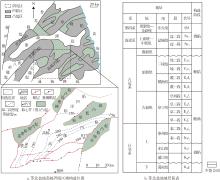
Fig.1
Regional tectonic location and stratigraphic characteristics of Gaoyou Sag, Subei Basin (modified from references [14,26])"
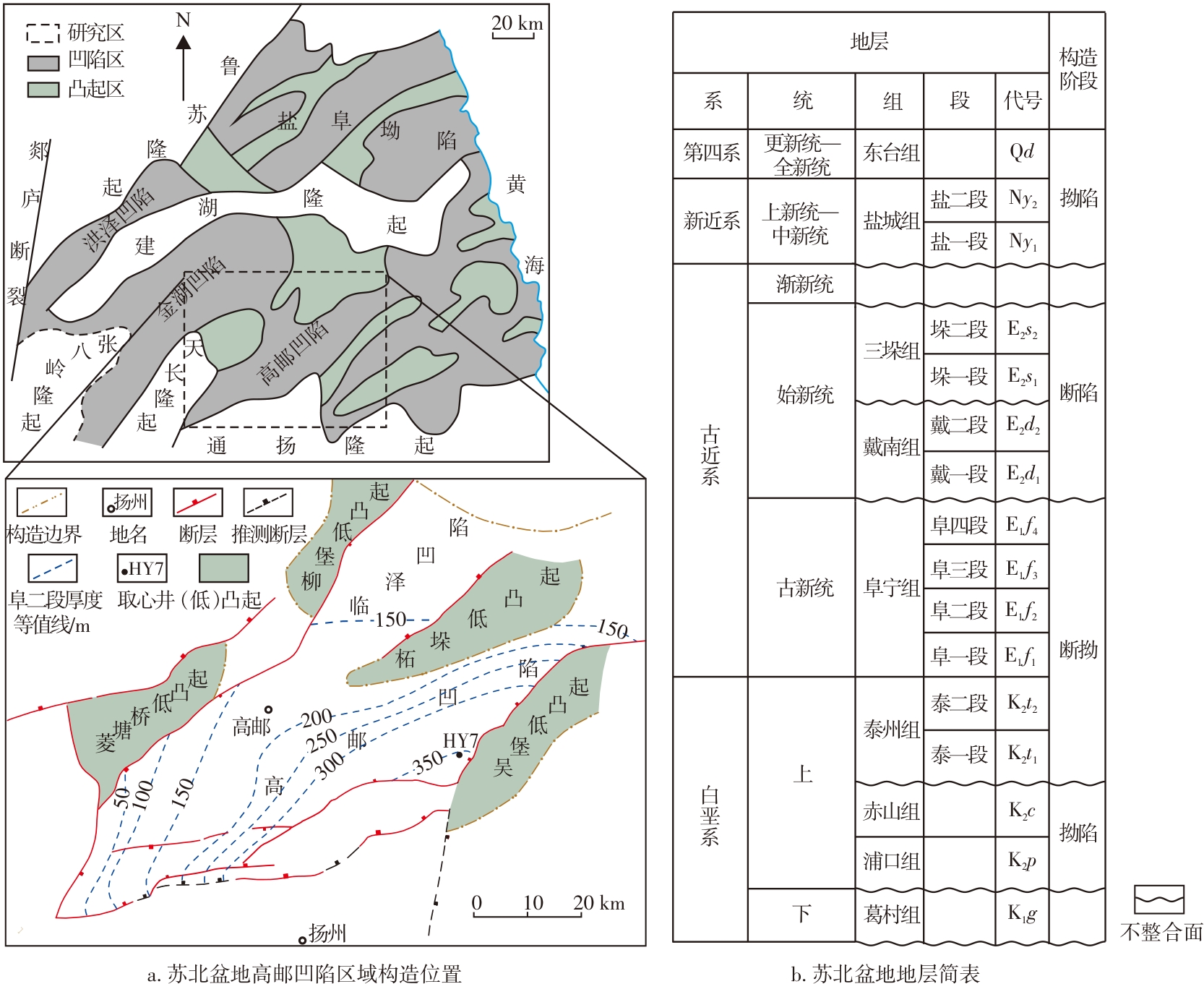
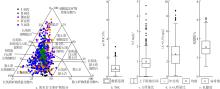
Fig.2
Major mineral components, and TOC, S1, S1+S2 and He porosity parameters of shale from well HY7 in second member of Funing Formation, Gaoyou Sag, Subei Basin"
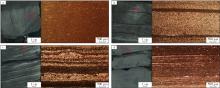
Fig.3
Core (left) and thin section (right) photos of typical bedding structures of well HY7 in second member of Funing Formation, Gaoyou Sag, Subei Basin"

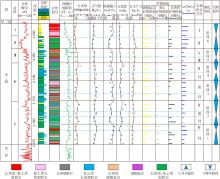
Fig.4
Sedimentary environment characteristics and classification of lithofacies combination types of well HY7 in second member of Funing Formation, Gaoyou Sag, Subei Basin"
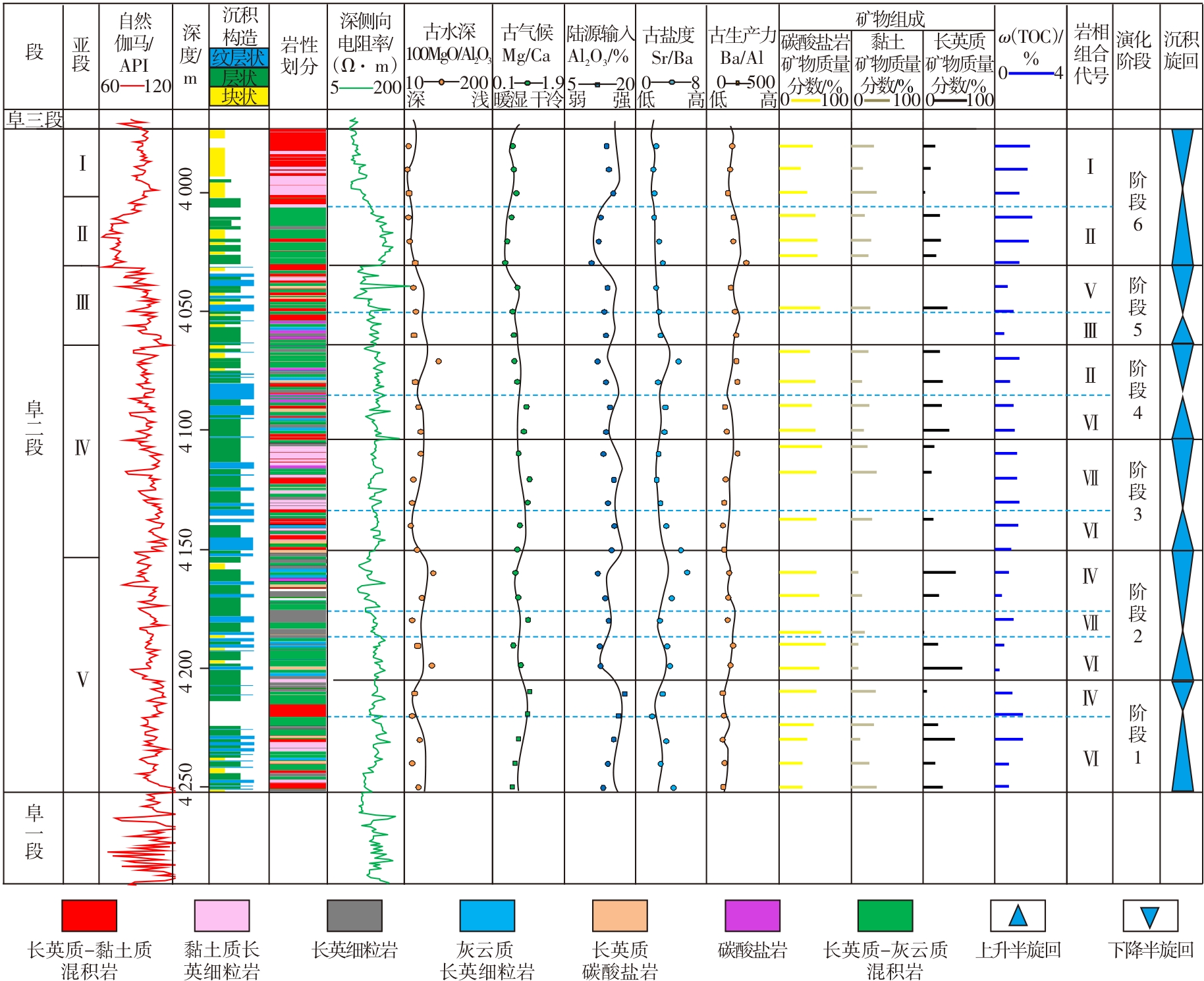
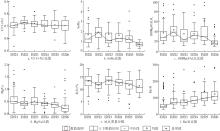
Fig.5
Box plots of geochemical parameters at different environmental evolution stages of second member of Funing Formation, Gaoyou Sag, Subei Basin"


Table 1
Comparison of evaluation parameters of lithofacies combination types of second member of Funing Formation, Gaoyou Sag, Subei Basin"
| 岩相组合代号 | 岩相类型 | 发育层段 | 厚度比/% | ω(TOC)/% | S1/ (mg/g) | S1+S2/ (mg/g) | 含油饱和指数/(mg/g) | 孔隙度/% | 力学脆性指数 |
|---|---|---|---|---|---|---|---|---|---|
| Ⅰ | 块状黏土质长英细粒岩、长英质-黏土质混积岩 | Ⅰ 亚段 | 11.66 | 1.58 | 0.85 | 4.59 | 54.59 | 3.71 | 30.75 |
| Ⅱ | 块状或层状长英质-灰质或白云质混积岩夹薄层长英质-黏土质混积岩 | Ⅱ、Ⅳ亚段 | 16.84 | 1.14 | 0.99 | 3.71 | 111.13 | 2.88 | 55.56 |
| Ⅲ | 层状碳酸盐岩、长英质-灰质或白云质混积岩互层 | Ⅲ亚段 | 4.90 | 0.69 | 1.07 | 2.88 | 150.43 | 3.32 | 60.84 |
| Ⅳ | 层状或纹层状的黏土质长英细粒岩或长英细砂岩、长英质-黏土质混积岩、长英质-灰质或白云质的混积岩,灰质或白云质英细粒岩互层 | Ⅴ亚段 | 14.70 | 0.51 | 0.66 | 1.46 | 121.86 | 2.57 | 45.45 |
| Ⅴ | 层状或纹层状长英质-黏土质混积岩、长英质-灰质或白云质混积岩互层 | Ⅳ亚段 | 6.92 | 1.19 | 1.01 | 4.31 | 101.54 | 4.00 | 52.60 |
| Ⅵ | 层状或纹层状长英质-灰质或白云质混积岩、灰质或白云质长英细粒岩夹薄层长英细粒岩、长英质-黏土质混积岩 | Ⅳ、Ⅴ亚段 | 30.22 | 0.70 | 1.12 | 2.35 | 140.19 | 3.01 | 54.67 |
| Ⅶ | 层状或纹层状的黏土质长英细粒岩或长英细粒岩夹薄层长英质-灰质或白云质混积岩、长英质-黏土质混积岩 | Ⅴ亚段 | 14.77 | 0.85 | 1.09 | 3.02 | 136.36 | 3.07 | 47.82 |
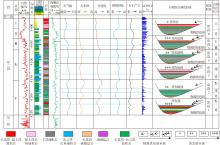
Fig.6
Vertical evolution models of sedimentary environment and lithofacies combination types of well HY7 in second member of Funing Formation, Gaoyou Sag, Subei Basin"

| [1] | 马永生, 蔡勋育, 赵培荣, 等. 中国陆相页岩油地质特征与勘探实践[J]. 地质学报, 2022, 96(1): 155-171. |
| MA Yongsheng, CAI Xunyu, ZHAO Peirong, et al. Geological characteristics and exploration practices of continental shale oil in China[J]. Acta Geologica Sinica, 2022, 96(1): 155-171. | |
| [2] | 何希鹏, 王凯, 何贵松, 等. 复杂构造带常压页岩气开发刻度区建立及其意义[J]. 天然气工业, 2025, 45(3): 16-35. |
| HE Xipeng, WANG Kai, HE Guisong, et al. Establishment of calibrated area of normal pressure shale gas development in complex structure belts and its significance[J]. Natural Gas Industry, 2025, 45(3): 16-35. | |
| [3] | 张海杰, 牟泳澄, 韩贵生, 等. 四川盆地大足地区上奥陶统五峰组—下志留统龙马溪组页岩气储层特征与分布规律[J]. 天然气勘探与开发, 2024, 47(4): 28-37. |
| ZHANG Haijie, MU Yongcheng, HAN Guisheng, et al. Shale gas reservoirs of the Upper Ordovician Wufeng Formation-Lower Silurian Longmaxi Formation, Dazu area, Sichuan Basin: Characteristics and distribution[J]. Natural Gas Exploration and Development, 2024, 47(4): 28-37. | |
| [4] | 白桦, 洪海涛, 邱玉超, 等. 基于地震相分析的四川盆地侏罗系凉高山组湖盆演化及页岩发育区预测[J]. 天然气勘探与开发, 2024, 47(6): 8-17. |
| BAI Hua, HONG Haitao, QIU Yuchao, et al. Seismic facies to analyze lacustrine-basin evolution and predict shale blocks extended into the Jurassic Lianggaoshan Formation, Sichuan Basin[J]. Natural Gas Exploration and Development, 2024, 47(6): 8-17. | |
| [5] | 孙平涛, 赵建忠, 刘强. 吉林油田页岩油水平井二开钻井关键技术及应用[J]. 天然气勘探与开发, 2024, 47(3): 111-117. |
| SUN Pingtao, ZHAO Jianzhong, LIU Qiang. Key second-spud horizontal-well technologies for shale oil in Jilin Oilfield and their application[J]. Natural Gas Exploration and Development, 2024, 47(3): 111-117. | |
| [6] | 任静思, 孔德蔚然, 刘军, 等. 川南页岩气地质工程协同研究平台建设初探[J]. 天然气勘探与开发, 2024, 47(3): 94-104. |
| REN Jingsi, KONG Deweiran, LIU Jun, et al. The geology-engineering collaborative platform established for shale gas, southern Sichuan Basin[J]. Natural Gas Exploration and Development, 2024, 47(3): 94-104. | |
| [7] | 沈童, 卢文涛, 郑爱维, 等. 四川盆地复兴地区侏罗系陆相页岩油可采储量评价方法[J]. 天然气勘探与开发, 2024, 47(5): 39-47. |
| SHEN Tong, LU Wentao, ZHENG Aiwei, et al. An integrated method for estimating recoverable reserves of Jurassic continental shale oil in Fuxing area, Sichuan Basin[J]. Natural Gas Exploration and Development, 2024, 47(5): 39-47. | |
| [8] | 王翔, 冯永超. 鄂尔多斯盆地南缘华北探区页岩油储层岩石力学特性实验研究[J]. 非常规油气, 2024, 11(1): 110-118. |
| WANG Xiang, FENG Yongchao. Experimental study on rock mechanical properties of shale oil reservoir in North China exploration, southern Ordos Basin[J]. Unconventional Oil & Gas, 2024, 11(1): 110-118. | |
| [9] | 张伟强. 渤南坳陷沙河街组页岩油藏水力裂缝穿层扩展规律研究[J]. 非常规油气, 2024, 11(2): 140-146. |
| ZHANG Weiqiang. Layer-crossing propagation law of hydraulic fracture in Shahejie Formation shale reservoir in Bonan Depression[J]. Unconventional Oil & Gas, 2024, 11(2): 140-146. | |
| [10] | 聂舟, 陈瑞华, 姜振学, 等. 长宁地区低阻页岩孔隙结构精细表征及分形研究[J]. 非常规油气, 2024, 11(1): 45-55. |
| NIE Zhou, CHEN Ruihua, JIANG Zhenxue, et al. Pore structure characterization and fractal study of low-resistivity shales in Changning area[J]. Unconventional Oil & Gas, 2024, 11(1): 45-55. | |
| [11] | 高攀明. 鄂尔多斯盆地吴起地区长7页岩油烃源岩特征及生排烃潜力[J]. 非常规油气, 2024, 11(3): 10-18. |
| GAO Panming. Characteristics and hydrocarbon generation and expulsion potential of Chang7 shale oil source rocks in Wuqi Area, Ordos Basin[J]. Unconventional Oil & Gas, 2024, 11(3): 10-18. | |
| [12] | 刘文慧, 马啸, 户瑞宁, 等. 海陆相页岩孔隙结构对比研究: 以龙马溪组和芦草沟组为例[J]. 非常规油气, 2024, 11(3): 35-48. |
| LIU Wenhui, MA Xiao, HU Ruining, et al. Comparative study on pore structure of marine and terrestrial shales: A case study of Longmaxi Formation and Lucaogou Formation[J]. Unconventional Oil & Gas, 2024, 11(3): 35-48. | |
| [13] | 段宏亮, 孙雅雄, 杨保良. 苏北盆地高邮凹陷古近系阜宁组二段页岩油富集主控因素[J]. 石油实验地质, 2024, 46(3): 441-450. |
| DUAN Hongliang, SUN Yaxiong, YANG Baoliang. Main controlling factors of shale oil enrichment in second member of Paleogene Funing Formation in Gaoyou Sag of Subei Basin[J]. Petroleum Geology & Experiment, 2024, 46(3): 441-450. | |
| [14] | 朱相羽, 段宏亮, 孙雅雄. 苏北盆地高邮凹陷古近系陆相页岩油勘探突破及意义[J]. 石油学报, 2023, 44(8): 1206-1221. |
| ZHU Xiangyu, DUAN Hongliang, SUN Yaxiong. Breakthrough and significance of Paleogene continental shale oil exploration in Gaoyou sag, Subei Basin[J]. Acta Petrolei Sinica, 2023, 44(8): 1206-1221. | |
| [15] | 张琬璐, 荆晓明. 海安凹陷曲塘次凹阜二段页岩油形成条件研究[J]. 非常规油气, 2024, 11(6): 34-43. |
| ZHANG Wanlu, JING Xiaoming. A study on formation conditions of shale oil in second member of Funing Formation in Qutang Sub-sag, Haian Sag[J]. Unconventional Oil & Gas, 2024, 11(6): 34-43. | |
| [16] | 孙龙德, 赵文智, 刘合, 等. 页岩油"甜点" 概念及其应用讨论[J]. 石油学报, 2023, 44(1): 1-13. |
| SUN Longde, ZHAO Wenzhi, LIU He, et al. Concept and application of "sweet spot" in shale oil[J]. Acta Petrolei Sinica, 2023, 44(1): 1-13. | |
| [17] | 焦方正, 邹才能, 杨智. 陆相源内石油聚集地质理论认识及勘探开发实践[J]. 石油勘探与开发, 2020, 47(6): 1067-1078. |
| JIAO Fangzheng, ZOU Caineng, YANG Zhi. Geological theory and exploration & development practice of hydrocarbon accumulation inside continental source kitchens[J]. Petroleum Exploration and Development, 2020, 47(6): 1067-1078. | |
| [18] | 郭旭升, 马晓潇, 黎茂稳, 等. 陆相页岩油富集机理探讨[J]. 石油与天然气地质, 2023, 44(6): 1333-1349. |
| GUO Xusheng, MA Xiaoxiao, LI Maowen, et al. Mechanisms for lacustrine shale oil enrichment in Chinese sedimentary basins[J]. Oil & Gas Geology, 2023, 44(6): 1333-1349. | |
| [19] | 赵贤正, 蒲秀刚, 周立宏, 等. 深盆湖相区页岩油富集理论、勘探技术及前景: 以渤海湾盆地黄骅坳陷古近系为例[J]. 石油学报, 2021, 42(2): 143-162. |
| ZHAO Xianzheng, PU Xiugang, ZHOU Lihong, et al. Enrichment theory, exploration technology and prospects of shale oil in lacustrine facies zone of deep basin: A case study of the Paleogene in Huanghua depression, Bohai Bay Basin[J]. Acta Petrolei Sinica, 2021, 42(2): 143-162. | |
| [20] | 林中凯, 张少龙, 李传华, 等. 湖相页岩油地层岩相组合类型划分及其油气勘探意义: 以博兴洼陷沙河街组为例[J]. 油气藏评价与开发, 2023, 13(1): 39-51. |
| LIN Zhongkai, ZHANG Shaolong, LI Chuanhua, et al. Types of shale lithofacies assemblage and its significance for shale oil exploration: A case study of Shahejie Formation in Boxing Sag[J]. Petroleum Reservoir Evaluation and Development, 2023, 13(1): 39-51. | |
| [21] | 庞小娇, 王贵文, 匡立春, 等. 沉积环境控制下的页岩岩相组合类型及测井表征: 以松辽盆地古龙凹陷青山口组为例[J]. 古地理学报, 2023, 25(5): 1156-1175. |
| PANG Xiaojiao, WANG Guiwen, KUANG Lichun, et al. Logging evaluation of lithofacies and their assemblage under control of sedimentary environment: A case study of the Qingshankou Formation in Gulong Sag, Songliao Basin[J]. Journal of Palaeogeography (Chinese Edition), 2023, 25(5): 1156-1175. | |
| [22] | 刘惠民, 王勇, 李军亮, 等. 济阳坳陷始新统页岩岩相发育主控因素及分布特征[J]. 古地理学报, 2023, 25(4): 752-767. |
| LIU Huimin, WANG Yong, LI Junliang, et al. Main controlling factors and distribution characteristics of shale lithofacies in the Eocene of Jiyang Depression[J]. Journal of Palaeogeography (Chinese Edition), 2023, 25(4): 752-767. | |
| [23] | 刘惠民, 张顺, 王学军, 等. 陆相断陷盆地页岩岩相组合类型及特征: 以济阳坳陷东营凹陷沙四上亚段页岩为例[J]. 地球科学, 2023, 48(1): 30-48. |
| LIU Huimin, ZHANG Shun, WANG Xuejun, et al. Types and characteristics of shale lithofacies combinations in continental faulted basins: A case study from upper sub-member of Es4 in Dongying Sag, Jiyang Depression[J]. Earth Science, 2023, 48(1): 30-48. | |
| [24] | 方志雄, 肖秋生, 张殿伟, 等. 苏北盆地陆相"断块型" 页岩油地质特征及勘探实践[J]. 石油与天然气地质, 2023, 44(6): 1468-1478. |
| FANG Zhixiong, XIAO Qiusheng, ZHANG Dianwei, et al. Geological characteristics and exploration of continental fault-block shale oil reservoirs in the Subei Basin[J]. Oil & Gas Geology, 2023, 44(6): 1468-1478. | |
| [25] | 严泽宇, 梁兵, 孙雅雄, 等. 苏北盆地高邮凹陷阜宁组二段深层页岩储层地应力方向及主控因素[J]. 石油实验地质, 2024, 46(6): 1187-1197. |
| YAN Zeyu, LIANG Bing, SUN Yaxiong, et al. In-situ stress orientation and main controlling factors of deep shale reservoirs in the second member of Paleogene Funing Formation in Gaoyou Sag, Subei Basin[J]. Petroleum Geology & Experiment, 2024, 46(6): 1187-1197. | |
| [26] | 李维, 朱筱敏, 段宏亮, 等. 苏北盆地高邮—金湖凹陷古近系阜宁组细粒沉积岩纹层特征与成因[J]. 古地理学报, 2020, 22(3): 469-482. |
| LI Wei, ZHU Xiaomin, DUAN Hongliang, et al. Characteristics and forming mechanism of laminae fine-grained sedimentary rock of the Paleogene Funing Formation in Gaoyou and Jinhu sags, Subei Basin[J]. Journal of Palaeogeography (Chinese Edition), 2020, 22(3): 469-482. | |
| [27] | 荆晓明. 苏北盆地溱潼凹陷古近系阜二段页岩油甜点评价[J]. 非常规油气, 2023, 10(3): 31-38. |
| JING Xiaoming. Evaluation of shale oil sweet spots in the second member of Paleogene Funing Formation in Qintong Sag, Subei Basin[J]. Unconventional Oil & Gas, 2023, 10(3): 31-38. | |
| [28] | 彭军, 曾垚, 杨一茗, 等. 细粒沉积岩岩石分类及命名方案探讨[J]. 石油勘探与开发, 2022, 49(1): 106-115. |
| PENG Jun, ZENG Yao, YANG Yiming, et al. Discussion on classification and naming scheme of fine-grained sedimentary rocks[J]. Petroleum Exploration and Development, 2022, 49(1): 106-115. | |
| [29] | FAN X J, LU Y B, LIU Z H, et al. Lacustrine shale lithofacies and depositional environment in the Paleocene second member of the Funing Formation, Subei Basin, China: Insights into shale oil development prospects[J]. Marine and Petroleum Geology, 2024, 164: 106849. |
| [30] | 逄淑伊, 操应长, 梁超. 渤海湾盆地东营凹陷沙四上亚段—沙三下亚段岩相特征及沉积环境: 以樊页1井为例[J]. 石油与天然气地质, 2019, 40(4): 799-809. |
| PANG Shuyi, CAO Yingchang, LIANG Chao. Lithofacies characteristics and sedimentary environment of Es 4U and Es 3L: A case study of well FY1 in Dongying Sag, Bohai Bay Basin[J]. Oil & Gas Geology, 2019, 40(4): 799-809. | |
| [31] | 许中杰, 程日辉, 张莉, 等. 华南陆缘晚三叠-早、中侏罗世海平面相对升降与古气候演化的地球化学记录[J]. 地球科学, 2012, 37(1): 113-124. |
| XU Zhongjie, CHENG Rihui, ZHANG Li, et al. The geochemistry records of sea-level relative movement and paleoclimatic evolution of the South China continental margin in Late Triassic-Early-Middle Jurassic[J]. Earth Science, 2012, 37(1): 113-124. | |
| [32] | 杨万芹, 王学军, 蒋有录, 等. 湖泊古气候的量化恢复及其对细粒沉积的影响: 以东营凹陷沙四段上亚段: 沙三段下亚段为例[J]. 油气地质与采收率, 2018, 25(2): 29-36. |
| YANG Wanqin, WANG Xuejun, JIANG Youlu, et al. Quantitative reconstruction of paleoclimate and its effects on fine-grained lacustrine sediments: A case study of the upper Es4 and lower Es3 in Dongying Sag[J]. Petroleum Geology and Recovery Efficiency, 2018, 25(2): 29-36. | |
| [33] | WEI X S, DENG Y, YAN D T, et al. Organic matter enrichment in Asia's Palaeolake controlled by the early and middle Eocene global warming and astronomically driven precessional climate[J]. Marine and Petroleum Geology, 2023, 154: 106342. |
| [34] | HUANG H, GAO Y, JONES M M, et al. Astronomical forcing of Middle Permian terrestrial climate recorded in a large paleolake in northwestern China[J]. Palaeogeography, Palaeoclimatology, Palaeoecology, 2020, 550: 109735. |
| [35] | 胡涛, 庞雄奇, 姜福杰, 等. 陆相断陷咸化湖盆有机质差异富集因素探讨: 以东濮凹陷古近系沙三段泥页岩为例[J]. 沉积学报, 2021, 39(1): 140-152. |
| HU Tao, PANG Xiongqi, JIANG Fujie, et al. Factors controlling differential enrichment of organic matter in saline lacustrine rift basin: A case study of third member Shahejie Fm in Dongpu Depression[J]. Acta Sedimentologica Sinica, 2021, 39(1): 140-152. | |
| [36] | 金芸芸, 李艳然, 李圯, 等. 陆相断陷咸化湖盆细粒沉积岩特征及沉积环境: 以泌阳凹陷核桃园组H3 Ⅲ亚段为例[J]. 断块油气田, 2024, 31(2): 289-298. |
| JIN Yunyun, LI Yanran, LI Yi, et al. Characteristics and sedimentary environment of fine-grained sedimentary rocks in continental rift-subsidence saline lacustrine basin: A case study of H3 Ⅲ Submember of Hetaoyuan Formation in Biyang Sag[J]. Fault-Block Oil & Gas Field, 2024, 31(2): 289-298. | |
| [37] | 熊小辉, 肖加飞. 沉积环境的地球化学示踪[J]. 地球与环境, 2011, 39(3): 405-414. |
| XIONG Xiaohui, XIAO Jiafei. Geochemical indicators of sedimentary environments: A summary[J]. Earth and Environment, 2011, 39(3): 405-414. | |
| [38] | 邱旭明, 刘玉瑞, 傅强. 苏北盆地上白垩统—第三系层序地层与沉积演化[M]. 北京: 地质出版社, 2006. |
| QIU Xuming, LIU Yurui, FU Qiang. Sequence stratigraphy and sedimentary evolution of Upper Cretaceous-Tertiary in Subei Basin[M]. Beijing: Geological Publishing House, 2006. |
| [1] | LI Chuhua. Genetic types and evolution models of abnormally high porosity in deep field of first member of Funing Formation, Gaoyou Sag, Subei Basin [J]. Petroleum Reservoir Evaluation and Development, 2026, 16(1): 162-173. |
| [2] | ZHU Xiangyu, YU Wenquan, ZHANG Jianwei, LI Chuhua, LI Heyong. Oil and gas enrichment mechanisms and key exploration technologies in deep layers of Subei Basin [J]. Petroleum Reservoir Evaluation and Development, 2025, 15(3): 357-372. |
| [3] | LI Shuyu, FAN Lixin, XIA Lianjun, ZHANG Juan, HE Junqing, ZHANG Hao, LI Yuezhe. Oil and gas accumulation characteristics of the third submember of the first member of Dainan Formation in deep layers of Gaoyou Sag, Subei Basin [J]. Petroleum Reservoir Evaluation and Development, 2025, 15(3): 455-462. |
| [4] | WANG Zhenguo, KANG Lifang, ZHANG Yafei, GUO Mingqiang. Sedimentary characteristics of Late Carboniferous to Early Permian coal measures and its control on symbiotic gas reservoirs in Shouyang area, Qinshui Basin [J]. Petroleum Reservoir Evaluation and Development, 2025, 15(2): 205-216. |
| [5] | TANG Lei, LIAO Wenting, XIA Lianjun, MA Jie, ZHANG Juan. Research on shale lamination types and logging characterization methods: A case study of the Funing Formation Member 2 in Gaoyou Sag, Subei Basin [J]. Petroleum Reservoir Evaluation and Development, 2025, 15(1): 28-39. |
| [6] | QIAN Shiyou, YANG Zhiqiang, XU Chen. Logging evaluation methods of low-organic matter fault-block shale oil in the Subei Basin and their application [J]. Petroleum Reservoir Evaluation and Development, 2025, 15(1): 19-27. |
| [7] | ZHONG Zhiguo, YU Wenquan, DUAN Hongliang, YANG Baoliang. Progress and research direction of shale oil exploration in complex fault blocks with low to medium TOC in Subei Basin [J]. Petroleum Reservoir Evaluation and Development, 2025, 15(1): 11-18. |
| [8] | ZHU Ziheng, REN Zhongxin, WANG Zhaozhou, GUO Shangtao, WANG Chaoguo, LIU Yujian, YANG Tao, WEI Bing. Sealing evaluation of Liuzhuang UGS in Subei Basin [J]. Petroleum Reservoir Evaluation and Development, 2024, 14(5): 805-813. |
| [9] | WANG Weiheng, GUO Xin, ZHANG Bin, XIA Weiwei. Development and performance evaluation of fracturing-displacement agent(HDFD) for shale oil: A case study of the second member of Funing Formation, Subei Basin [J]. Petroleum Reservoir Evaluation and Development, 2024, 14(5): 771-778. |
| [10] | ZHANG Fei, LI Qiuzheng, JIANG Aming, DENG Ci. Application of shale oil 2D NMR logging evaluation in Huazhuang area of Gaoyou Sag [J]. Petroleum Reservoir Evaluation and Development, 2024, 14(5): 707-713. |
| [11] | WANG Xinqian, YU Wenduan, MA Xiaodong, ZHOU Tao, TAI Hao, CUI Qinyu, DENG Kong, LU Yongchao, LIU Zhanhong. Identification and application of shale lithofacies based on conventional logging curves: A case study of the second member of Funing Formation in Qintong Sag, Subei Basin [J]. Petroleum Reservoir Evaluation and Development, 2024, 14(5): 699-706. |
| [12] | YU Wenduan, GAO Yuqiao, ZAN Ling, MA Xiaodong, YU Qilin, LI Zhipeng, ZHANG Zhihuan. Distribution of oil bearing and shale oil-rich strata in the second member of Funing Formation in Qintong Sag [J]. Petroleum Reservoir Evaluation and Development, 2024, 14(5): 688-698. |
| [13] | GAO Yuqiao, HE Xipeng, CHENG Xiong, TANG Xuan, HUA Caixia, ZAN Ling, ZHANG Peixian, CHEN Xuewu, PANG Yiwei. Discussion on high hydrocarbon generation efficiency of saline lacustrine source rocks with low TOC: A case study of the second member of Funing Formation, Qintong Sag, Subei Basin [J]. Petroleum Reservoir Evaluation and Development, 2024, 14(5): 678-687. |
| [14] | SUN Yaxiong, ZHU Xiangyu, QIU Xuming, LIU Qidong, DUAN Hongliang, QIU Yongfeng, GONG Lei. Characteristics of shale fractures in the second member of Funing Formation in Gaoyou Sag of Subei Basin [J]. Petroleum Reservoir Evaluation and Development, 2024, 14(3): 414-424. |
| [15] | WANG Xin, HAN Jianqiang, ZAN Ling, LI Xiaolong, PENG Xingping. Logging evaluation of shale oil in the second member of Funing Formation of Qintong Sag, Subei Basin [J]. Petroleum Reservoir Evaluation and Development, 2024, 14(3): 364-372. |
|
||
