
Petroleum Reservoir Evaluation and Development ›› 2026, Vol. 16 ›› Issue (1): 11-22.doi: 10.13809/j.cnki.cn32-1825/te.2025491
• Specialist Forum • Previous Articles Next Articles
LIN Qianguo1,2( ), WANG Jixing3
Received:2025-10-20
Online:2026-01-06
Published:2026-01-26
CLC Number:
LIN Qianguo,WANG Jixing. Review and prospects of simulation studies on leakage, migration, and transformation of geological CO2 storage[J]. Petroleum Reservoir Evaluation and Development, 2026, 16(1): 11-22.
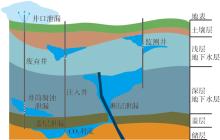
Fig.1
Schematic diagram of geological CO2 sequestration leakage pathways"
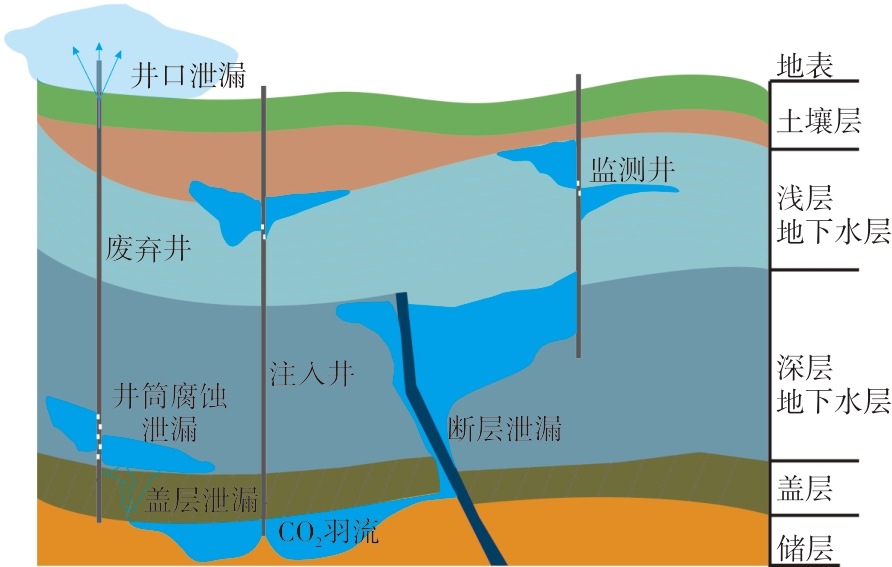
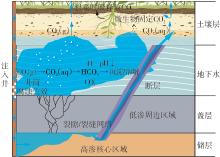
Fig.2
Schematic diagram of leakage, migration, transformation mechanisms of sequestered CO2 and environmental impact"
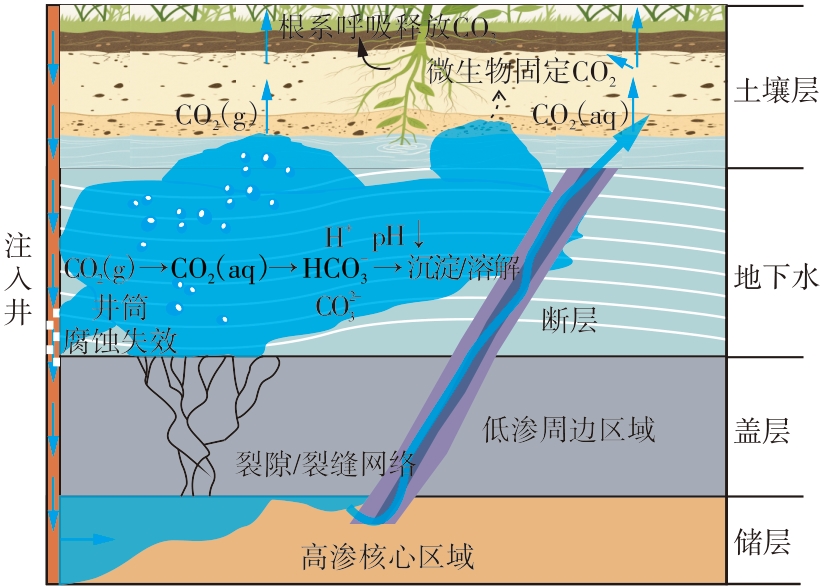
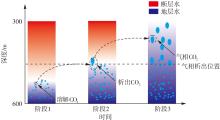
Fig.3
Mechanism of stratified fluid formation by CO2 migration along faults (modified from reference [92])"
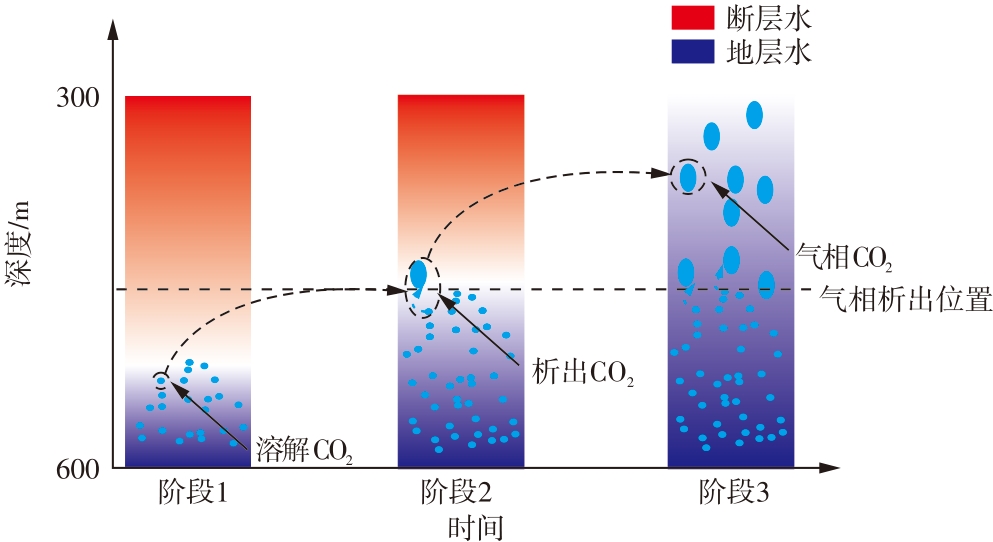
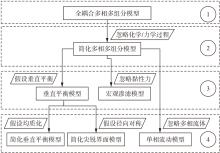
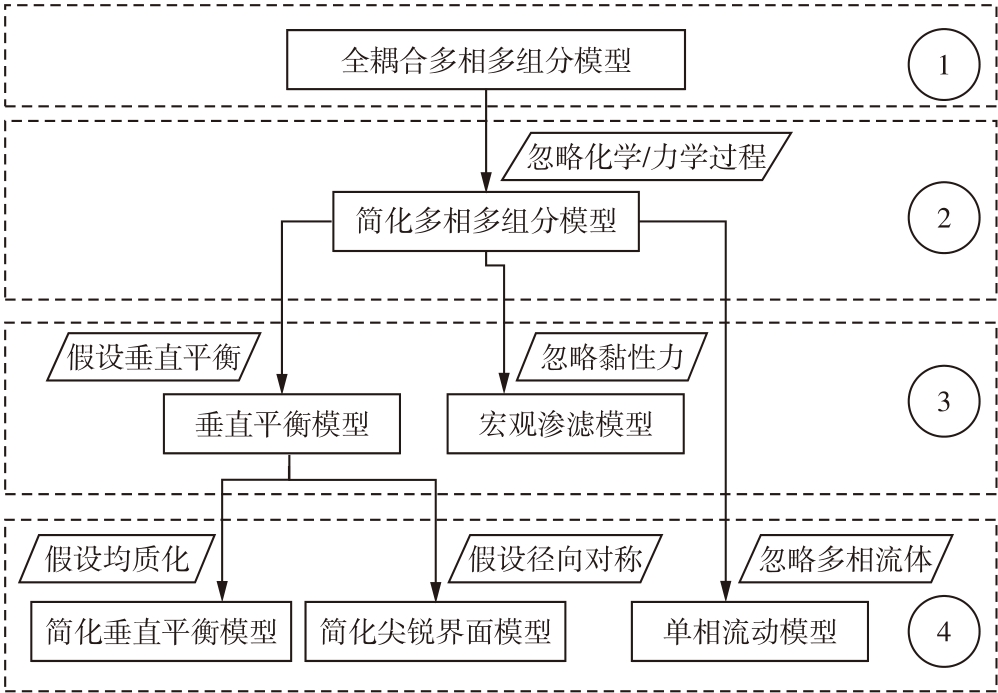
Fig.4
Complexity grading from fully coupled multi-field multiphase simulation models to single-phase simulation models"
| [1] | 姚红生, 邱伟生, 周德华, 等. 苏北盆地复杂断块油藏CCUS-EOR关键技术与实践[J]. 天然气工业, 2025, 45(9): 212-222. |
| YAO Hongsheng, QIU Weisheng, ZHOU Dehua, et al. Key technologies and practices of CCUS-EOR in complex fault-block reservoirs in the Subei Basin[J]. Natural Gas Industry, 2025, 45(9): 212-222. | |
| [2] | 何志勇, 郭本帅, 汪东, 等. CO2捕集和利用技术的应用与研发进展[J]. 油气藏评价与开发, 2024, 14(1): 70-75. |
| HE Zhiyong, GUO Benshuai, WANG Dong, et al. Application and research progress of CO2 capture and utilization technology[J]. Petroleum Reservoir Evaluation and Development, 2024, 14(1): 70-75. | |
| [3] | VISWANATHAN H S, PAWAR R J, STAUFFER P H, et al. Development of a hybrid process and system model for the assessment of wellbore leakage at a geologic CO2 sequestration site[J]. Environmental Science & Technology, 2008, 42(19): 7280-7286. |
| [4] | CARROLL S, CAREY J W, DZOMBAK D, et al. Review: Role of chemistry, mechanics, and transport on well integrity in CO2 storage environments[J]. International Journal of Greenhouse Gas Control, 2016, 49: 149-160. |
| [5] | 张志升, 吴向阳, 吴倩, 等. CO2驱油封存泄漏风险管理系统及应用研究[J]. 油气藏评价与开发, 2024, 14(1): 91-101. |
| ZHANG Zhisheng, WU Xiangyang, WU Qian, et al. Risk management system and application of CO2 flooding and sequestration leakage[J]. Petroleum Reservoir Evaluation and Development, 2024, 14(1): 91-101. | |
| [6] | JHA B, JUANES R. Coupled multiphase flow and poromechanics: A computational model of pore pressure effects on fault slip and earthquake triggering[J]. Water Resources Research, 2014, 50(5): 3776-3808. |
| [7] | VILARRASA V, RUTQVIST J. Thermal effects on geologic carbon storage[J]. Earth-Science Reviews, 2017, 165: 245-256. |
| [8] | KUANG N J, ZHOU J P, XIAN X F, et al. Geomechanical risk and mechanism analysis of CO2 sequestration in unconventional coal seams and shale gas reservoirs[J]. Rock Mechanics Bulletin, 2023, 2(4): 100079. |
| [9] | CHENG Y, LIU W, XU T, et al. Seismicity induced by geological CO2 storage: A review[J]. Earth-Science Reviews, 2023, 239: 104369. |
| [10] | 禹海涛, 张改, 闫晓. CO2封存诱发近断层活化机制研究进展[J]. 华侨大学学报(自然科学版), 2024, 45(2): 136-149. |
| YU Haitao, ZHANG Gai, YAN Xiao. Research progress on mechanism of near-fault reactivation induced by CO2 geological storage[J]. Journal of Huaqiao University (Natural Science), 2024, 45(2): 136-149. | |
| [11] | 王展鹏, 刘双星, 刘琦, 等. 地质封存过程中CO2注入对地层影响研究进展[J]. 油气藏评价与开发, 2025, 15(4): 632-640. |
| WANG Zhanpeng, LIU Shuangxing, LIU Qi, et al. Research progress on effects of CO2 injection on formations during geological storage[J]. Petroleum Reservoir Evaluation and Development, 2025, 15(4): 632-640. | |
| [12] | PATERSON L, ENNIS-KING J, SHARMA S. Observations of thermal and pressure transients in carbon dioxide wells[C]//Paper SPE-134881-MS presented at the SPE Annual Technical Conference and Exhibition, Florence, Italy, September 2010. |
| [13] | GOR G Y, PRÉVOST J H. Effect of CO2 injection temperature on caprock stability[J]. Energy Procedia, 2013, 37: 3727-3732. |
| [14] | GOR G Y, ELLIOT T R, PRÉVOST J H. Effects of thermal stresses on caprock integrity during CO2 storage[J]. International Journal of Greenhouse Gas Control, 2013, 12: 300-309. |
| [15] | VILARRASA V, RINALDI A P, RUTQVIST J. Long-term thermal effects on injectivity evolution during CO2 storage[J]. International Journal of Greenhouse Gas Control, 2017, 64: 314-322. |
| [16] | SALIMZADEH S, PALUSZNY A, ZIMMERMAN R W. Effect of cold CO2 injection on fracture apertures and growth[J]. International Journal of Greenhouse Gas Control, 2018, 74: 130-141. |
| [17] | LUO Z, BRYANT S, MECKEL T. Application of improved injection well temperature model to cranfield measurements[J]. Energy Procedia, 2013, 37: 4128-4135. |
| [18] | FERRONATO M, GAMBOLATI G, JANNA C, et al. Geomechanical issues of anthropogenic CO2 sequestration in exploited gas fields[J]. Energy Conversion and Management, 2010, 51(10): 1918-1928. |
| [19] | MIOCIC J M, JOHNSON G, BOND C E. Uncertainty in fault seal parameters: Implications for CO2 column height retention and storage capacity in geological CO2 storage projects[J]. Solid Earth, 2019, 10(3): 951-967. |
| [20] | RUTQVIST J. The geomechanics of CO2 storage in deep sedimentary formations[J]. Geotechnical and Geological Engineering, 2012, 30(3): 525-551. |
| [21] | PAN D, GALLI G. The fate of carbon dioxide in water-rich fluids under extreme conditions[J]. Science Advances, 2016, 2(10): e1601278. |
| [22] | RAZA A, GHOLAMI R, SARMADIVALEH M, et al. Integrity analysis of CO2 storage sites concerning geochemical-geomechanical interactions in saline aquifers[J]. Journal of Natural Gas Science and Engineering, 2016, 36: 224-240. |
| [23] | GOODARZI S, SETTARI A, KEITH D. Geomechanical modeling for CO2 storage in wabamun lake area of alberta, canada[J]. Energy Procedia, 2011, 4: 3399-3406. |
| [24] | RUTQVIST J, BIRKHOLZER J T, TSANG C F. Coupled reservoir–geomechanical analysis of the potential for tensile and shear failure associated with CO2 injection in multilayered reservoir–caprock systems[J]. International Journal of Rock Mechanics and Mining Sciences, 2008, 45(2): 132-143. |
| [25] | SHI J Q, DURUCAN S. A coupled reservoir-geomechanical simulation study of CO2 storage in a nearly depleted natural gas reservoir[J]. Energy Procedia, 2009, 1(1): 3039-3046. |
| [26] | TILLNER E, SHI J Q, BACCI G, et al. Coupled dynamic flow and geomechanical simulations for an integrated assessment of CO2 storage impacts in a saline aquifer[J]. Energy Procedia, 2014, 63: 2879-2893. |
| [27] | United States Environmental Protection Agency. Determination of Maximum Injection Pressure[R]. Washington, DC: United States Environmental Protection Agency, 1994. |
| [28] | CHOPRA S, HUFFMAN A R. Velocity determination for pore-pressure prediction[J]. The Leading Edge, 2006, 25(12): 1502-1515. |
| [29] | VILARRASA V, SILVA O, CARRERA J, et al. Liquid CO2 injection for geological storage in deep saline aquifers[J]. International Journal of Greenhouse Gas Control, 2013, 14: 84-96. |
| [30] | RAZA A, GHOLAMI R, SARMADIVALEH M. Feasibility of limestone reservoirs as a carbon dioxide storage site: An experimental study[J]. AAPG Bulletin, 2020, 103(1): 83-96. |
| [31] | GARCIA-RIOS M, LUQUOT L, SOLER J M, et al. Influence of the flow rate on dissolution and precipitation features during percolation of CO2-rich sulfate solutions through fractured limestone samples[J]. Chemical Geology, 2015, 414: 95-108. |
| [32] | HEMME C, VAN BERK W. Change in caprock porosity triggered by pressure and temperature dependent CO2-water-rock interactions in CO2 storage systems[J]. Petroleum, 2017, 3(1): 96-108. |
| [33] | GHARBI O, BIJELJIC B, BOEK E, et al. Changes in pore structure and connectivity induced by co2 injection in carbonates: A combined pore-scale approach[J]. Energy Procedia, 2013, 37: 5367-5378. |
| [34] | EMBERLEY S, HUTCHEON I, SHEVALIER M, et al. Geochemical monitoring of fluid-rock interaction and CO2 storage at the Weyburn CO2-injection enhanced oil recovery site, Saskatchewan, Canada[J]. Energy, 2004, 29(9-10): 1393-1401. |
| [35] | LI D, REN S, RUI H. CO2 leakage behaviors in typical caprock-aquifer system during geological storage process[J]. ACS Omega, 2019, 4(18): 17874-17879. |
| [36] | ESPINOZA D N, KIM S H, SANTAMARINA J C. CO2 geological storage: Geotechnical implications[J]. KSCE Journal of Civil Engineering, 2011, 15(4): 707-719. |
| [37] | SEYYEDI M, MAHMUD H K B, VERRALL M, et al. Pore structure changes occur during co2 injection into carbonate reservoirs[J]. Scientific Reports, 2020, 10: 3624. |
| [38] | ZHANG M, BACHU S. Review of integrity of existing wells in relation to CO2 geological storage: What do we know?[J]. International Journal of Greenhouse Gas Control, 2011, 5(4): 826-840. |
| [39] | SCHWIND B E, PAYNE M L, OTTEN G K, et al. Development of leak resistance in industry standard OCTG connections using finite element analysis and full scale testing[C]//Paper OTC-13050-MS presented at the Offshore Technology Conference, Houston, Texas, April 2001. |
| [40] | CHOI Y S, YOUNG D, NEŠIĆ S, et al. Wellbore integrity and corrosion of carbon steel in CO2 geologic storage environments: A literature review[J]. International Journal of Greenhouse Gas Control, 2013, 16: S70-S77. |
| [41] | ABID K, GHOLAMI R, CHOATE P, et al. A review on cement degradation under CO2-rich environment of sequestration projects[J]. Journal of Natural Gas Science and Engineering, 2015, 27: 1149-1157. |
| [42] | IEA. Long term integrity of CO2 storage-well abandonment[R]. Greenhouse Gas R&D Programme (IEA GHG), 2009. |
| [43] | DANIEL R F, KALDI J G. Evaluating seal capacity of caprocks and intraformational barriers for the geosequestration of co2 [C]//PESA Eastern Australian Basins Symposium III, Sydney, Australia, September 2008. |
| [44] | GHOLAMI R, RAZA A, IGLAUER S. Leakage risk assessment of a CO2 storage site: A review[J]. Earth-Science Reviews, 2021, 223: 103849. |
| [45] | UMAR B A, GHOLAMI R, RAZA A, et al. A study on the surface wettability of clastic rocks with potential application for CO2 storage sites[J]. Natural Resources Research, 2020, 29(3): 2051-2061. |
| [46] | WANG Z, SMALL M J. A Bayesian approach to CO2 leakage detection at saline sequestration sites using pressure measurements[J]. International Journal of Greenhouse Gas Control, 2014, 30: 188-196. |
| [47] | BUSCH A, KAMPMAN N. Geological Carbon Storage: Subsurface Seals and Caprock Integrity[M]. Hoboken: John Wiley & Sons, Inc, 2018. |
| [48] | 张森琦, 刁玉杰, 程旭学, 等. 二氧化碳地质储存逃逸通道及环境监测研究[J]. 冰川冻土, 2010, 32(6): 1251-1261. |
| ZHANG Senqi, DIAO Yujie, CHENG Xuxue, et al. CO2 geological storage leakage routes and environment monitoring[J]. Journal of Glaciology and Geocryology, 2010, 32(6): 1251-1261. | |
| [49] | BIRKHOLZER J T, ZHOU Q, TSANG C F. Large-scale impact of CO2 storage in deep saline aquifers: A sensitivity study on pressure response in stratified systems[J]. International Journal of Greenhouse Gas Control, 2009, 3(2): 181-194. |
| [50] | WANG J G, JU Y, GAO F, et al. A simple approach for the estimation of CO2 penetration depth into a caprock layer[J]. Journal of Rock Mechanics and Geotechnical Engineering, 2016, 8(1): 75-86. |
| [51] | KIVI I R, MAKHNENKO R Y, VILARRASA V. Two-phase flow mechanisms controlling CO2 intrusion into shaly caprock[J]. Transport in Porous Media, 2022, 141(3): 771-798. |
| [52] | CRUZ F, DANG S, CURTIS M, et al. Diffusive leakage of scCO2 in shaly caprocks: Effect of geochemical reactivity and anisotropy[J]. SPE Journal, 2024, 29(9): 5087-5100. |
| [53] | KIM H, MAKHNENKO R Y. Characterization of multiphase flow in shaly caprock for geologic CO2 storage[J]. Advances in Water Resources, 2023, 182: 104570. |
| [54] | DENG H, STAUFFER P H, DAI Z, et al. Simulation of industrial-scale CO2 storage: Multi-scale heterogeneity and its impacts on storage capacity, injectivity and leakage[J]. International Journal of Greenhouse Gas Control, 2012, 10: 397-418. |
| [55] | LIU B, ZHANG Y. CO2 modeling in a deep saline aquifer: A predictive uncertainty analysis using design of experiment[J]. Environmental Science & Technology, 2011, 45(8): 3504-3510. |
| [56] | WANG D, ZHAO M, SONG Y, et al. Influence of capillary pressure and injection rate as well as heterogeneous and anisotropic permeability on CO2 transport and displacement efficiency in water-saturated porous media[J]. Energy Procedia, 2013, 37: 3945-3951. |
| [57] | THOMAS J A, MCGAUGHEY A J H. Reassessing fast water transport through carbon nanotubes[J]. Nano Letters, 2008, 8(9): 2788-2793. |
| [58] | FALK K, COASNE B, PELLENQ R, et al. Subcontinuum mass transport of condensed hydrocarbons in nanoporous media[J]. Nature Communications, 2015, 6: 6949. |
| [59] | 李荣. 碳封存条件下多孔结构内多相流动机理与运移规律研究[D]. 北京: 清华大学, 2017. |
| LI Rong. Investigation on multiphase flow in porous media under carbon geological sequestration conditions[D]. Beijing: Tsinghua University, 2017. | |
| [60] | 高帅, 魏宁, 李小春, 等. 层状非均质性对CO2在盖层中迁移泄漏规律的影响[J]. 岩土力学, 2017, 38(11): 3287-3294. |
| GAO Shuai, WEI Ning, LI Xiaochun, et al. Effect of layered heterogeneity on CO2 migration and leakage mechanism in the caprock[J]. Rock and Soil Mechanics, 2017, 38(11): 3287-3294. | |
| [61] | WEBER U W, RINALDI A P, ROQUES C, et al. In-situ experiment reveals CO2 enriched fluid migration in faulted caprock[J]. Scientific Reports, 2023, 13: 170006. |
| [62] | NOORAIEPOUR M, FAZELI H, MIRI R, et al. Effect of CO2 phase states and flow rate on salt precipitation in shale caprocks: A microfluidic study[J]. Environmental Science & Technology, 2018, 52(10): 6050-6060. |
| [63] | 马瑾. 地质封存条件下超临界二氧化碳运移规律研究[D]. 北京: 清华大学, 2013. |
| MA Jin. Researches on the migration of supercritical CO2 on geological storage conditions[D]. Beijing: Tsinghua University, 2013. | |
| [64] | 孙会珠, 朱玉双, 魏勇, 等. CO2驱酸化溶蚀作用对原油采收率的影响机理[J]. 岩性油气藏, 2020, 32(4): 136-142. |
| SUN Huizhu, ZHU Yushuang, WEI Yong, et al. Influence mechanism of acidification on oil recovery during CO2 flooding[J]. Lithologic Reservoirs, 2020, 32(4): 136-142. | |
| [65] | 郭冀隆. 二氧化碳地质封存过程中CO2—水—岩相互作用实验研究[D]. 北京: 中国地质大学(北京), 2017. |
| GUO Jilong. Experimental studies on CO2-water-rock interactions under geological CO2 storage conditions[D]. Beijing: China University of Geosciences (Beijing), 2017. | |
| [66] | BIRKHOLZER J T, ZHOU Q. Basin-scale hydrogeologic impacts of CO2 storage: Capacity and regulatory implications[J]. International Journal of Greenhouse Gas Control, 2009, 3(6): 745-756. |
| [67] | NICOT J P. Evaluation of large-scale CO2 storage on fresh-water sections of aquifers: An example from the Texas Gulf Coast Basin[J]. International Journal of Greenhouse Gas Control, 2008, 2(4): 582-593. |
| [68] | BRICKER S H, BARKWITH A, MACDONALD A M, et al. Effects of CO2 injection on shallow groundwater resources: A hypothetical case study in the Sherwood Sandstone aquifer, UK[J]. International Journal of Greenhouse Gas Control, 2012, 11: 337-348. |
| [69] | KHARAKA Y K, THORDSEN J J, KAKOUROS E, et al. Changes in the chemistry of shallow groundwater related to the 2008 injection of CO2 at the ZERT field site, Bozeman, Montana[J]. Environmental Earth Sciences, 2010, 60(2): 273-284. |
| [70] | PETER A, LAMERT H, BEYER M, et al. Investigation of the geochemical impact of CO2 on shallow groundwater: Design and implementation of a CO2 injection test in Northeast Germany[J]. Environmental Earth Sciences, 2012, 67(2): 335-349. |
| [71] | KHARAKA Y K, COLE D R, HOVORKA S D, et al. Gas-water-rock interactions in Frio Formation following CO2 injection: Implications for the storage of greenhouse gases in sedimentary basins[J]. Geology, 2006, 34(7): 577-580. |
| [72] | ZHENG L, SPYCHER N. Modeling the potential impacts of CO2 sequestration on shallow groundwater: The fate of trace metals and organic compounds before and after leakage stops[J]. Greenhouse Gases: Science and Technology, 2018, 8(1): 161-184. |
| [73] | OLDENBURG C M, UNGER A J A. On leakage and seepage from geologic carbon sequestration sites: Unsaturated zone attenuation[J]. Vadose Zone Journal, 2003, 2(3): 287-296. |
| [74] | LU J, PARTIN J W, HOVORKA S D, et al. Potential risks to freshwater resources as a result of leakage from CO2 geological storage: a batch-reaction experiment[J]. Environmental Earth Sciences, 2010, 60(2): 335-348. |
| [75] | HARVEY O R, QAFOKU N P, CANTRELL K J, et al. Geochemical implications of gas leakage associated with geologic CO2 storage: A qualitative review[J]. Environmental Science & Technology, 2013, 47(1): 23-36. |
| [76] | MOONIS M, HE W, KIM Y, et al. Effect of potential CO2 leakage from carbon capture and storage sites on soil and leachate chemistry[J]. KSCE Journal of Civil Engineering, 2017, 21(5): 1640-1647. |
| [77] | GUPTA P K, YADAV B. Leakage of CO2 from geological storage and its impacts on fresh soil–water systems: A review[J]. Environmental Science and Pollution Research, 2020, 27(12): 12995-13018. |
| [78] | HE W, YOO G, MOONIS M, et al. Impact assessment of high soil CO2 on plant growth and soil environment: A greenhouse study[J]. PeerJ, 2019, 7: e6311. |
| [79] | SEYEDI D M, VU M N, POUYA A. A two-scale hydromechanical model for fault zones accounting for their heterogeneous structure[J]. Computers and Geotechnics, 2015, 68: 8-16. |
| [80] | AKINNIKAWE O, EHLIG-ECONOMIDES C A. Geologic model and fluid flow simulation of Woodbine aquifer CO2 sequestration[J]. International Journal of Greenhouse Gas Control, 2016, 49: 1-13. |
| [81] | ZHANG L, JIANG M, YANG Q, et al. Evolution of fault-induced salt precipitation due to convection of CO2 and brine along fault during CO2 storage in multilayered saline aquifer-caprock[J]. Energy, 2023, 278: 127758. |
| [82] | ROMANO V, BIGI S, PARK H, et al. A numerical model for gas CO2 migration in a fault zone[J]. Petroleum Geoscience, 2023, 29(3): petgeo2022092. |
| [83] | NAKAJIMA T, XUE Z, CHIYONOBU S, et al. Numerical simulation of CO2 leakage along fault system for the assessment of environmental impacts at CCS site[J]. Energy Procedia, 2014, 63: 3234-3241. |
| [84] | FALTA R W, ZUO L, BENSON S M. Migration of exsolved CO2 following depressurization of saturated brines[J]. Greenhouse Gases: Science and Technology, 2013, 3(6): 503-515. |
| [85] | CURRENTI G, CANTUCCI B, MONTEGROSSI G, et al. CO2 leakage scenarios in shale overburden[J]. Minerals, 2023, 13(8): 1016. |
| [86] | PLAMPIN M R, ILLANGASEKARE T, SAKAKI T, et al. Experimental study of gas evolution in heterogeneous shallow subsurface formations during leakage of stored CO2 [J]. International Journal of Greenhouse Gas Control, 2014, 22: 47-62. |
| [87] | PORTER M L, PLAMPIN M R, PAWAR R, et al. CO2 leakage in shallow aquifers: A benchmark modeling study of CO2 gas evolution in heterogeneous porous media[J]. International Journal of Greenhouse Gas Control, 2015, 39: 51-61. |
| [88] | ZUO L, KREVOR S, FALTA R W, et al. An experimental study of CO2 exsolution and relative permeability measurements during CO2 saturated water depressurization[J]. Transport in Porous Media, 2012, 91(2): 459-478. |
| [89] | ZUO L, ZHANG C, FALTA R W, et al. Micromodel investigations of CO2 exsolution from carbonated water in sedimentary rocks[J]. Advances in Water Resources, 2013, 53: 188-197. |
| [90] | ZUO L, AJO-FRANKLIN J B, VOLTOLINI M, et al. Pore-scale multiphase flow modeling and imaging of CO2 exsolution in sandstone[J]. Journal of Petroleum Science and Engineering, 2017, 155: 63-77. |
| [91] | XU R, LUO S, JIANG P. Pore scale numerical simulation of supercritical CO2 injecting into porous media containing water[J]. Energy Procedia, 2011, 4: 4418-4424. |
| [92] | WANG J X, LI Y, LIN Q G, et al. A two-phase layered model for simulating leakage along faults considering the blocking effect of CO2 exsolution[J/OL]. Greenhouse Gases: Science and Technology, 2025, (2025-10-28)[2025-10-30]. . |
| [93] | PARK J, PARK S S, CHO J, et al. Analysis on caprock and aquifer properties related with leakage during CO2 storage[J]. Geosystem Engineering, 2016, 19(4): 188-196. |
| [94] | HAN G, HAN W S, KIM K Y, et al. Roles of fault structures and regional formations on CO2 migration and distribution in shallow saline aquifer in Green River, Utah[J]. Journal of Hydrology, 2019, 570: 786-801. |
| [95] | GASDA S E, NILSEN H M, DAHLE H K, et al. Effective models for CO2 migration in geological systems with varying topography[J]. Water Resources Research, 2012, 48(10): 2012WR012264. |
| [96] | WIEGERS C E, SCHÄFER D. Numerical simulations of spreading scenarios of highly mineralized water in shallow freshwater aquifers[J]. Grundwasser-Zeitschrift der Fachsektion Hydrogeologie, 2015, 20: 85-95. |
| [97] | MACMINN C W, SZULCZEWSKI M L, JUANES R. CO2 migration in saline aquifers. Part 1. Capillary trapping under slope and groundwater flow[J]. Journal of Fluid Mechanics, 2010, 662: 329-351. |
| [98] | LIU J, YANG F, CHONG S, et al. Modeling CO2 migration in a site-specific shallow subsurface under complex hydrodynamics[J]. International Journal of Greenhouse Gas Control, 2021, 112: 103483. |
| [99] | GASPARINI A, CREDOZ A, GRANDIA F, et al. Experimental and numerical modeling of CO2 leakage in the vadose zone[J]. Greenhouse Gases: Science and Technology, 2015, 5(6): 732-755. |
| [100] | BANDILLA K W, CELIA M A, BIRKHOLZER J T, et al. Multiphase modeling of geologic carbon sequestration in saline aquifers[J]. Groundwater, 2015, 53(3): 362-377. |
| [101] | CELIA M A, NORDBOTTEN J M. How simple can we make models for CO2 injection, migration, and leakage?[J]. Energy Procedia, 2011, 4: 3857-3864. |
| [102] | CHEN X, JIANG M, XU Z. Pore-scale study of heat and mass transfer in different pore throats of porous media with reactive transport[J]. Journal of Porous Media, 2022, 25(10): 47-65. |
| [103] | KHANAL A, KHAN M I, SHAHRIAR M F. Comprehensive parametric study of CO2 sequestration in deep saline aquifers[J]. Chemical Engineering Science, 2024, 287: 119734. |
| [104] | CAI M, SU Y, ELSWORTH D, et al. Hydro-mechanical-chemical modeling of sub-nanopore capillary-confinement on CO2-CCUS-EOR[J]. Energy, 2021, 225: 120203. |
| [105] | OLDENBURG C M, UNGER A J A. Carbon dioxide capture for storage in deep geologic formations[M]. Amsterdam: Elsevier, 2005. |
| [106] | OLDENBURG C M, UNGER A J A. Coupled vadose zone and atmospheric surface-layer transport of carbon dioxide from geologic carbon sequestration sites[J]. Vadose Zone Journal, 2004, 3(3): 848-857. |
| [107] | BASIRAT F, SHARMA P, FAGERLUND F, et al. Experimental and modeling investigation of CO2 flow and transport in a coupled domain of porous media and free flow[J]. International Journal of Greenhouse Gas Control, 2015, 42: 461-470. |
| [108] | ALTEVOGT A S, CELIA M A. Numerical modeling of carbon dioxide in unsaturated soils due to deep subsurface leakage[J]. Water Resources Research, 2004, 40(3): 2003WR002848. |
| [109] | FARAJZADEH R, ZITHA P L J, BRUINING J. Enhanced mass transfer of CO2 into water: Experiment and modeling[J]. Industrial & Engineering Chemistry Research, 2009, 48(13): 6423-6431. |
| [110] | NGHIEM L, SAMMON P, GRABENSTETTER J, et al. Modeling CO2 storage in aquifers with a fully-coupled geochemical EOS compositional simulator[C]// Paper SPE-89474-MS presented at the SPE/DOE Symposium on Improved Oil Recovery, Tulsa, Oklahoma, April 2004. |
| [111] | BACON D H, QAFOKU N P, DAI Z, et al. Modeling the impact of carbon dioxide leakage into an unconfined, oxidizing carbonate aquifer[J]. International Journal of Greenhouse Gas Control, 2016, 44: 290-299. |
| [112] | ZHENG L, SPYCHER N, BIANCHI M, et al. Impacts of elevated dissolved CO2 on a shallow groundwater system: Reactive transport modeling of a controlled-release field test[J]. Chemical Geology, 2016: 447: 117-132. |
| [113] | SZABÓ Z, GÁL N E, KUN É, et al. Geochemical modeling possibilities of CO2 and brine inflow to freshwater aquifers[J]. Central European Geology, 2017, 60(3): 289-298. |
| [114] | XIAO T, DAI Z, MCPHERSON B, et al. Reactive transport modeling of arsenic mobilization in shallow groundwater: Impacts of CO2 and brine leakage[J]. Geomechanics and Geophysics for Geo-Energy and Geo-Resources, 2017, 3(3): 339-350. |
| [115] | SZABÓ Z, GÁL N E, KUN É, et al. Accessing effects and signals of leakage from a CO2 reservoir to a shallow freshwater aquifer by reactive transport modelling[J]. Environmental Earth Sciences, 2018, 77(12): 1-12. |
| [116] | BIE H, YANG C, LIU P. Assessing groundwater monitoring strategy for leakage detection in the Texas Gulf Coast Aquifer (USA) at a hypothetical CO2 storage site: A reactive transport modeling approach[J]. Hydrogeology Journal, 2019, 27(2): 553-566. |
| [117] | ROSSI L, LOISY C, CEREPI A, et al. Impact of a CO2 leak on the release of major and trace elements according to groundwater flow conditions in a shallow freshwater carbonate aquifer: In-situ experiments and modelling[J]. International Journal of Greenhouse Gas Control, 2024, 132: 104042. |
| [118] | 张志升, 吴向阳, 吴倩, 等. CO2 驱油封存泄漏风险管理系统及应用研究[J]. 油气藏评价与开发, 2024, 14(1): 91-101. |
| ZHANG Zhisheng, WU Xiangyang, WU Qian, et al. Risk management system and application of CO2 flooding and sequestration leakage[J]. Petroleum Reservoir Evaluation and Development, 2024, 14(1): 91-101. |
| [1] | SHI Hui, XIE Tiancheng, LIU Ziliang, JIANG Zhikun, WEI Yingchun. Numerical simulation study on influence of coal fines migration on porosity and permeability in cataclastic coal [J]. Petroleum Reservoir Evaluation and Development, 2025, 15(6): 1025-1033. |
| [2] | CHE Yang, DONG Jingnan, CHEN Chunyu, FANG Mingxing, TAN Maojin, TANG Weihong. Research and validation of underground positioning for open-hole old wells using acoustic remote detection technology [J]. Petroleum Reservoir Evaluation and Development, 2025, 15(6): 1112-1120. |
| [3] | QI Huaiyan, YANG Guobin, ZHU Yadi, DENG Mingxin, GENG Shaoyang, TIAN Weichao. Study on imbibition mechanisms in tight oil reservoirs based on nuclear magnetic resonance and pore-scale simulation [J]. Petroleum Reservoir Evaluation and Development, 2025, 15(5): 824-833. |
| [4] | SUN Qiufen, QIN Jiazheng, FENG Qiao, QIAO Yu, LIU Yaxin, ZHAO Qiyang, XU Liang, YAN Chun. A machine learning-based method for recovery rate prediction in fractured water-driven gas reservoirs [J]. Petroleum Reservoir Evaluation and Development, 2025, 15(5): 834-843. |
| [5] | WANG Shuoshi, JI Qiang, GUO Ping, LIU Huang, WEN Lianhui, XU Ruifeng, WANG Zhouhua, ZHANG Ruixu. Applicability of LARSEN & SKAUGE relative permeability hysteresis model in high-temperature and high-pressure CO2-water alternating injection experiments [J]. Petroleum Reservoir Evaluation and Development, 2025, 15(4): 613-624. |
| [6] | SUN Dongsheng, ZHANG Shunkang, WANG Zhilin, GE Zhengjun, LIN Bo. Calculation method for CO2 geological storage capacity of fault-block traps in Subei Basin based on safety considerations [J]. Petroleum Reservoir Evaluation and Development, 2025, 15(4): 641-645. |
| [7] | ZHU Suyang, PENG Zhen, DI Yunting, PENG Xiaolong, LIU Dongchen, GUAN Wenjie. Research progress on shale gas productivity evaluation: concepts, methods and future directions [J]. Petroleum Reservoir Evaluation and Development, 2025, 15(3): 488-499. |
| [8] | CHEN Xingming, QIAN Yanghui, CHEN Zhongzhi, CHEN Zifan. Exploration and application of 3D CO2 storage leakage monitoring technology: A case study of Zhangjiaduo oilfield in Subei Basin [J]. Petroleum Reservoir Evaluation and Development, 2025, 15(3): 508-514. |
| [9] | CHAI Nina, LI Jiarui, ZHANG Liwen, WANG Junjie, LIU Yapeng, ZHU Lun. Experimental study on hydraulic fracture propagation in interbedded continental shale oil reservoirs [J]. Petroleum Reservoir Evaluation and Development, 2025, 15(1): 124-130. |
| [10] | GAI Changcheng, LI Hongda, REN Lu, CAO Wei, HAO Jie. Comparative analysis of geothermal and reservoir numerical simulation methods [J]. Petroleum Reservoir Evaluation and Development, 2024, 14(6): 849-856. |
| [11] | QU Changqing, LIN Qianguo. Atmospheric diffusion study of surface leakage from CO2 enhanced oil recovery with carbon capture and storage based on flux monitoring-CFD simulation [J]. Petroleum Reservoir Evaluation and Development, 2024, 14(6): 885-891. |
| [12] | ZHANG Yi, NING Chongru, CHEN Yazhou, JI Yulong, ZHAO Liyang, WANG Aifang, HUANG Jingjing, YU Kaiyi. Huff-n-puff technology and parameter optimization of large displacement water injection in tight oil reservoir [J]. Petroleum Reservoir Evaluation and Development, 2024, 14(5): 727-733. |
| [13] | CAO Xiaopeng, LIU Haicheng, LI Zhongxin, CHEN Xianchao, JIANG Pengyu, FAN Hao. Optimization of huff-n-puff in shale oil horizontal wells based on EDFM [J]. Petroleum Reservoir Evaluation and Development, 2024, 14(5): 734-740. |
| [14] | LIAO Kai, ZHANG Shicheng, XIE Bobo. Simulation of reasonable shut-in time for shale oil after volume fracturing [J]. Petroleum Reservoir Evaluation and Development, 2024, 14(5): 749-755. |
| [15] | CHEN Xiang, WANG Guan, LIU Pingli, DU Juan, WANG Ming, CHEN Weihua, LI Jinlong, LIU Jinming, LIU Fei. Experimental and simulation study on fracture conductivity of acid-fracturing in Dengying Formation of Sichuan Basin [J]. Petroleum Reservoir Evaluation and Development, 2024, 14(4): 569-576. |
|
||
