
Petroleum Reservoir Evaluation and Development ›› 2026, Vol. 16 ›› Issue (1): 74-83.doi: 10.13809/j.cnki.cn32-1825/te.2025063
• Methodological Theory • Previous Articles Next Articles
ZHAO Zihan1( ), PENG Xian2, WANG Mengyu1, ZHOU Yuan1, LI Longxin1, LUO Yu2, XU Shihao3, WANG Yongchao4, REN Yunbo5, XIONG Wei3, ZHAO Yulong3, CAO Cheng3()
Received:2025-02-10
Online:2026-01-06
Published:2026-01-26
CLC Number:
ZHAO Zihan,PENG Xian,WANG Mengyu, et al. Research on evaluation indicators for CO2-enhanced gas recovery and storage potential in carbonate gas reservoirs[J]. Petroleum Reservoir Evaluation and Development, 2026, 16(1): 74-83.

Table 1
Advantages and disadvantages of different evaluation indicator methods"
| 评价指标方法 | 优点 | 缺点 |
|---|---|---|
| 层次分析法[ | 可将复杂问题划分为多个层系 | 判断矩阵的构建主观性较强 |
| 变异系数法[ | 通过指标的变异性进行权重划分,客观性强 | 对数据的质量要求高 |
| 专家赋权法[ | 根据专家的经验进行划分,适用于数据不足的情况 | 专家的经验有时过于主观且不统一 |
灰色关联度 分析法[ | 能够很好地处理小样本和不确定性问题 | 指标关联关系明确度高 |
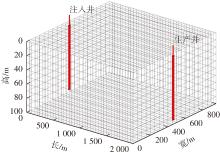
Fig.1
Mechanism model"
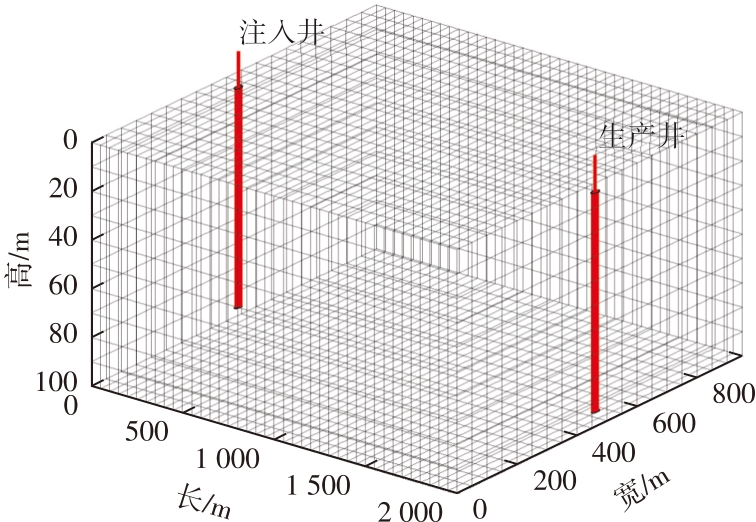
Table 2
Modeling parameters"
| 参数 | 取值 |
|---|---|
| 网格尺寸 | 50 m×50 m×10 m |
| 基质孔隙度/% | 6 |
| 裂缝孔隙度/% | 2 |
| 基质平均渗透率/μm2 | 10-4 |
| 裂缝平均渗透率/μm2 | 5×10⁻³ |
| 注入井注入速率/(m3/d) | 200 000 |
| 生产井井底压力/MPa | 5.5 |
| 形状因子 | [10, 10, 10] |
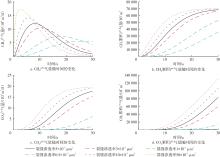
Fig.2
Impact of fracture permeability on gas production rate and cumulative gas production rate"
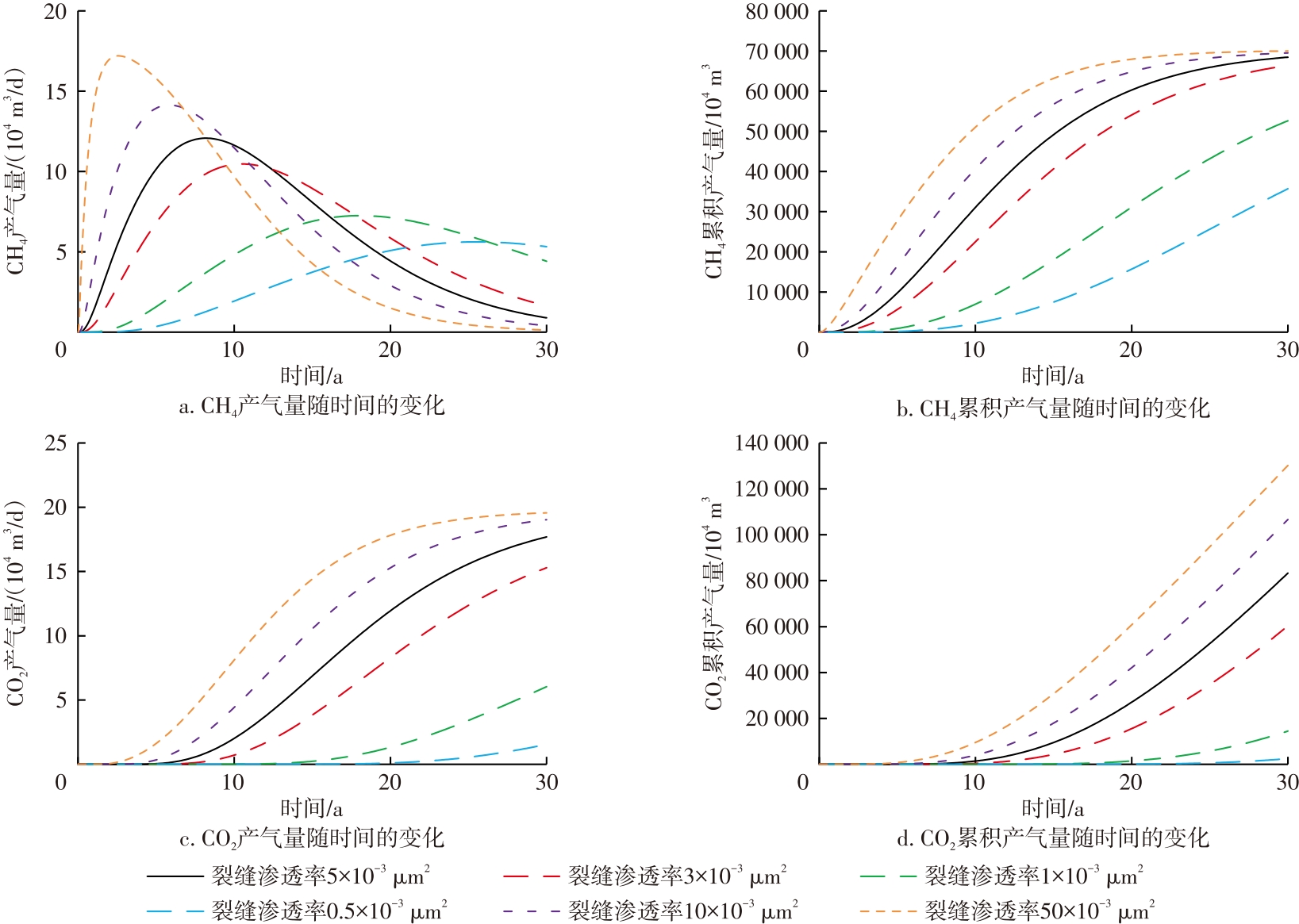
Fig.3
Impact of reservoir dip angle on gas production rate and cumulative gas production rate"
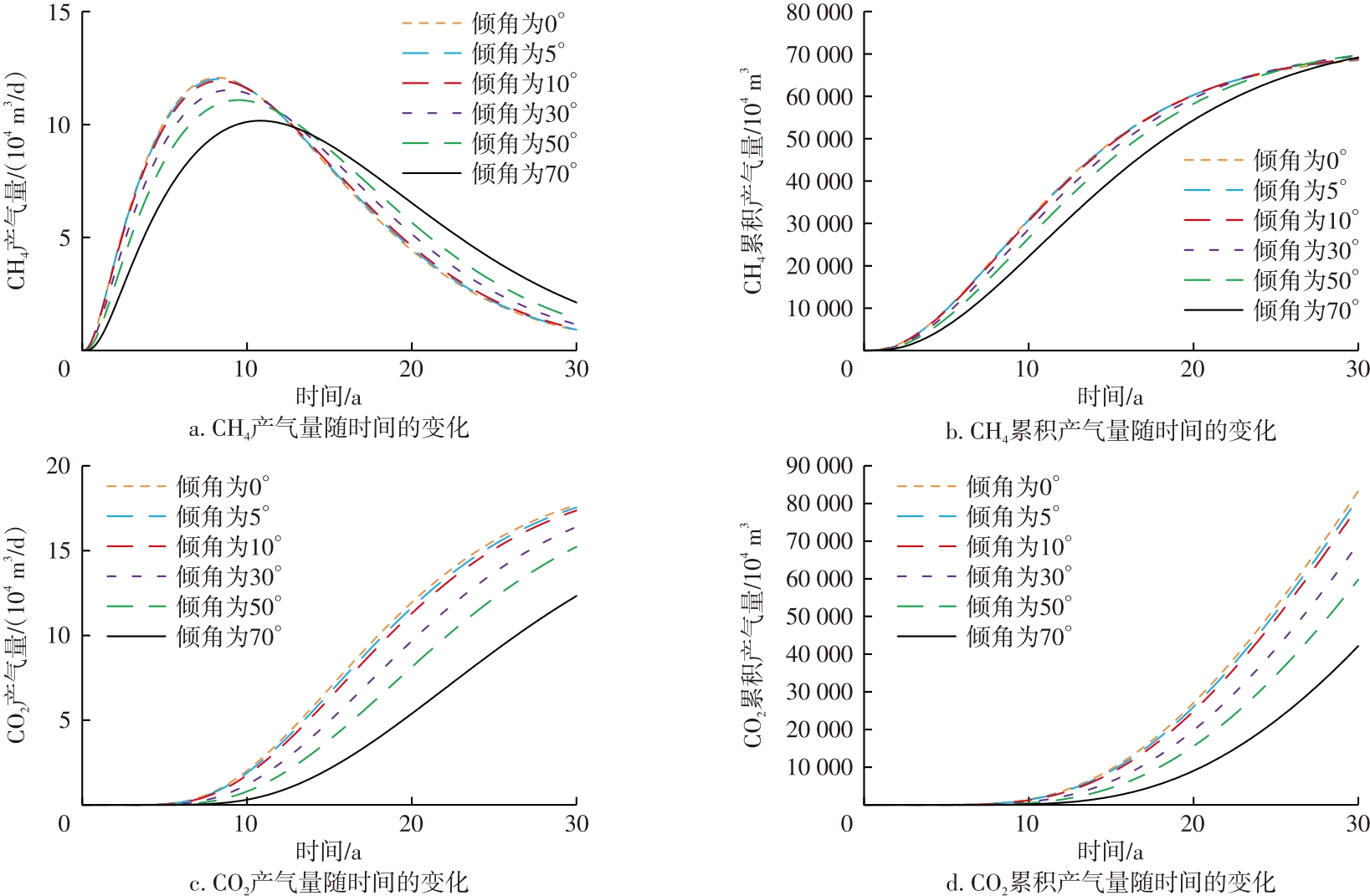
Fig.4
Impact of fracture porosity on gas production rate and cumulative gas production rate"
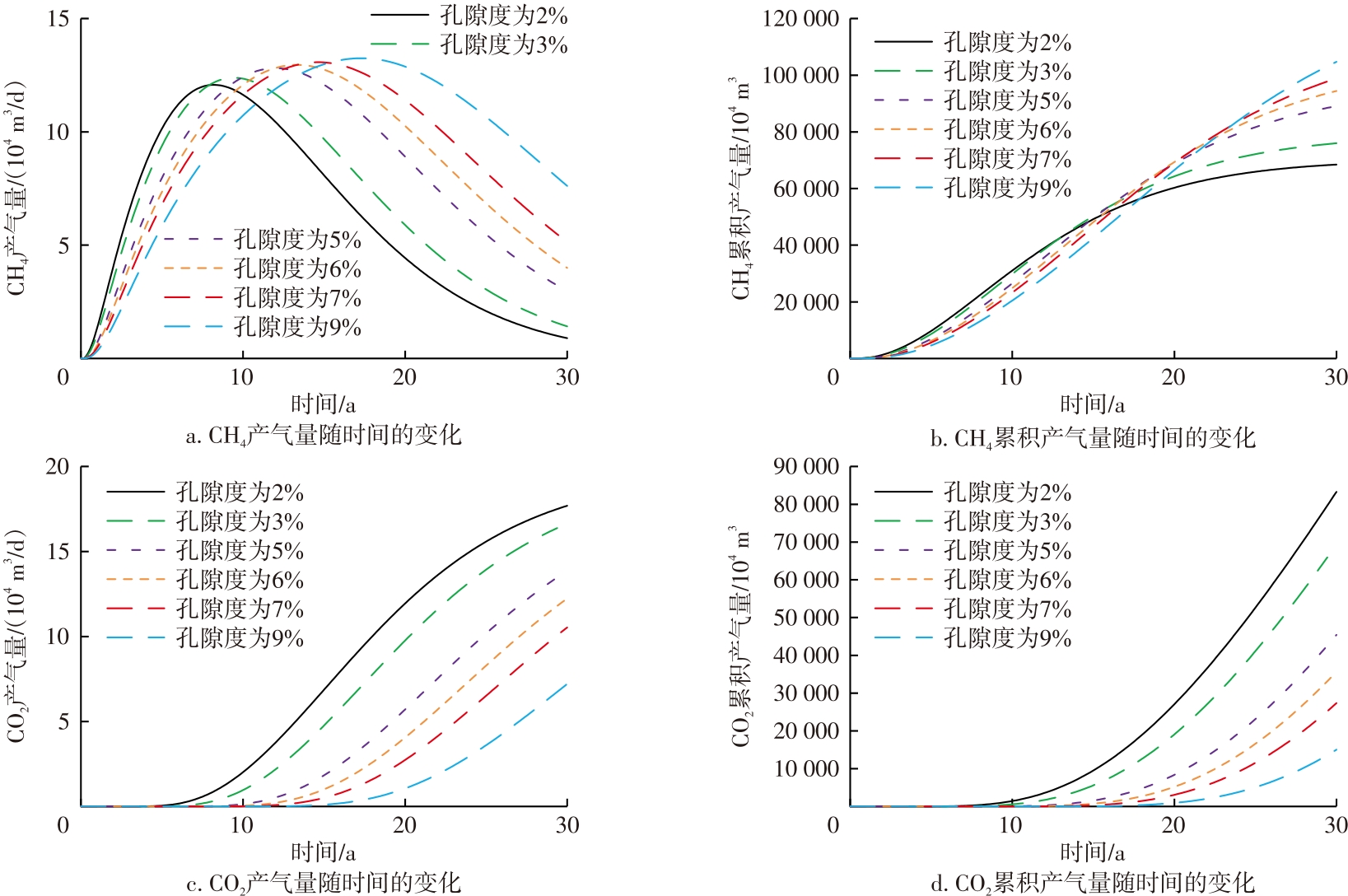
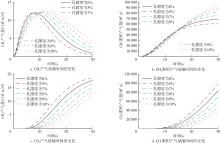
Fig.5
Impact of matrix porosity on gas production rate and cumulative gas production rate"

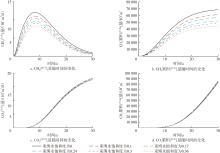
Fig.6
Impact of irreducible water saturation on gas production rate and cumulative gas production rate"
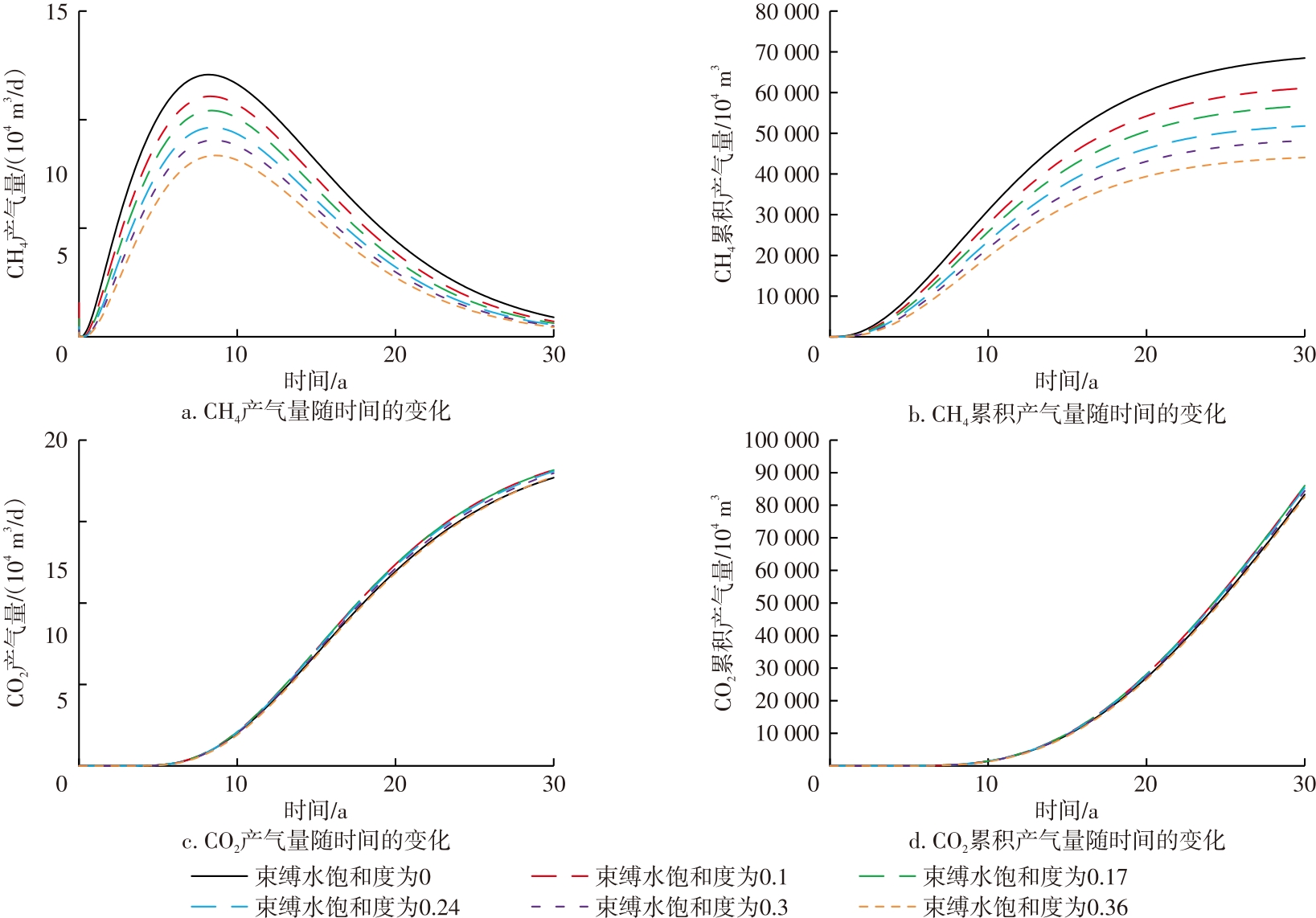
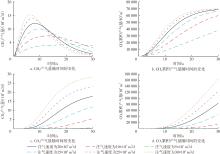
Fig.7
Impact of gas injection rate on gas production rate and cumulative gas production rate"

Table 3
Enhanced recovery rates and storage rates under different modeling parameters %"
| 建模参数 | 生产井杂质 含量为20% | 生产井杂质 含量为50% | 生产井杂质 含量为80% | |||
|---|---|---|---|---|---|---|
| 提高采收率均值 | 埋存率 均值 | 提高采收率均值 | 埋存率 均值 | 提高采收率均值 | 埋存率 均值 | |
| 基质渗透率 | 51.09 | 97.14 | 73.67 | 90.16 | 90.16 | 77.58 |
| 裂缝渗透率 | 50.21 | 97.27 | 73.04 | 89.93 | 90.27 | 75.25 |
| 储层倾角 | 53.47 | 97.31 | 75.77 | 91.04 | 92.23 | 79.55 |
裂缝(洞) 孔隙度 | 57.85 | 97.52 | 76.46 | 91.40 | 90.58 | 78.80 |
| 基质孔隙度 | 51.78 | 97.14 | 73.86 | 90.36 | 90.14 | 77.67 |
| 注气时机 | 49.95 | 96.93 | 72.88 | 89.81 | 89.75 | 77.15 |
| 含水饱和度 | 47.26 | 97.55 | 69.95 | 91.56 | 88.02 | 79.84 |
| 注气速度 | 51.08 | 97.09 | 73.20 | 90.15 | 73.20 | 90.15 |
CO2 摩尔分数 | 61.10 | 99.38 | ||||
Table 4
Coefficients of variation of evaluation indicators"
| 评价指标 | 生产井杂质 含量为20% | 生产井杂质 含量为50% | 生产井杂质 含量为80% | |||
|---|---|---|---|---|---|---|
提高 采收率 | 埋存率 | 提高 采收率 | 埋存率 | 提高 采收率 | 埋存率 | |
| 裂缝渗透率 | 0.026 9 | 0.014 8 | 0.023 4 | 0.039 4 | 0.011 7 | 0.061 5 |
| 储层倾角 | 0.061 6 | 0.003 1 | 0.040 9 | 0.011 2 | 0.027 3 | 0.029 4 |
裂缝(洞) 孔隙度 | 0.086 3 | 0.003 3 | 0.033 2 | 0.011 1 | 0.010 2 | 0.018 8 |
| 基质孔隙度 | 0.045 3 | 0.001 0 | 0.020 1 | 0.003 8 | 0.004 8 | 0.010 6 |
| 含水饱和度 | 0.043 4 | 0.004 0 | 0.024 9 | 0.011 7 | 0.010 6 | 0.023 9 |
| 注气速度 | 0.134 4 | 0.010 9 | 0.064 2 | 0.042 8 | 0.064 2 | 0.042 8 |
CO2 摩尔分数 | 0.165 9 | 0.003 2 | ||||
Table 5
Weight values of evaluation indicators %"
| 评价指标 | 生产井杂质 含量为20% | 生产井杂质 含量为50% | 生产井杂质 含量为80% | |||
|---|---|---|---|---|---|---|
提高 采收率 | 埋存率 | 提高 采收率 | 埋存率 | 提高 采收率 | 埋存率 | |
| 裂缝渗透率 | 5 | 37 | 11 | 33 | 9 | 33 |
| 储层倾角 | 11 | 8 | 20 | 9 | 21 | 16 |
裂缝(洞) 孔隙度 | 15 | 8 | 16 | 9 | 8 | 10 |
| 基质孔隙度 | 8 | 2 | 10 | 3 | 4 | 6 |
| 含水饱和度 | 8 | 10 | 12 | 10 | 8 | 13 |
| 注气速度 | 24 | 27 | 31 | 36 | 50 | 23 |
CO2 摩尔分数 | 29 | 8 | ||||
Table 6
Evaluation indicator system for CO2-enhanced gas recovery and storage potential of carbonate reservoirs"
| 评价指标 | 评价等级 | ||
|---|---|---|---|
| 较好(7) | 中等(5) | 较差(3) | |
| 裂缝渗透率/10-3 μm2 | >10 | 1~10 | <1 |
| 储层倾角/(°) | >40 | 20~40 | <20 |
| 裂缝(洞)孔隙度/% | >3 | 1~3 | <1 |
| 基质孔隙度/% | >10 | 5~10 | <5 |
| 含水饱和度 | <0.2 | 0.2~0.4 | >0.4 |
| 注气速度/(104 m3/d) | >10 | 5~10 | <5 |
| CO2摩尔分数/% | >70 | 30~70 | <30 |
Table 7
Scores of different indicators for CO2-enhanced gas recovery and storage in different sections of WLH gas reservoir"
| 指标层 | 中段轴部 | 南段 | 中段东翼 | |||
|---|---|---|---|---|---|---|
| 取值 | 评价等级 | 取值 | 评价等级 | 取值 | 评价等级 | |
裂缝渗透率/ 10-3 μm2 | 2 | 中等 | 2 | 中等 | 2 | 较好 |
| 储层倾角/(°) | 30 | 中等 | 30 | 中等 | 10 | 较差 |
| 缝洞孔隙度/% | 1~4 | 中等 | 1~4 | 中等 | 1~7 | 较好 |
| 基质孔隙度/% | 1~5 | 较差 | 1~5 | 较差 | 3~4 | 较差 |
| 含水饱和度 | <0.2 | 较好 | <0.2 | 较好 | <0.2 | 较好 |
注气速度/ (104 m3/d) | 20 | 较好 | 20 | 较好 | 20 | 较好 |
| CO2摩尔分数/% | 100 | 较好 | 100 | 较好 | 100 | 较好 |
Table 8
Comprehensive total scores of CO2-enhanced gas recovery and storage in different sections of WLH gas reservoir"
| 阶段 | 目标层 | 中段轴部 | 南段 | 中段东翼 | |||
|---|---|---|---|---|---|---|---|
| 得分 | 总得分 | 得分 | 总得分 | 得分 | 总得分 | ||
生产井杂质 含量为20% | 提采 | 6.06 | 6.02 | 6.06 | 6.02 | 6.24 | 6.31 |
| 埋存 | 5.86 | 5.86 | 6.60 | ||||
生产井杂质 含量为50% | 提采 | 5.66 | 5.70 | 5.66 | 5.70 | 5.80 | 5.94 |
| 埋存 | 5.86 | 5.86 | 6.52 | ||||
生产井杂质 含量为80% | 提采 | 6.08 | 5.99 | 6.08 | 5.99 | 6.00 | 6.04 |
| 埋存 | 5.65 | 5.65 | 6.19 | ||||
| [1] | GAO W, LIANG S, WANG R, et al. Industrial carbon dioxide capture and utilization: State of the art and future challenges[J]. Chemical Society Reviews, 2020, 49(23): 8584-8686. |
| [2] | 张烈辉, 曹成, 文绍牧, 等. 碳达峰碳中和背景下发展CO2-EGR的思考[J]. 天然气工业, 2023, 43(1): 13-22. |
| ZHANG Liehui, CAO Cheng, WEN Shaomu, et al. Thoughts on the development of CO2-EGR under the background of carbon peak and carbon neutrality[J]. Natural Gas Industry, 2023, 43(1): 13-22. | |
| [3] | 张贤. 碳中和目标下中国碳捕集利用与封存技术应用前景[J]. 可持续发展经济导刊, 2020(12): 22-24. |
| ZHANG Xian. The application prospect of CCUS in China under the target of carbon neutrality[J]. China Sustainability Tribune, 2020(12): 22-24. | |
| [4] | EDOUARD M N, OKERE C J, EJIKE C, et al. Comparative numerical study on the co-optimization of CO2 storage and utilization in EOR, EGR, and EWR: Implications for CCUS project development[J]. Applied Energy, 2023, 347: 121448. |
| [5] | 王紫剑, 唐玄, 荆铁亚, 等. 中国年封存量百万吨级CO2地质封存选址策略[J]. 现代地质, 2022, 36(5): 1414-1431. |
| WANG Zijian, TANG Xuan, JING Tieya, et al. Site selection strategy for an annual million-ton scale CO2 geological storage in China[J]. Geoscience, 2022, 36(5): 1414-1431. | |
| [6] | 曹成, 陈星宇, 张烈辉, 等. 气藏注CO2提高采收率及封存评价方法研究进展[J]. 科学技术与工程, 2024, 24(18): 7463-7475. |
| CAO Cheng, CHEN Xingyu, ZHANG Liehui, et al. Review of gas reservoir CO2 injection for enhanced recovery and sequestration evaluation methods[J]. Science Technology and Engineering, 2024, 24(18): 7463-7475. | |
| [7] | ZHANG K, LAU H C, CHEN Z. Regional carbon capture and storage opportunities in Alberta, Canada[J]. Fuel, 2022, 322: 124224. |
| [8] | FU L, SHAO Y, SHAO M, et al. Application and research progress of CO2 stimulation technology in unconventional oil and gas reservoirs: A review and prospect[J]. Energy & Fuels, 2023, 37(24): 19400-19418. |
| [9] | 杨霄翼, 刘延锋, 徐连三. 深部盐水层CO2地质埋存适宜性评价指标体系及其应用[J]. 安全与环境工程, 2014, 21(5): 71-77. |
| YANG Xiaoyi, LIU Yanfeng, XU Liansan. Construction and application of comprehensive evaluation index system for the suitability of CO2 geological storage in deep saline aquifer[J]. Safety and Environmental Engineering, 2014, 21(5): 71-77. | |
| [10] | 崔传智, 李安慧, 李惊鸿, 等. 盐水层CO2封存稳定性评价指标建立及储层优选[J/OL]. 深圳大学学报(理工版), 2024: 1-9. (2024-06-05). . |
| CUI Chuanzhi, LI Anhui, LI Jinghong, et al. Establishment of evaluation index of CO2 storage stability of saline reservoir and reservoir optimization[J/OL]. Journal of Shenzhen University (Science and Engineering), 2024: 1-9. (2024-06-05). . | |
| [11] | 樊东方, 罗凯, 靳志宏. 基于变异系数法的社会物流成本聚合指标构建[J]. 公路交通科技, 2023, 40(1): 245-251. |
| FAN Dongfang, LUO Kai, JIN Zhihong. Construction of social logistics cost aggregation indicator based on variation coefficient method[J]. Journal of Highway and Transportation Research and Development, 2023, 40(1): 245-251. | |
| [12] | ZHOU Zhiyong, KIZIL M, CHEN Zhongwei, et al. A new approach for selecting best development face ventilation mode based on G1-coefficient of variation method[J]. Journal of Central South University, 2018, 25(10): 2462-2471. |
| [13] | 马瑾. 地质封存条件下超临界二氧化碳运移规律研究[D]. 北京: 清华大学, 2013. |
| MA Jin. Researches on the migration of supercritical CO2 on geological storage conditions[D]. Beijing: Tsinghua University, 2013. | |
| [14] | 周锋, 黄仕林, 李晓明, 等. 基于层次分析法的致密气藏储层分类定量评价: 以新场气田蓬莱镇组气藏为例[J]. 油气藏评价与开发, 2024, 14(3): 468-474. |
| ZHOU Feng, HUANG Shilin, LI Xiaoming, et al. Quantitative evaluation of tight gas reservoir classification based on analytic hierarchy process: A case study of Penglaizhen Formation gas reservoir in Xinchang Gas Field[J]. Petroleum Reservoir Evaluation and Development, 2024, 14(3): 468-474. | |
| [15] | 吴育平, 孙卫, 魏驰, 等. 基于聚类分析和灰色关联分析法的储层综合评价: 以鄂尔多斯盆地姬塬地区长61储层为例[J]. 油气藏评价与开发, 2018, 8(1): 12-15. |
| WU Yuping, SUN Wei, WEI Chi, et al. Reservoir comprehensive evaluation based on cluster analysis and gray correlative analytical method: A case study in Chang-61 formation of Jiyuan area in Ordos Basin[J]. Reservoir Evaluation and Development, 2018, 8(1): 12-15. | |
| [16] | 张成龙, 王瑞景, 罗翔, 等. “双碳”愿景下CO2驱强化采油封存技术工程选址指标评价[J]. 大庆石油地质与开发, 2024, 43(1): 158-167. |
| ZHANG Chenglong, WANG Ruijing, LUO Xiang, et al. Evaluation of CO2-EOR project site selection indexes under “dual carbon” vision[J]. Petroleum Geology & Oilfield Development in Daqing, 2024, 43(1): 158-167. | |
| [17] | 李武广, 杨胜来, 娄毅. CO2地质埋存目标区优选体系与评价方法研究[J]. 天然气地球科学, 2011, 22(4): 747-752. |
| LI Wuguang, YANG Shenglai, LOU Yi. Optimization system and evaluation of CO2 geological storage target area[J]. Natural Gas Geoscience, 2011, 22(4): 747-752. | |
| [18] | 杨国强, 苏小四, 杜尚海, 等. 松辽盆地CO2地质储存适宜性评价[J]. 地球学报, 2011, 32(5): 570-580. |
| YANG Guoqiang, SU Xiaosi, DU Shanghai, et al. Suitability assessment of geological sequestration of CO2 in Songliao Basin[J]. Acta Geoscientica Sinica, 2011, 32(5): 570-580. | |
| [19] | 闫海军, 杨长城, 郭建林, 等. 四川盆地中部地区震旦系大型碳酸盐岩气藏开发技术新进展[J]. 天然气工业, 2024, 44(5): 68-79. |
| YAN Haijun, YANG Changcheng, GUO Jianlin, et al. New technological progress in the development of Sinian large carbonate gas reservoirs in central Sichuan Basin[J]. Natural Gas Industry, 2024, 44(5): 68-79. | |
| [20] | 陈书东. 裂缝性碳酸盐岩气藏裂缝表征与地质建模研究[D]. 东营: 中国石油大学(华东), 2017. |
| CHEN Shudong. Fractures characterization and geological modeling of fractured carbonate gas reservoirs[D]. Dongying: China University of Petroleum (Huadong), 2017. | |
| [21] | 朱清源, 吴克柳, 张晟庭, 等. 致密砂岩气藏注CO2提高天然气采收率微观机理[J]. 天然气工业, 2024, 44(4): 135-145. |
| ZHU Qingyuan, WU Keliu, ZHANG Shengting, et al. Microscopic mechanism of CO2 injection to enhance gas recovery in tight sandstone gas reservoirs[J]. Natural Gas Industry, 2024, 44(4): 135-145. | |
| [22] | QUANDALLE P, SABATHIER J C. Typical features of a multipurpose reservoir simulator[J]. SPE Reservoir Engineering, 1989, 4(4): 475-480. |
| [23] | XIONG W, ZHAO Y L, WEN S M, et al. Influence of diffusion, adsorption, connate water, and salinity on enhanced gas recovery and carbon storage reservoir simulations[J]. Energy & Fuels, 2024, 38(14): 12645-12657. |
| [24] | KAZEMI H, MERRILL L S Jr, PORTERFIELD K L, et al. Numerical simulation of water-oil flow in naturally fractured reservoirs[J]. Society of Petroleum Engineers Journal, 1976, 16(6): 317-326. |
| [25] | SHOJAEI H, JESSEN K. Diffusion and matrix-fracture interactions during gas injection in fractured reservoirs[C]//SPE Improved Oil Recovery Symposium. Richardson: Society of Petroleum Engineers, 2014: SPE 169152-MS. |
| [26] | WARREN J E, ROOT P J. The behavior of naturally fractured reservoirs[J]. Society of Petroleum Engineers Journal, 1963, 3(3): 245-255. |
| [27] | COATS K H. Implicit compositional simulation of single-porosity and dual-porosity reservoirs[C]//SPE Symposium on Reservoir Simulation. Richardson: Society of Petroleum Engineers, 1989: SPE 18427-MS. |
| [28] | LIM K T, AZIZ K. Matrix-fracture transfer shape factors for dual-porosity simulators[J]. Journal of Petroleum Science and Engineering, 1995, 13(3/4): 169-178. |
| [29] | XIONG W, ZHANG L H, ZHAO Y L, et al. Compositional simulation for carbon storage in porous media using an electrolyte association equation of state[J]. SPE Journal, 2024, 29(6): 3314-3336. |
| [30] | PENG D Y, ROBINSON D B. A new two-constant equation of state[J]. Industrial & Engineering Chemistry Fundamentals, 1976, 15(1): 59-64. |
| [31] | HONARI A, BIJELJIC B, JOHNS M L, et al. Enhanced gas recovery with CO2 sequestration: The effect of medium heterogeneity on the dispersion of supercritical CO2-CH4 [J]. International Journal of Greenhouse Gas Control, 2015, 39: 39-50. |
| [32] | KASALA E E, WANG J, LWAZI H M, et al. The influence of hydraulic fracture and reservoir parameters on the storage of CO2 and enhancing CH4 recovery in Yanchang formation[J]. Energy, 2024, 296: 131184. |
| [33] | 靖晶. 地层倾角对CO2运移与封存量的影响研究[D]. 长春: 吉林大学, 2016. |
| JING Jing. Influence of formation dip on CO2 migration and storage amount in reservoir[D]. Changchun: Jilin University, 2016. | |
| [34] | 张烈辉, 熊伟, 赵玉龙, 等. 衰竭底水气藏注CO2提高天然气采收率与碳封存机理[J]. 天然气工业, 2024, 44(4): 25-38. |
| ZHANG Liehui, XIONG Wei, ZHAO Yulong, et al. Mechanism of CO2 injection to enhance gas recovery and carbon storage in depleted bottom-water gas reservoirs[J]. Natural Gas Industry, 2024, 44(4): 25-38. | |
| [35] | 张林峰, 杨艳国, 穆永亮, 等. 基于气-水两相流的注热CO2增产CH4数值模拟研究[J]. 煤炭科学技术, 2024, 52(3): 115-128. |
| ZHANG Linfeng, YANG Yanguo, MU Yongliang, et al. Numerical study of heat injection CO2 to increase CH4 production based on gas-water two-phase flow[J]. Coal Science and Technology, 2024, 52(3): 115-128. | |
| [36] | 尹书郭. 页岩层中CO2封存和CH4开采的影响因素研究[D]. 武汉: 武汉科技大学, 2022. |
| YIN Shuguo. The study on influence factors of CO2 storage and CH4 production in shale formation[D]. Wuhan: Wuhan University of Science and Technology, 2022. |
| [1] | MAO Zhenqiang, FAN Chao, LIU Saijun, YANG Zhikai, GAO Tong, WANG Yuanyuan. Research and application of key technologies for development of CCUS demonstration project in medium-deep reservoirs [J]. Petroleum Reservoir Evaluation and Development, 2026, 16(1): 118-127. |
| [2] | LI Jingwei, PENG Bo, WANG Zeteng, CHEN Xiaoqian, ZHANG Zhenghao, LIU Jindong, LIU Shuangxing, LI Xiaofeng. CO2 storage potential assessment models and their practical progress in oil and gas reservoirs [J]. Petroleum Reservoir Evaluation and Development, 2026, 16(1): 141-152. |
| [3] | YE Hongying, CAO Cheng, ZHAO Yulong, ZHANG Liehui, ZHU Haonan, WEN Shaomu, LI Qingping, ZHANG Deping, ZHAO Song, CAO Zhenglin. Research progress on machine learning in CO2 enhanced oil and gas recovery and geological storage [J]. Petroleum Reservoir Evaluation and Development, 2026, 16(1): 84-95. |
| [4] | ZHANG Chao, ZHU Pengyu, HUANG Tianjing, YAN Changhao, LIU Jie, WANG Bo, ZHANG Bin, ZHANG Yi. Study on the influence of CO2-water-rock reactions under reservoir conditions on geochemical properties of sandstone reservoirs [J]. Petroleum Reservoir Evaluation and Development, 2025, 15(4): 545-553. |
| [5] | CHEN Hongju, LIU Qiang, SUN Lili, YU Hang. Status and prospects of low carbon development in offshore oil and gas industry [J]. Petroleum Reservoir Evaluation and Development, 2024, 14(6): 981-989. |
| [6] | ZHU Haonan, CAO Cheng, ZHANG Liehui, ZHAO Yulong, PENG Xian, ZHAO Zihan, CHEN Xingyu. Mechanism and development direction of CO2-EGR [J]. Petroleum Reservoir Evaluation and Development, 2024, 14(6): 975-980. |
| [7] | WEI Haifeng. Economic benefits and fiscal tax policies of CO2 capture, utilization and storage [J]. Petroleum Reservoir Evaluation and Development, 2024, 14(2): 277-283. |
| [8] | CHEN Xingming, HE Zhishan. Research and application of modular skid-mounted CO2 recovery technology [J]. Petroleum Reservoir Evaluation and Development, 2024, 14(1): 64-69. |
| [9] | YE Xiaodong, CHEN Jun, CHEN Xi, WANG Haimei, WANG Huijun. China's CCUS technology challenges and countermeasures under “double carbon” target [J]. Petroleum Reservoir Evaluation and Development, 2024, 14(1): 1-9. |
| [10] | ZHAO Yulong, YANG Bo, CAO Cheng, ZHANG Liehui, ZHOU Xiang, HUANG Chenzhi, RUI Yiming, LI Jinlong. Research progress of evaluation of CO2 storage potential and suitability assessment indexes in saline aquifers [J]. Petroleum Reservoir Evaluation and Development, 2023, 13(4): 484-494. |
| [11] | SANG Shuxun,LIU Shiqi,LU Shijian,ZHU Qianlin,WANG Meng,HAN Sijie,LIU Tong,ZHENG Sijian. Engineered full flowsheet technology of CCUS and its research progress [J]. Petroleum Reservoir Evaluation and Development, 2022, 12(5): 711-725. |
| [12] | LI Yang,HUANG Wenhuan,JIN Yong,HE Yingfu,CHEN Zuhua,TANG Yong,WU Gongyi. Different reservoir types of CO2 flooding in Sinopec EOR technology development and application under “dual carbon” vision [J]. Petroleum Reservoir Evaluation and Development, 2021, 11(6): 793-804. |
| [13] | HU Yongle,HAO Mingqiang. Development characteristics and cost analysis of CCUS in China [J]. Reservoir Evaluation and Development, 2020, 10(3): 15-22. |
| [14] | LI Shilun,SUN Lei,CHEN Zuhua,LI Jian,TANG Yong,PAN Yi. Further discussion on reservoir engineering concept and development mode of CO2 flooding-EOR technology [J]. Reservoir Evaluation and Development, 2020, 10(3): 1-14. |
|
||
