
Petroleum Reservoir Evaluation and Development ›› 2026, Vol. 16 ›› Issue (1): 84-95.doi: 10.13809/j.cnki.cn32-1825/te.2025268
• Methodological Theory • Previous Articles Next Articles
YE Hongying1( ), CAO Cheng1,2,3(), ZHAO Yulong1, ZHANG Liehui1, ZHU Haonan1, WEN Shaomu4, LI Qingping2, ZHANG Deping5, ZHAO Song6, CAO Zhenglin7
Received:2025-06-09
Online:2026-01-06
Published:2026-01-26
CLC Number:
YE Hongying,CAO Cheng,ZHAO Yulong, et al. Research progress on machine learning in CO2 enhanced oil and gas recovery and geological storage[J]. Petroleum Reservoir Evaluation and Development, 2026, 16(1): 84-95.
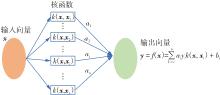
Fig.1
Schematic diagram of SVM algorithm principle[20]"
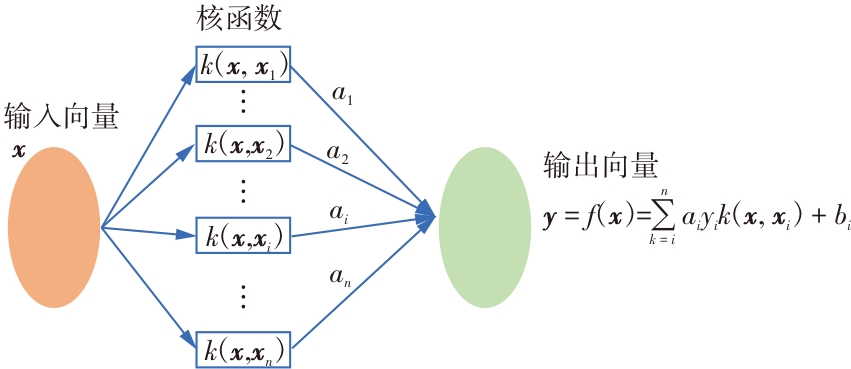

Table 1
Comparison of common algorithms"
| 算法 | 核心技术 | 主要优势 | 存在缺点 | 数据规模 | 复杂度 | 可解释性 |
|---|---|---|---|---|---|---|
SVM 据文献[ | 核函数、最大间隔优化 | 理论完备、小样本优势 | 计算复杂度高、核参数选择困难 | 小规模 (<1×10⁴) | 高 | 低 |
PSO 据文献[ | 群体智能(鸟群模拟)、速度-位置迭代公式 | 全局优化、快速收敛 | 局部最优、参数敏感 | 中小规模 (<10×104) | 低 | 低 |
RF 据文献[ | 集成学习、Bootstrap(自助抽样法)抽样 | 鲁棒性、特征重要性 | 解释性差、极端值敏感、过平滑 | 中小规模 (1×10⁴~100×104) | 中 | 中 |
VMD 据文献[ | 变分优化、模态分解、惩罚项最小化 | 自适应分解、信号特征提取 | 层数K依赖、计算成本高 | 中小规模 (<5×10⁴) | 高 | 中 |
GA 据文献[ | 自然选择(交叉/变异/选择)、染色体编码 | 全局搜索、复杂约束、多目标优化 | 收敛速度慢、编码复杂 | 中规模 (1×10⁴~50×104) | 中 | 低 |
| ANN据文献[ | 反向传播、非线性激活函数、深层网络 | 深层特征学习、端到端建模 | 过拟合、计算成本高、黑箱特性 | 大规模 (>10×104) | 高 | 低 |
| XGBoost据文献[ | 梯度提升、二阶导数优化 | 高效并行、预测精度高 | 过拟合、超参数依赖 | 中大规模 (1×10⁴~1 000×104) | 中 | 中 |
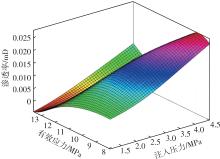
Fig.2
Three-dimensional relationship surface of injection pressure, effective stress, and permeability based on ANFIS model[42]"
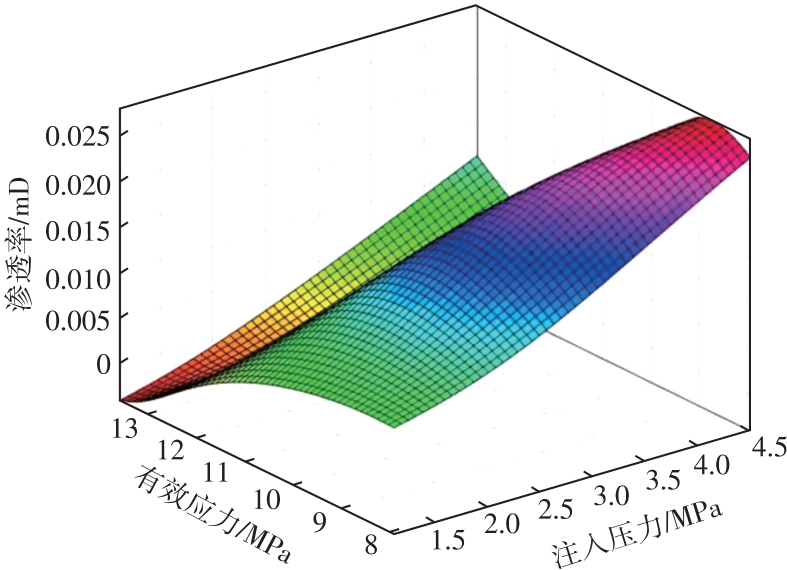
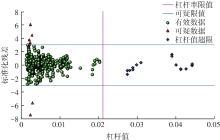
Fig.3
Williams plot of RBFNN-ABC model[45]"
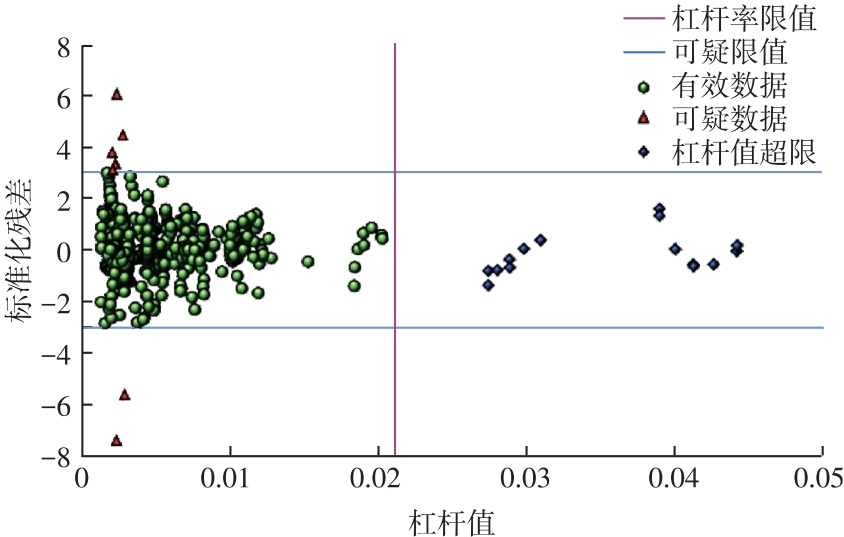
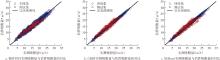
Fig.4
Comparison between measured and estimated adsorption capacities using three algorithms[47]"

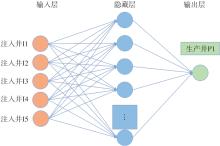
Fig.5
Schematic diagram of neural network connections between injection wells and production wells[53]"
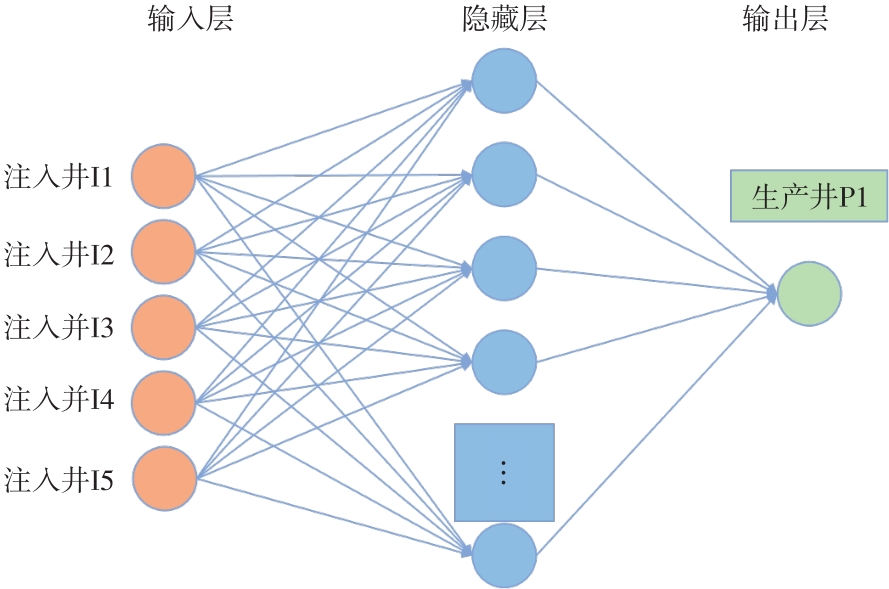
Fig.6
Schematic diagram of CNN-GRU surrogate model structure[60]"
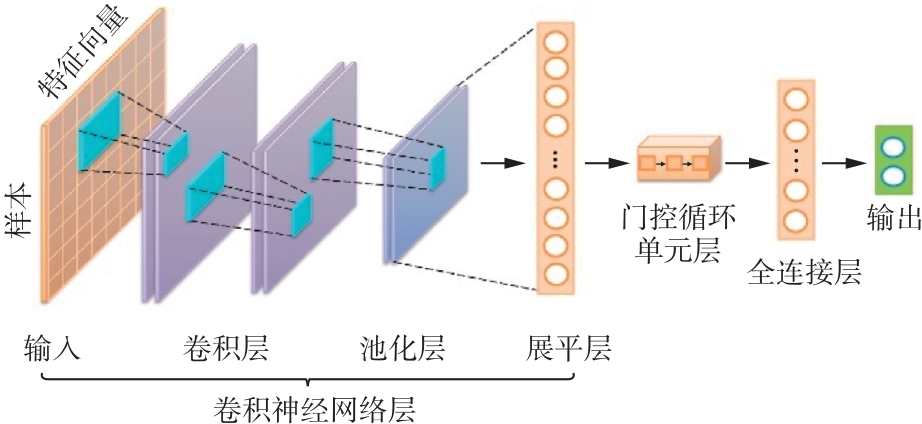
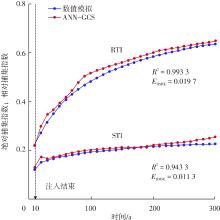
Fig.7
Prediction results of RTI and STI[61]"
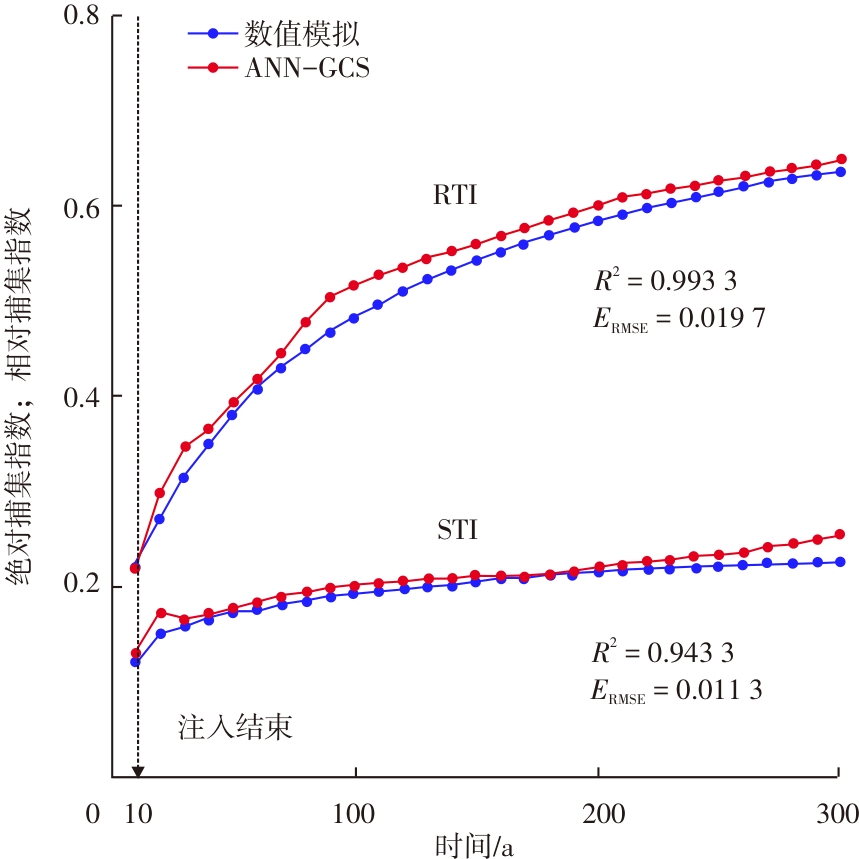
Table 2
Summary of application directions, algorithm models, and achievements of key ML technologies for CO2 oil displacement"
| 应用方向 | 算法模型 | 成果 |
|---|---|---|
| MMP预测 | GA-SVR、SVM-RF、时空图卷积网络 | 预测误差降至4.00%~7.69%,温度是关键影响;物理可解释性增强[ |
| 渗透率预测 | XGBoost、多核支持向量机-遗传算法、ANFIS-PSO、GEP、MLP | 渗透率解释精度增加37.97%;扩散系数预测误差小于1%;XGBoost模型提升渗透率预测精度50%;高温高压下MLP精度最高(R2达到0.998 0);ANFIS-PSO、GEP等模型显著优于传统经验公式(R2不小于0.997 0)[ |
| 溶解度预测 | RBFNN-ABC、XGBoost | RBFNN-ABC在宽温压范围下精度极高(R2达到0.996 7);XGBoost结合DUAN-SUN模型,溶解度预测误差不大于3.2%,计算效率显著提升[ |
| 多目标优化 | ANN与NSGA-II结合、混合粒子群算法、强化学习 | 模拟时间大幅度缩小,误差小于3%,R2大于0.999 0;混合粒子群算法降低成本14.7%;强化学习优化碳封存流程,效率提升20%,能耗降低15% [ |
| 动态优化与因果建模 | 深度Q网络、BO-Light CBM | 气窜率减少25%,日产油量增加15%;潜力评估准确率98.7%[ |
Table 3
Summary of algorithm models and achievements of ML in CO2 geological storage"
| 应用方向 | 算法模型 | 成果 |
|---|---|---|
| 选址优化 | DNN | DNN整合多源数据选址,储层质量、注入能力为关键指标[ |
| 储层表征 | SVM、RF、符号回归 | SVM结合地震数据预测岩相,构造高位井区适合封存;符号回归揭示渗透率为二次注气封存关键参数,其重要性随时间增长[ |
| 封存参数优化 | 改进PSO算法、ANN、CNN-GRU、径向基函数神经网络(RBFNN) | 用改进PSO算法优化井网,发现井距对封存影响显著;CNN-GRU与NSGA-Ⅱ能确定不同目标下CH4再注入的最优参数组合;RBF-NN模型能确定影响封存效率的关键参数[ |
| 封存效率 | BP神经网络、ANFIS、RF | BP神经网络预测封存系数误差小于8%;RF模型在残余/溶解封存效率预测中精度最高(R2不小于0.965 0);AOSSA-ANFIS模型(基于自适应正交麻雀搜索算法的自适应神经模糊推理系统模型)误差小于其他优化的ANFIS模型[ |
| 监测与风险评估 | LSTM、CONV-LSTM、ANN、SVM-RF | LSTM精准识别泄漏,CONV-LSTM特征提取潜力大;ANN结合LHS优化监测设计,压力监测减少73%泄漏量不确定性;通过优化注气策略,使日产油量增加[ |
Table 4
Summary of application status of different ML methods in CO2 enhanced oil and gas recovery and geological storage"
| 领域 | ML方法 | 具体应用 | 应用成熟度及算法特点 |
|---|---|---|---|
| CO2-EOR&CO2-EGR | ANN | MMP预测;产量预测与评价;多目标优化 | 中等。在部分任务上取得一定成果,存在过拟合、计算成本高及黑箱特性 |
| RF | MMP预测;渗流机理建模;产量预测与评价 | 中等。鲁棒性强、能评估特征,解释性差、内存消耗大 | |
| SVM | MMP预测;产量预测与评价 | 中等。理论完备、小样本优势明显,计算复杂度高、核参数选择困难 | |
| XGBoost | 产量预测;多目标优化;吸附量预测 | 中等。能并行计算且预测精度高,存在过拟合倾向、依赖超参数调整,处理动态扩散过程时可解释性差 | |
| CO2封存 | DNN | 储层优选;监测与选址优化 | 中等。模型性能高,对数据质量要求高 |
| XGBoost | 储层优选 | 中等。多任务中表现良好,存在过拟合和超参数依赖问题 | |
| SVM | 储层优选;储层表征 | 中等。小样本和高维数据处理能力强,计算复杂度高,核参数选择难 | |
| RF | 封存效率预测;储层物性与吸附能力预测 | 中等。稳定性好,能评估特征,解释性差,内存消耗大 | |
| MLP | 封存效果预测 | 中等。能处理非线性问题,训练时间长、易过拟合 | |
| ANFIS | 封存效果预测 | 中等。能融合模糊逻辑和神经网络优势,参数确定较复杂 |
| [1] | 王国锋, 吕伟峰, 崔凯, 等. 全球二氧化碳捕集、利用与封存产业集群技术进展及应用展望[J]. 石油勘探与开发, 2025, 52(2): 478-487. |
| WANG Guofeng, Weifeng LYU, CUI Kai,et al. Technical progress and application of global carbon dioxide capture,utilization and storage cluster[J]. Petroleum Exploration and Development, 2025, 52(2): 478-487. | |
| [2] | BROWN K, WHITTAKER S, WILSON M, et al. The history and development of the IEA GHG Weyburn-Midale CO2 Monitoring and Storage Project in Saskatchewan, Canada (the world’s largest CO2 for EOR and CCS program)[J]. Petroleum, 2017, 3(1): 3-9. |
| [3] | 李倩文, 马晓潇, 高波, 等. 美国重点页岩油区勘探开发进展及启示[J]. 新疆石油地质, 2021, 42(5): 630-640. |
| LI Qianwen, MA Xiaoxiao, GAO Bo, et al. Progress and enlightenment of exploration and development of major shale oil zones in the USA[J]. Xinjiang Petroleum Geology, 2021, 42(5): 630-640. | |
| [4] | 窦立荣, 孙龙德, 吕伟峰, 等. 全球二氧化碳捕集、利用与封存产业发展趋势及中国面临的挑战与对策[J]. 石油勘探与开发, 2023, 50(5): 1083-1096. |
| DOU Lirong, SUN Longde, Weifeng LYU,et al. Trend of global carbon dioxide capture,utilization and storage industry and challenges and countermeasures in China[J]. Petroleum Exploration and Development, 2023, 50(5): 1083-1096. | |
| [5] | 舒华文. 胜利油田百万吨级 CCUS 输注采关键工程技术[J]. 油气藏评价与开发, 2024, 14(1): 10-17. |
| SHU Huawen. Key engineering technologies of one-million-ton CCUS transportation-injection-extraction in Shengli Oilfield[J]. Petroleum Reservoir Evaluation and Development, 2024, 14(1): 10-17. | |
| [6] | 王峰, 黎政权, 张德平. 吉林油田CCUS-EOR技术攻关与实践新进展[J]. 天然气工业, 2024, 44(4): 76-82. |
| WANG Feng, LI Zhengquan, ZHANG Deping. New research and practice progress of CCUS-EOR technology in Jilin Oilfield[J]. Natural Gas Industry, 2024, 44(4): 76-82. | |
| [7] | 张烈辉, 曹成, 文绍牧, 等. 碳达峰碳中和背景下发展CO2-EGR的思考[J]. 天然气工业, 2023, 43(1): 13-22. |
| ZHANG Liehui, CAO Cheng, WEN Shaomu, et al. Thoughts on the development of CO2-EGR under the background of carbon peak and carbon neutrality[J]. Natural Gas Industry, 2023, 43(1): 13-22. | |
| [8] | 肖江, 宋世杰, 刘兰兰, 等. 二氧化碳捕集及封存技术探索研究: 以陕煤集团榆林化学公司为例[J]. 煤炭科学技术, 2024, 52(5): 316-323. |
| XIAO Jiang, SONG Shijie, LIU Lanlan, et al. Research on carbon dioxide capture and storage technology: A case study of Shaanxi Coal Group Yulin Chemical Co., Ltd[J]. Coal Science and Technology, 2024, 52(5): 316-323. | |
| [9] | 赵云飞, 孙洪国, 张雪玲, 等. 基于特征参数的聚合物驱开发指标组合预测方法[J].大庆石油地质与开发, 2023, 42(1): 57-63. |
| ZHAO Yunfei, SUN Hongguo, ZHANG Xueling, et al. Combination prediction method of polymer flooding development index based on characteristics parameters[J]. Petroleum Geology & Oilfield Development in Daqing, 2023, 42(1): 57-63. | |
| [10] | PINGS C J Jr, TEMPELAAR-LIETZ W. Canal field gas injection project[J]. Journal of Petroleum Technology, 1955, 7(8): 25-31. |
| [11] | 成金华. 能源转型中的天然气角色与能源安全: 评《中国天然气全产业链市场安全问题研究》[J]. 华中师范大学学报(自然科学版), 2024, 58(6): 731-732. |
| CHENG Jinhua. The role of natural gas in energy transformation and energy security: Comment on “research on market security of China’s natural gas industry chain” [J]. Journal of Central China Normal University (Natural Sciences), 2024, 58(6): 731-732. | |
| [12] | 杨勇. 中国碳捕集、驱油与封存技术进展及发展方向[J]. 石油学报, 2024, 45(1): 325-338. |
| YANG Yong. Technology progress and development direction of carbon capture, oil-flooding and storage in China[J]. Acta Petrolei Sinica, 2024, 45(1): 325-338. | |
| [13] | 张凯, 陈掌星, 兰海帆, 等. 碳捕集、利用与封存技术的现状及前景[J]. 特种油气藏, 2023, 30(2): 1-9. |
| ZHANG Kai, CHEN Zhangxing, LAN Haifan, et al. Status and prospects of carbon capture, utilization and storage technology[J]. Special Oil & Gas Reservoirs, 2023, 30(2): 1-9. | |
| [14] | SINHA S, DE LIMA R P, LIN Y, et al. Normal or abnormal? Machine learning for the leakage detection in carbon sequestration projects using pressure field data[J]. International Journal of Greenhouse Gas Control, 2020, 103: 103189. |
| [15] | 芮振华, 邓海洋, 胡婷. 基于混合物理数据驱动的油藏地质体CO2利用与封存代理模型研究[J]. 钻采工艺, 2025, 48(1): 190-198. |
| RUI Zhenhua, DENG Haiyang, HU Ting. Study on CO2 utilization and storage proxy model for reservoir geobodies based on hybrid physics-data driven[J]. Drilling & Production Technology, 2025, 48(1): 190-198. | |
| [16] | HUSSIN F, RAHIM S A N MD, HATTA N S M, et al. A systematic review of machine learning approaches in carbon capture applications[J]. Journal of CO2 Utilization, 2023, 71: 102474. |
| [17] | METZ B, DAVIDSON O, DE CONINCK H, et al. IPCC special report on carbon dioxide capture and storage[R]. Intergovernmental Panel on Climate Change, Geneva (Switzerland). Working Group III, 2005. |
| [18] | 王光付, 李阳, 王锐, 等. 二氧化碳地质封存与利用新进展[J]. 石油与天然气地质, 2024, 45(4): 1168-1179. |
| WANG Guangfu, LI Yang, WANG Rui, et al. Recent advances in geological carbon dioxide storage and utilization[J]. Oil & Gas Geology, 2024, 45(4): 1168-1179. | |
| [19] | 张代俐, 汪廷华, 朱兴淋. SVM样本约简算法研究综述[J]. 计算机科学, 2024, 51(7): 59-70. |
| ZHANG Daili, WANG Tinghua, ZHU Xinglin. Overview of sample reduction algorithms for support vector machine[J]. Computer Science, 2024, 51(7): 59-70. | |
| [20] | 牟丹, 张丽春, 徐长玲. 3种经典机器学习算法在火山岩测井岩性识别中的对比[J]. 吉林大学学报(地球科学版), 2021, 51(3): 951-956. |
| MOU Dan, ZHANG Lichun, XU Changling. Comparison of three classical machine learning algorithms for lithology identification of volcanic rocks using well logging data[J]. Journal of Jilin University (Earth Science Edition), 2021, 51(3): 951-956. | |
| [21] | 高淑芝, 赵匀琨, 张义民. 改进粒子群算法在可靠性分析中的应用[J]. 机械设计与制造, 2024, (12): 117-120. |
| GAO Shuzhi, ZHAO Yunkun, ZHANG Yimin. Application of improved particle swarm optimization algorithm in reliability analysis[J]. Machinery Design & Manufacture, 2024, (12): 117-120. | |
| [22] | 任俊帆, 薛亮, 聂捷, 等. 基于随机森林算法的二氧化碳驱油与封存主控因素研究[J]. 地质科技通报, 2024, 43(3): 147-156. |
| REN Junfan, XUE Liang, NIE Jie, et al. Research on the main control factors of carbon dioxide flooding and storage based on random forest algorithm[J]. Bulletin of Geological Science and Technology, 2024, 43(3): 147-156. | |
| [23] | 赵昕海, 张术臣, 李志深, 等. 基于VMD的故障特征信号提取方法[J]. 振动.测试与诊断, 2018, 38(1): 11-19. |
| ZHAO Xinhai, ZHANG Shuchen, LI Zhishen, et al. Application of new denoising method based on VMD in fault feature extraction[J]. Journal of Vibration, Measurement & Diagnosis, 2018, 38(1): 11-19. | |
| [24] | 马航, 董卫宇, 唐之卓, 等. 遗传算法在模糊测试中的应用研究综述[J]. 小型微型计算机系统, 2025, 46(4): 948-957. |
| MA Hang, DONG Weiyu, TANG Zhizhuo, et al. Review of the application of genetic algorithm in fuzzing[J]. Journal of Chinese Computer Systems, 2025, 46(4): 948-957. | |
| [25] | 张驰, 郭媛, 黎明. 人工神经网络模型发展及应用综述[J]. 计算机工程与应用, 2021, 57(11): 57-69. |
| ZHANG Chi, GUO Yuan, LI Ming. Review of development and application of artificial neural network models[J]. Computer Engineering and Applications, 2021, 57(11): 57-69. | |
| [26] | 蒋熙梅, 闫伟超, 邢会林, 等. 基于自动超参数优化框架与梯度提升算法融合的储层粒度二维分布预测研究[J]. 地球物理学进展, 2024, 39(5): 1886-1900. |
| JIANG Ximei, YAN Weichao, XING Huilin, et al. Research on two-dimensional reservoir grain size distribution prediction based on the fusion of automatic hyperparameter optimization framework and gradient boosting algorithm[J]. Progress in Geophysics, 2024, 39(5): 1886-1900. | |
| [27] | 丁世飞, 齐丙娟, 谭红艳. 支持向量机理论与算法研究综述[J]. 电子科技大学学报, 2011, 40(1): 2-10. |
| DING Shifei, QI Bingjuan, TAN Hongyan. An overview on theory and algorithm of support vector machines[J]. Journal of University of Electronic Science and Technology of China, 2011, 40(1): 2-10. | |
| [28] | 杨维,李歧强. 粒子群优化算法综述[J]. 中国工程科学, 2004, 6(5): 87-94. |
| YANG Wei, LI Qiqiang. Survey on particle swarm optimization algorithm[J]. Strategic Study of CAE, 2004, 6(5): 87-94. | |
| [29] | 李欣海. 随机森林模型在分类与回归分析中的应用[J]. 应用昆虫学报, 2013, 50(4): 1190-1197. |
| LI Xinhai. Using “random forest” for classification and regression[J]. Chinese Journal of Applied Entomology, 2013, 50(4): 1190-1197. | |
| [30] | 杨晶显, 张帅, 刘继春, 等. 基于VMD和双重注意力机制LSTM的短期光伏功率预测[J]. 电力系统自动化, 2021, 45(3): 174-182. |
| YANG Jingxian, ZHANG Shuai, LIU Jichun, et al. Short-term photovoltaic power prediction based on variational mode decomposition and long shortterm memory with dual-stage attention mechanism[J]. Automation of Electric Power Systems, 2021, 45(3): 174-182. | |
| [31] | 马永杰, 云文霞. 遗传算法研究进展[J]. 计算机应用研究, 2012, 29(4): 1201-1206. |
| MA Yongjie, YUN Wenxia. Research progress of genetic algorithm[J]. Application Research of Computers, 2012, 29(4): 1201-1206. | |
| [32] | 李彦冬, 郝宗波, 雷航. 卷积神经网络研究综述[J]. 计算机应用, 2016, 36(9): 2508-2515. |
| LI Yandong, HAO Zongbo, LEI Hang. Survey of convolutional neural network[J]. Journal of Computer Applications, 2016, 36(9): 2508-2515. | |
| [33] | 李占山, 刘兆赓. 基于XGBoost的特征选择算法[J]. 通信学报, 2019, 40(10): 101-108. |
| LI Zhanshan, LIU Zhaogeng. Feature selection algorithm based on XGBoost[J]. Journal on Communications, 2019, 40(10): 101-108. | |
| [34] | HUANG Y F, HUANG G H, DONG M Z, et al. Development of an artificial neural network model for predicting minimum miscibility pressure in CO2 flooding[J]. Journal of Petroleum Science and Engineering, 2003, 37(1/2): 83-95. |
| [35] | AHMADI M A, ZAHEDZADEH M, SHADIZADEH S R, et al. Connectionist model for predicting minimum gas miscibility pressure: Application to gas injection process[J]. Fuel, 2015, 148: 202-211. |
| [36] | SAYYAD H, MANSHAD A K, ROSTAMI H. Application of hybrid neural particle swarm optimization algorithm for prediction of MMP[J]. Fuel, 2014, 116: 625-633. |
| [37] | CHEN G, FU K, LIANG Z, et al. The genetic algorithm based back propagation neural network for MMP prediction in CO2-EOR process[J]. Fuel, 2014, 126: 202-212. |
| [38] | BIAN X Q, HAN B, DU Z M, et al. Integrating support vector regression with genetic algorithm for CO2-oil minimum miscibility pressure (MMP) in pure and impure CO2 streams[J]. Fuel, 2016, 182: 550-557. |
| [39] | KOUHI M M, KAHZADVAND K, SHAHIN M, et al. New connectionist tools for prediction of CO2 diffusion coefficient in brine at high pressure and temperature─implications for CO2 sequestration in deep saline aquifers[J]. Fuel, 2025, 384: 134000. |
| [40] | NI H, BENSON S M. Using unsupervised machine learning to characterize capillary flow and residual trapping[J]. Water Resources Research, 2020, 56(8): e2020WR027473. |
| [41] | AMAR M N, JAHANBANI GHAHFAROKHI A. Prediction of CO2 diffusivity in brine using white-box machine learning[J]. Journal of Petroleum Science and Engineering, 2020, 190: 107037. |
| [42] | SHARMA L K, VISHAL V, SINGH T N. Predicting CO2 permeability of bituminous coal using statistical and adaptive neuro-fuzzy analysis[J]. Journal of Natural Gas Science and Engineering, 2017, 42: 216-225. |
| [43] | AHMADI M A, AHMADI A. Applying a sophisticated approach to predict CO2 solubility in brines: Application to CO2 sequestration[J]. International Journal of Low-Carbon Technologies, 2016, 11(3): 325-332. |
| [44] | FENG Q, CUI R, WANG S, et al. Estimation of CO2 diffusivity in brine by use of the genetic algorithm and mixed kernel-based support vector machine model[J]. Journal of Energy Resources Technology-Transactions of the ASME, 2019, 141(4): 041001. |
| [45] | MENAD N A, HEMMATI-SARAPARDEH A, VARAMESH A, et al. Predicting solubility of CO2 in brine by advanced machine learning systems: Application to carbon capture and sequestration[J]. Journal of CO2 Utilization, 2019, 33: 83-95. |
| [46] | 魏兵, 陈海龙, 刘帅, 等. 页岩储层CO2吸附解吸行为及弥散特征[J]. 天然气工业, 2024, 44(12): 176-186. |
| WEI Bing, CHEN Hailong, LIU Shuai, et al. CO2 adsorption/desorption behaviors and dispersion characteristics in shale reservoirs[J]. Natural Gas Industry, 2024, 44(12): 176-186. | |
| [47] | FENG Q, WANG J, ZHANG J, et al. Data-driven modeling of the methane adsorption isotherm on coal using supervised learning methods: A comparative study[J]. Journal of Physics: Conference Series, 2021, 1813(1): 012023. |
| [48] | YAN H, ZHANG J, ZHOU N, et al. Application of hybrid artificial intelligence model to predict coal strength alteration during CO2 geological sequestration in coal seams[J]. Science of the Total Environment, 2020, 711: 135029. |
| [49] | 范黎利. 基于机器学习的页岩对CH4与CO2过剩吸附量预测方法的研究[D]. 长沙: 湖南大学, 2021. |
| FAN Lili. Research on prediction method of excess adsorption amount of methane and carbon dioxide on shale based on machine learning[D]. Changsha: Hunan University, 2021. | |
| [50] | AMAR M N, LARESTANI A, LYU Q, et al. Modeling of methane adsorption capacity in shale gas formations using white-box supervised machine learning techniques[J]. Journal of Petroleum Science and Engineering, 2022, 208: 109226. |
| [51] | 张凯, 吴海洋, 徐耀东, 等. 考虑地质及开发因素约束的三角形井网优化[J]. 中国石油大学学报(自然科学版), 2015, 39(4): 111-118. |
| ZHANG Kai, WU Haiyang, XU Yaodong, et al. Triangulated well pattern optimization constrained by geological and production factors[J]. Journal of China University of Petroleum(Edition of Natural Science), 2015, 39(4): 111-118. | |
| [52] | 范利军, 杨建平, 赵东亚, 等. 基于改进粒子群算法的CO2驱井网优化设计[J]. 石油工程建设, 2016, 42(5): 6-9. |
| FAN Lijun, YANG Jianping, ZHAO Dongya, et al. Optimum design of CO2 flooding well based on improved particle swarm algorithm[J]. Petroleum Engineering Construction, 2016, 42(5): 6-9. | |
| [53] | 刘巍, 刘威, 谷建伟, 等. 利用卡尔曼滤波和人工神经网络相结合的油藏井间连通性研究[J]. 油气地质与采收率, 2020, 27(2): 118-124. |
| LIU Wei, LIU Wei, GU Jianwei, et al. Research on interwell connectivity of oil reservoirs based on Kalman filter and artificial neural network[J]. Petroleum Geology and Recovery Efficiency, 2020, 27(2): 118-124. | |
| [54] | VIDA G, SHAHAB M D, MOHAMMAD M. Smart proxy modeling of SACROC CO2-EOR[J]. Fluids, 2019, 4(2): 85. |
| [55] | AMINI S, MOHAGHEGH S. Application of machine learning and artificial intelligence in proxy modeling for fluid flow in porous media[J]. Fluids, 2019, 4(3): 126. |
| [56] | CHEN B, PAWAR R J. Capacity assessment and co-optimization of CO2 storage and enhanced oil recovery in residual oil zones[J]. Journal of Petroleum Science and Engineering, 2019, 182: 106342. |
| [57] | ZHANG N, WEI M, FAN J, et al. Development of a hybrid scoring system for EOR screening by combining conventional screening guidelines and random forest algorithm[J]. Fuel, 2019, 256: 115915. |
| [58] | MENAD N A, NOUREDDINE Z. An efficient methodology for multi-objective optimization of water alternating CO2 EOR process[J]. Journal of the Taiwan Institute of Chemical Engineers, 2019, 99: 154-165. |
| [59] | BOCOUM A O, RASAEI M R. Multi-objective optimization of WAG injection using machine learning and data-driven Proxy models[J]. Applied Energy, 2023, 349: 121593. |
| [60] | CHEN G, TIAN H, YUAN Y, et al. Optimization of co-injecting CH4 with CO2 to enhanced oil recovery and carbon storage: A machine-learning based case study on H59 block of Jilin Oilfield, China[J]. Geoenergy Science and Engineering, 2024, 243: 213380. |
| [61] | SONG Y, SUNG W, JANG Y, et al. Application of an artificial neural network in predicting the effectiveness of trapping mechanisms on CO2 sequestration in saline aquifers[J]. International Journal of Greenhouse Gas Control, 2020, 98: 103042. |
| [62] | SUN A Y. Optimal carbon storage reservoir management through deep reinforcement learning[J]. Applied Energy, 2020, 278: 115660. |
| [63] | XUE H, WANG G, LI X, et al. Predictive combination model for CH4 separation and CO2 sequestration with CO2 injection into coal seams: VMD-STA-BiLSTM-ELM hybrid neural network modeling[J]. Energy, 2024, 313: 133744. |
| [64] | 贺荣权. 基于机器学习的二氧化碳驱油及碳封存项目利润优化研究[D]. 哈尔滨: 哈尔滨工业大学, 2021. |
| HE Rongquan. Modeling and optimizing for operation of CO2-EOR project based on machine learning methods[D]. Harbin: Harbin Institute of Technology, 2021. | |
| [65] | SHEN B, YANG S, GAO X, et al. A novel CO2-EOR potential evaluation method based on BO-LightGBM algorithms using hybrid feature mining[J]. Geoenergy Science and Engineering, 2023, 222: 211427. |
| [66] | SHEN B, YANG S, HU J, et al. Interpretable causal-based temporal graph convolutional network framework in complex spatio-temporal systems for CCUS-EOR[J]. Energy, 2024, 309: 133129. |
| [67] | IBRAHIM A F, AL-DHAIF R, ELKATATNY S, et al. Applications of artificial intelligence to predict oil rate for high gas–oil ratio and water-cut wells[J]. ACS Omega, 2021, 6(30): 19484-19493. |
| [68] | BEMANI A, BAGHBAN A, MOSAVI A, et al. Estimating CO2-Brine diffusivity using hybrid models of ANFIS and evolutionary algorithms[J]. Engineering Applications of Computational Fluid Mechanics, 2020, 14(1): 818-834. |
| [69] | 徐路路. 二氧化碳地质封存中储层物性特征演化及注采优化研究[D]. 长春: 吉林大学, 2024. |
| XU Lulu. Study on evolution of reservoir physical characteristics and injection-production optimization in carbon dioxide geological storage[D]. Changchun: Jilin University, 2024. | |
| [70] | 涂永易. CO2水气交替注入对低渗油藏采收率的影响规律研究[D]. 大庆: 东北石油大学, 2023. |
| TU Yongyi.Study on the influence law of CO2 water alternating gas on the recovery efficiency of low permeability reservoir[D].Daqing: Northeast Petroleum University, 2023. | |
| [71] | 苏玉亮, 蔡明玉, 孟凡坤, 等. 低渗透油藏CO2驱试井解释方法[J]. 油气地质与采收率, 2020, 27(1): 113-119. |
| SU Yuliang, CAI Mingyu, MENG Fankun, et al. Well testing interpretation method for CO2 flooding in low permeability oil reservoirs[J]. Petroleum Geology and Recovery Efficiency, 2020, 27(1): 113-119. | |
| [72] | SUN Q, AMPOMAH W, KUTSIENYO E J, et al. Assessment of CO2 trapping mechanisms in partially depleted oil-bearing sands[J]. Fuel, 2020, 278: 118356. |
| [73] | BHATTACHERJEE R, BOTCHWAY K, PASHIN J C, et al. Machine learning-based prediction of CO2 fugacity coefficients: Application to estimation of CO2 solubility in aqueous brines as a function of pressure, temperature, and salinity[J]. International Journal of Greenhouse Gas Control, 2023, 128: 103971. |
| [74] | AMPOMAH W, BALCH R S, GRIGG R B, et al. Co‐optimization of CO2‐EOR and storage processes in mature oil reservoirs[J]. Greenhouse Gases: Science & Technology, 2017, 7(1): 128-142. |
| [75] | 滕世婷. 特低渗透滩坝砂油藏CO2驱层系井网适配性研究[D]. 东营: 中国石油大学(华东), 2021. |
| TENG Shiting. Adaptation of layers and well patterns of CO2 drive in ultra-low permeability beach-bar sand reservoir[D]. Dongying: China University of Petroleum (East China), 2021. | |
| [76] | 白宏山. CO2捕集、运输、驱油与封存全流程随机优化算法研究[D]. 东营: 中国石油大学(华东), 2020. |
| BAI Hongshan. Research on stochastic optimization algorithms of whole process for CO2 capture, transportation, utilization and storage[D]. Dongying: China University of Petroleum (East China), 2020. | |
| [77] | ANYEBE A P, YEBOAH O K K, BAKINSON O I, et al. Optimizing carbon capture efficiency through AI-driven process automation for enhancing predictive maintenance and CO2 sequestration in oil and gas facilities[J]. American Journal of Environment and Climate, 2024, 3(3): 44-58. |
| [78] | 李承龙. 一种二氧化碳驱油开发效果综合评价新方法[J]. 中外能源, 2022, 27(4): 45-50. |
| LI Chenglong. New comprehensive evaluation method for development effect of CO2 flooding[J]. Sino-Global Energy, 2022, 27(4): 45-50. | |
| [79] | NASSABEH M, YOU Z, KESHAVARZ A, et al. Sub-surface geospatial intelligence in carbon capture, utilization and storage: A machine learning approach for offshore storage site selection[J]. Energy, 2024, 305: 132086. |
| [80] | NARAYAN S, KUMAR V, MUKHERJEE B, et al. Machine learning assisted reservoir characterization for CO2 sequestration: A case study from the Penobscot field, Canada offshore[J]. Marine and Petroleum Geology, 2024, 169: 107054. |
| [81] | 张延旭, 姜晶, 王涛, 等. 神经网络法在油藏埋存CO2效果预测中的应用[J]. 精细石油化工进展, 2018, 19(2): 29-32. |
| ZHANG Yanxu, JIANG Jing, WANG Tao, et al. Application of artificial neural network in forecast of carbon dioxide storage in reservoir[J]. Advances in Fine Petrochemicals, 2018, 19(2): 29-32. | |
| [82] | SAFAEI-FAROUJI M, THANH H VO, DAI Z, et al. Exploring the power of machine learning to predict carbon dioxide trapping efficiency in saline aquifers for carbon geological storage project[J]. Journal of Cleaner Production, 2022, 372: 133778. |
| [83] | XING X, BIAN X Q, ZHANG J, et al.A data-driven dual-optimization hybrid machine learning model for predicting carbon dioxide trapping efficiency in saline aquifers: Application in carbon capture and storage[J]. Geoenergy Science and Engineering, 2024, 243: 213363. |
| [84] | ZHONG Z, SUN A Y, YANG Q, et al. A deep learning approach to anomaly detection in geological carbon sequestration sites using pressure measurements[J]. Journal of Hydrology, 2019, 573: 885-894. |
| [85] | CHEN B, HARP D R, LIN Y, et al. Geologic CO2 sequestration monitoring design: A machine learning and uncertainty quantification based approach[J]. Applied Energy, 2018, 225: 332-345. |
| [86] | ZHOU Z, LIN Y, ZHANG Z, et al. A data-driven CO2 leakage detection using seismic data and spatial–temporal densely connected convolutional neural networks[J]. International Journal of Greenhouse Gas Control, 2019, 90: 102790. |
| [87] | MORALES M M, MEHANA M, TORRES-VERDÍN C, et al. Optimal monitoring design for uncertainty quantification during geologic CO2 sequestration: A machine learning approach[J]. Geoenergy Science and Engineering, 2025, 244: 213402. |
| [88] | 王长江, 颜世翠, 张娟, 等. 基于模糊融合预测的页岩地质甜点识别技术: 以胜利油区渤南洼陷为例[J]. 油气地质与采收率, 2024, 31(4): 73-83. |
| WANG Changjiang, YAN Shicui, ZHANG Juan, et al.Geological sweet spot identification technology of shale based on fuzzy fusion prediction: A case study of Bonan Subsag in Shengli Oilfield[J]. Petroleum Geology and Recovery Efficiency, 2024, 31(4): 73-83. | |
| [89] | PRAKS P, RASMUSSEN A, LYE K O, et al. Sensitivity analysis of parameters for carbon sequestration: Symbolic regression models based on open porous media reservoir simulators predictions[J]. Heliyon, 2024, 10(22): e40044. |
| [90] | YOU J, AMPOMAH W, SUN Q, et al. Machine learning based co-optimization of carbon dioxide sequestration and oil recovery in CO2-EOR project[J]. Journal of Cleaner Production, 2020, 260: 120866. |
| [91] | 范利军, 赵东亚, 刘佳佳, 等. CO2井网驱油封存联合优化设计与敏感性分析[J]. 石油工程建设, 2017, 43(4): 7-12. |
| FAN Lijun, ZHAO Dongya, LIU Jiajia, et al. Joint optimization design and sensitivity analysis of CO2 well pattern EOR and storage[J]. Petroleum Engineering Construction, 2017, 43(4): 7-12. | |
| [92] | ABDULKHALEQ H B, IBRAHEEM I K, AL-MUDHAFAR W J, et al. Harnessing the power of machine learning for the optimization of CO2 sequestration in saline aquifers: Applied on the tensleep formation at teapot dome in Wyoming[J]. Geoenergy Science and Engineering, 2025, 245: 213522. |
| [93] | KARACAN C Ö. A fuzzy logic approach for estimating recovery factors of miscible CO2-EOR projects in the United States[J]. Journal of Petroleum Science and Engineering, 2020, 184: 106533. |
| [94] | LI Q, HAO Y R, WANG P T, et al. Research on safety evaluation of CO2 enhanced oil and gas recovery (CO2-EOR) project: A case study of dagang oilfield[J]. Processes, 2025, 13(1): 28. |
| [95] | 姚健, 郭红强, 张金元, 等. 延长油田低渗油藏CO2封存适宜度评价方法研究及试验[J]. 河南科技, 2024, 51(13): 40-45. |
| YAO Jian, GUO Hongqiang, ZHANG Jinyuan, et al. Study and experiment on evaluation method of CO2 storage suitability for low permeability reservoir in Yanchang Oilfield[J]. Henan Science and Technology, 2024, 51(13): 40-45. |
| [1] | YANG Long, XU Xun, GUO Liqiang, ZHANG Yizhong, WANG Kun, ZHENG Jingjing. Correction model for phase equilibrium parameters of CO2 geological storage in deep saline aquifers [J]. Petroleum Reservoir Evaluation and Development, 2026, 16(1): 61-73. |
| [2] | ZHAO Yong, FENG Qin, SUN Xin, WANG Qing. Investigation on risk of induced earthquakes for CO2 geological storage in X block, Xihu Sag, East China Sea [J]. Petroleum Reservoir Evaluation and Development, 2026, 16(1): 23-33. |
| [3] | WANG Nenghao, LIAN Wei, LI Jun, LI Jiaqi. Study on plume evolution and influencing factors of reservoir and caprock integrity in CO2 deep saline aquifer storage: A case study of Shenhua CCS project [J]. Petroleum Reservoir Evaluation and Development, 2026, 16(1): 128-140. |
| [4] | LI Jingwei, PENG Bo, WANG Zeteng, CHEN Xiaoqian, ZHANG Zhenghao, LIU Jindong, LIU Shuangxing, LI Xiaofeng. CO2 storage potential assessment models and their practical progress in oil and gas reservoirs [J]. Petroleum Reservoir Evaluation and Development, 2026, 16(1): 141-152. |
| [5] | SUN Qiufen, QIN Jiazheng, FENG Qiao, QIAO Yu, LIU Yaxin, ZHAO Qiyang, XU Liang, YAN Chun. A machine learning-based method for recovery rate prediction in fractured water-driven gas reservoirs [J]. Petroleum Reservoir Evaluation and Development, 2025, 15(5): 834-843. |
| [6] | YANG Shugang, REN Jinman, CAI Mingyu, LIU Haotong, LIU Shuangxing, XUE Ming, ZHANG Kunfeng. Investigation on occurrence states of CO2 storage in formations with gas field produced water reinjection [J]. Petroleum Reservoir Evaluation and Development, 2025, 15(4): 656-663. |
| [7] | SUN Dongsheng, ZHANG Shunkang, WANG Zhilin, GE Zhengjun, LIN Bo. Calculation method for CO2 geological storage capacity of fault-block traps in Subei Basin based on safety considerations [J]. Petroleum Reservoir Evaluation and Development, 2025, 15(4): 641-645. |
| [8] | ZHANG Zhang, MENG Peng, YANG Wei, ZHANG Xiaolong, HUANG Qi, WANG Haoran. Characterization of braided river reservoir architecture based on seismic attribute stacking ensemble learning: A case study of the C-2 oilfield in the Bohai Bay Basin [J]. Petroleum Reservoir Evaluation and Development, 2025, 15(1): 64-72. |
| [9] | NIE Yunli, GAO Guozhong. Classification of shale gas “sweet spot” based on Random Forest machine learning [J]. Petroleum Reservoir Evaluation and Development, 2023, 13(3): 358-367. |
| [10] | ZHANG Qing,HE Feng,HE Youwei. Well interference evaluation and prediction of shale gas wells based on machine learning [J]. Petroleum Reservoir Evaluation and Development, 2022, 12(3): 487-495. |
| [11] | HUANG Jiachen,ZHANG Jinchuan. Overview of oil and gas production forecasting by machine learning [J]. Petroleum Reservoir Evaluation and Development, 2021, 11(4): 613-620. |
| [12] | LI Chang,SHEN Anjiang,CHANG Shaoying,LIANG Zhengzhong,LI Zhenlin,MENG He. Application and contrast of machine learning in carbonate lithofacies log identification: A case study of Longwangmiao Formation of MX area in Sichuan Basin [J]. Petroleum Reservoir Evaluation and Development, 2021, 11(4): 586-596. |
| [13] | ZHANG Jinchuan,CHEN Shijing,LI Zhongming,LANG Yue,WANG Chunyan,WANG Dongsheng,LI Zhen,TANG Xuan,LIU Yang,LI Pei,TONG Zhongzheng. Intelligent evaluation of shale gas resources [J]. Petroleum Reservoir Evaluation and Development, 2021, 11(4): 476-486. |
|
||
