
Petroleum Reservoir Evaluation and Development ›› 2026, Vol. 16 ›› Issue (1): 34-42.doi: 10.13809/j.cnki.cn32-1825/te.2025249
• Methodological Theory • Previous Articles Next Articles
BI Yongbin1,2( ), MA Xiaoli2, ZHONG Huiying1(), JIANG Mingjie2, GU Xiao2, CHEN Shaoyong2
Received:2025-05-26
Online:2026-01-06
Published:2026-01-26
CLC Number:
BI Yongbin,MA Xiaoli,ZHONG Huiying, et al. Research on migration characteristics of CO2 miscible fronts and microscopic mobilization mechanisms in deep low-permeability oil reservoirs[J]. Petroleum Reservoir Evaluation and Development, 2026, 16(1): 34-42.
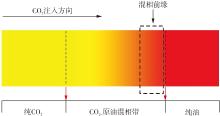
Fig.1
Schematic diagram of CO2 miscible front"
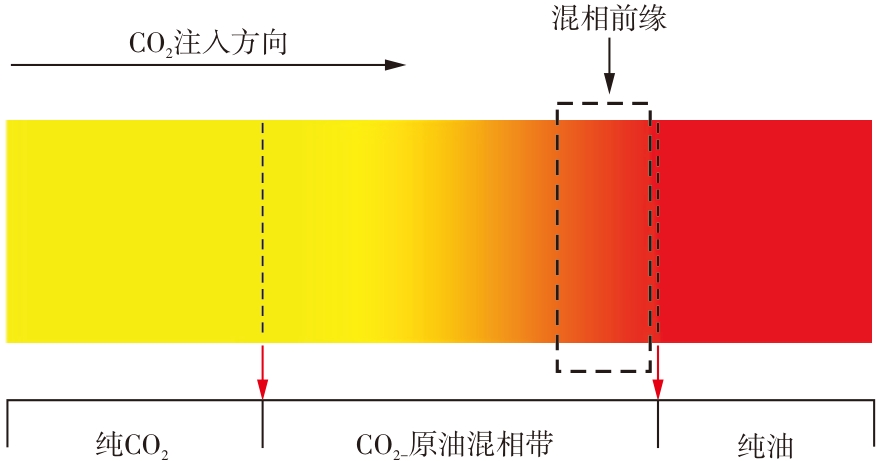

Table 1
Physical property parameters of core samples for NMR displacement experiments in low-permeability reservoir"
| 岩心编号 | 长度/mm | 直径/mm | 孔隙度/% | 渗透率/10-3 μm2 |
|---|---|---|---|---|
| 1 | 76.29 | 25.26 | 13.63 | 6.42 |
| 2 | 79.81 | 25.28 | 15.38 | 10.41 |
| 3 | 76.99 | 25.45 | 14.88 | 12.38 |
| 4 | 50.44 | 25.24 | 14.70 | 26.97 |
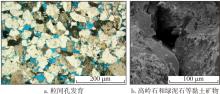
Fig.2
Microscopic analysis results of experimental cores based on SEM and cast thin section analysis"
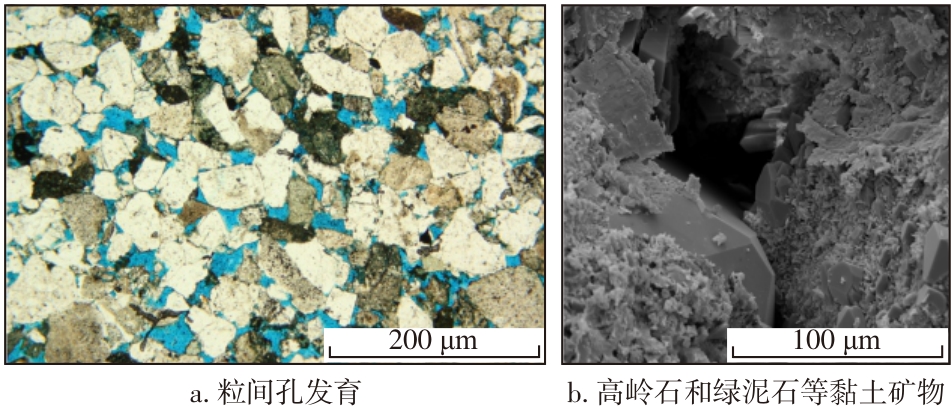
Fig.3
Results of minimum miscible pressure measured by slim tube method"
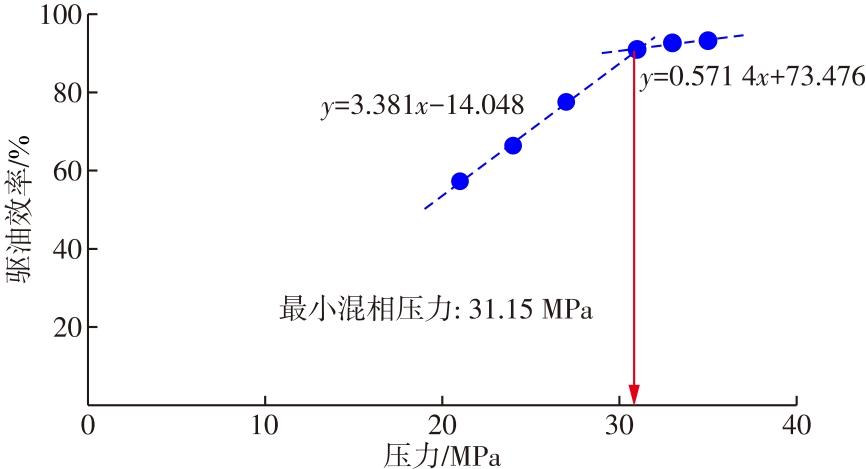
Fig.4
NMR images of CO2 miscible flooding of different core samples before and after displacement (left: before displacement, right: after displacement)"
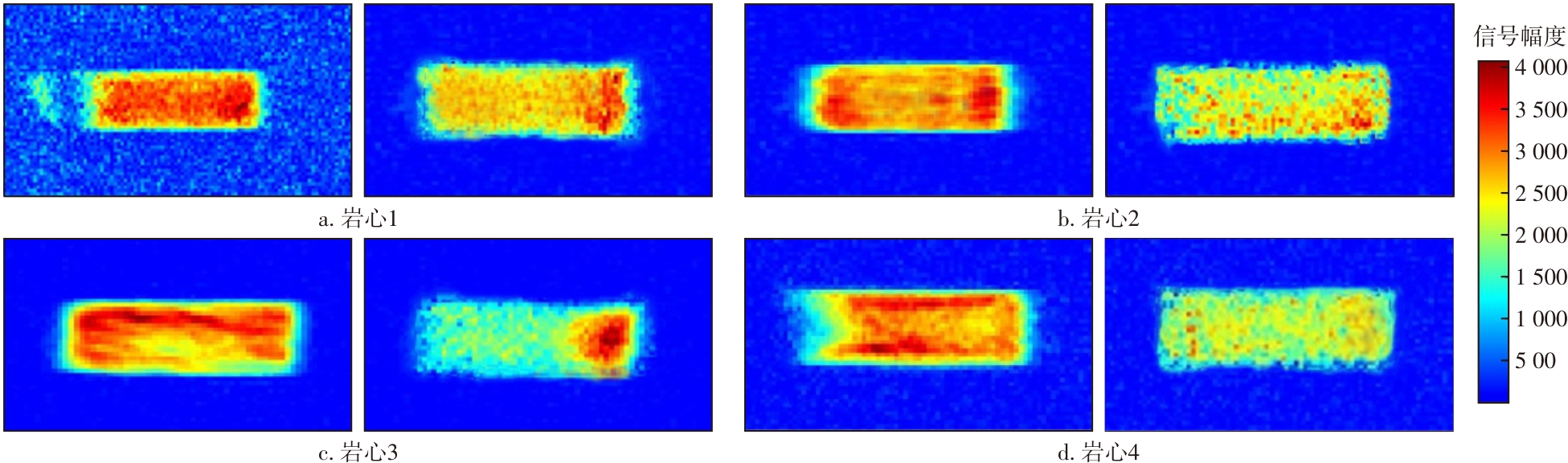
Fig.5
Quantitative NMR maps of different core samples during CO2 flooding"
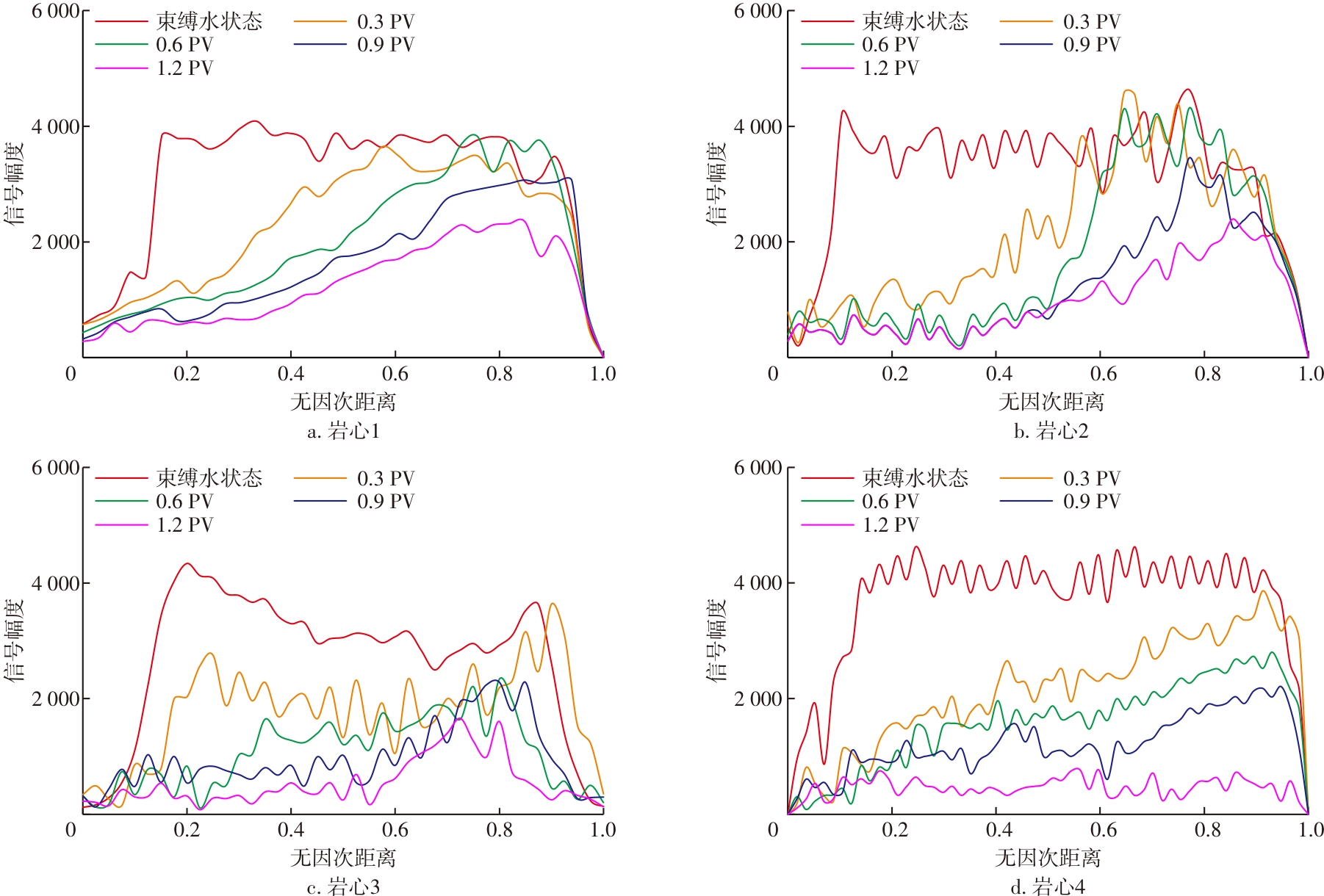
Fig.6
NMR T2 spectra of different core samples"
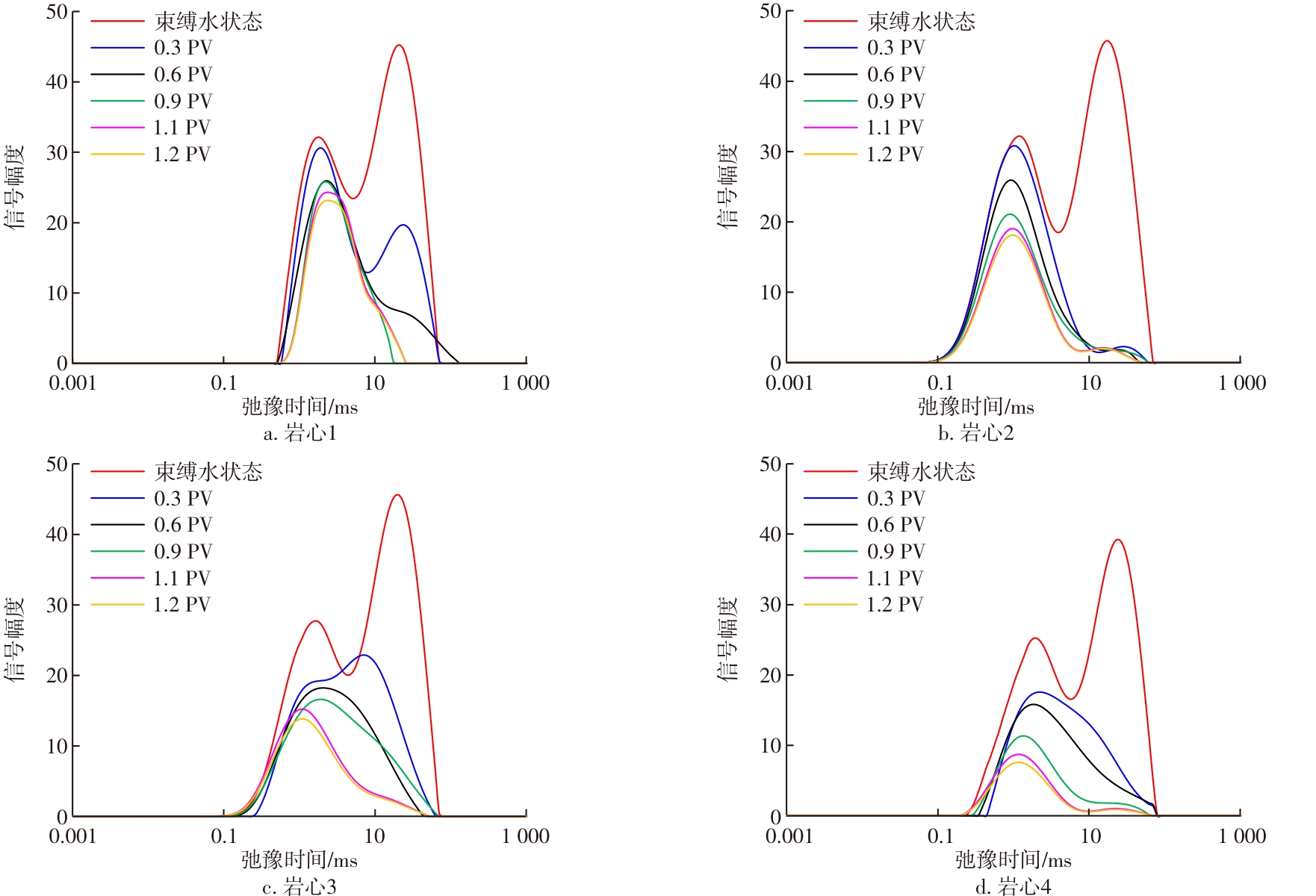
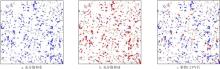
Fig.7
CT scan results of core 3 under different states"

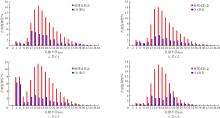
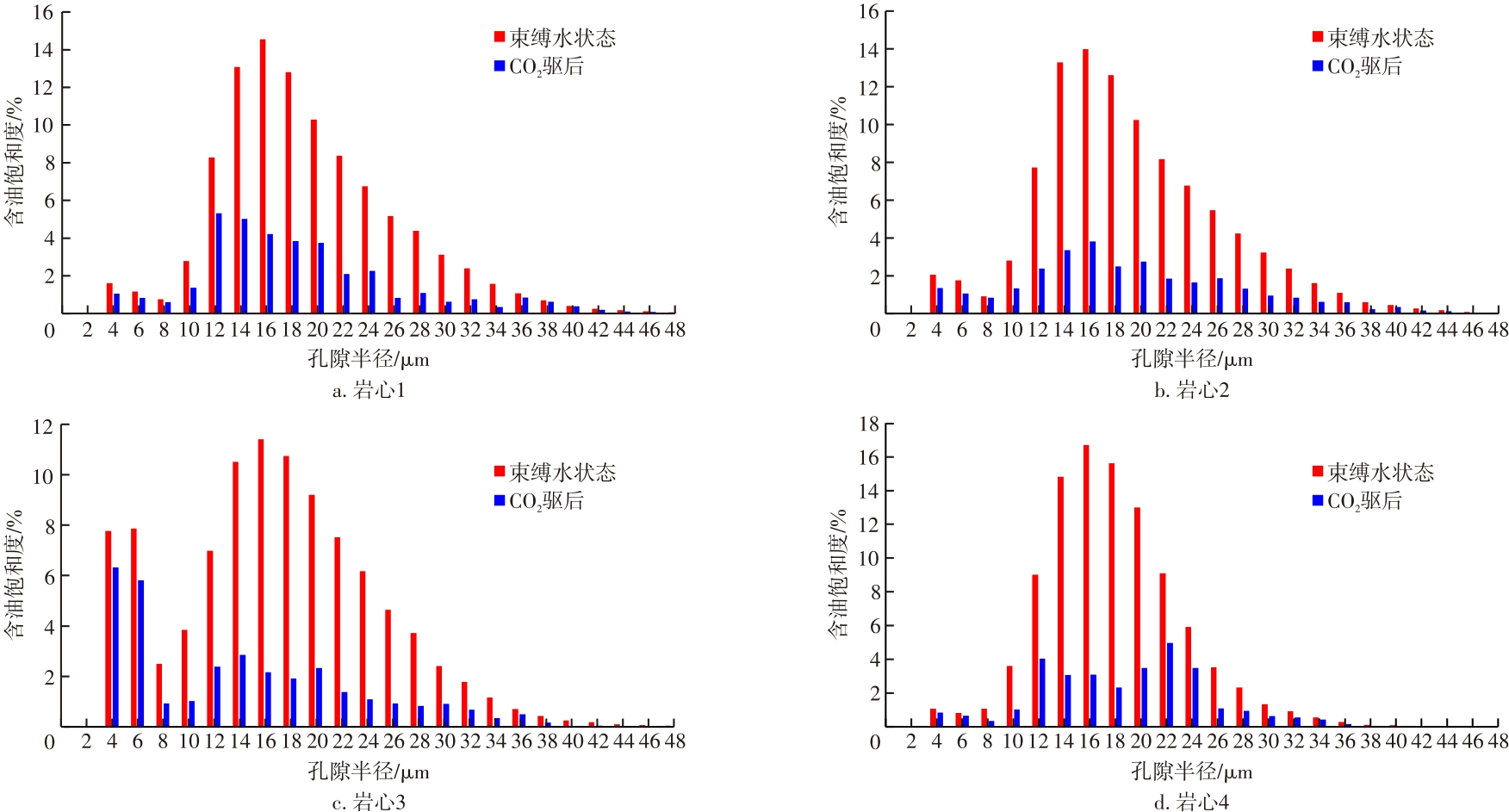
Fig.8
Results of pore oil saturation before and after CO2 flooding"
| [1] | 王军, 邱伟生. 高含水油藏CO2人工气顶驱油-封存适宜条件研究[J]. 油气藏评价与开发, 2024, 14(1): 48-54. |
| WANG Jun, QIU Weisheng. Suitable conditions for CO2 artificial gas cap flooding-sequestration in high water cut reservoir[J]. Petroleum Reservoir Evaluation and Development, 2024, 14(1): 48-54. | |
| [2] | BASHIR A, SHARIFI HADDAD A, RAFATI R. A review of fluid displacement mechanisms in surfactant-based chemical enhanced oil recovery processes: Analyses of key influencing factors[J]. Petroleum Science, 2022, 19(3): 1211-1235. |
| [3] | SHI J, CHENG L, CAO R, et al. Analysis and quantitative evaluation of temperature influence mechanism of multi-cycle water huff-n-puff in ultra-low permeability reservoirs[J]. Energy, 2023, 263: 125600. |
| [4] | MACHALE J, MAJUMDER S K, GHOSH P, et al. Development of a novel biosurfactant for enhanced oil recovery and its influence on the rheological properties of polymer[J]. Fuel, 2019, 257: 116067. |
| [5] | WEI J, LIANG S, ZHANG D, et al. Frozen core experimental study on oil-water distribution characteristics at different stages of water flooding in low permeability oil reservoirs[J]. Energy, 2023, 278: 128007. |
| [6] | KANG W L, ZHOU B B, ISSAKHOV M, et al. Advances in enhanced oil recovery technologies for low permeability reservoirs[J]. Petroleum Science, 2022, 19(4): 1622-1640. |
| [7] | 李侠清, 张星, 卢占国, 等. 低渗透油藏渗吸采油主控因素[J]. 油气地质与采收率, 2021, 28(5): 137-142. |
| LI Xiaqing, ZHANG Xing, LU Zhanguo, et al. Main controlling factors of imbibition oil recovery technology in low-permeability reservoirs[J]. Petroleum Geology and Recovery Efficiency, 2021, 28(5): 137-142. | |
| [8] | 刘凯, 高振东, 王成俊, 等. 低渗透油藏渗吸采油技术研究进展[J]. 油田化学, 2021, 38(4): 747-753. |
| LIU Kai, GAO Zhendong, WANG Chengjun, et al. Research progress of imbibition oil production in low-permeability reservoirs[J]. Oilfield Chemistry, 2021, 38(4): 747-753. | |
| [9] | 郑金定, 任帅, 倪庆东, 等. 三维模型模拟水平井对水驱开发特征的影响[J]. 重庆科技大学学报(自然科学版), 2024, 26(6): 33-37. |
| ZHENG Jinding, REN Shuai, NI Qingdong, et al. The influence of horizontal wells on waterdrive development characteristics through 3D model simulation[J]. Journal of Chongqing University of Science and Technology (Natural Science Edition), 2024, 26(6): 33-37. | |
| [10] | 蔡灿, 周圣文, 陈浩, 等. 超临界CO2压裂物理模拟实验研究进展[J]. 重庆科技大学学报(自然科学版), 2024, 26 (4):11-19. |
| CAI Can, ZHOU Shengwen, CHEN Hao, et al. Advancements in Supercritical CO2 Fracturing Physical Simulation Experiments[J]. Journal of Chongqing University of Science and Technology (Natural Science Edition), 2024,26(4):11-19. | |
| [11] | 王威, 侯爽. 低渗透砂岩油藏开发效果评价新方法研究及应用[J]. 复杂油气藏, 2023, 16(4): 433-438, 443. |
| WANG Wei, HOU Shuang. Research and application of a new method for evaluating the development effect of low permeability sandstone reservoirs[J]. Complex Hydrocarbon Reservoirs, 2023, 16(4): 433-438. | |
| [12] | 王香增, 杨红, 王伟, 等. 延长油田低渗透油藏提高采收率技术进展[J]. 油气地质与采收率, 2022, 29(4): 69-75. |
| WANG Xiangzeng, YANG Hong, WANG Wei, et al. Technical advancements in enhanced oil recovery in low permeability reservoirs of Yanchang Oilfield[J]. Petroleum Geology and Recovery Efficiency, 2022, 29(4): 69-75. | |
| [13] | 计秉玉, 何应付. 中国石化低渗透油藏CO2驱油实践与认识[J]. 油气藏评价与开发, 2021, 11(6): 805-811. |
| JI Bingyu, HE Yingfu. Practice and understanding about CO2 flooding in low permeability oil reservoirs by Sinopec[J]. Petroleum Reservoir Evaluation and Development, 2021, 11(6): 805-811. | |
| [14] | 胡永乐, 郝明强, 陈国利, 等. 中国CO2驱油与埋存技术及实践[J]. 石油勘探与开发, 2019, 46(4): 716-727. |
| HU Yongle, HAO Mingqiang, CHEN Guoli, et al. Technologies and practice of CO2 flooding and sequestration in China[J]. Petroleum Exploration and Development, 2019, 46(4): 716-727. | |
| [15] | 王香增. 低渗透砂岩油藏二氧化碳驱油技术[M]. 北京: 石油工业出版社, 2017. |
| WANG Xiangzeng. CO2 flooding technology in low permeability sandstone reservoir[M]. Beijing: Petroleum Industry Press, 2017. | |
| [16] | 胡永乐. 二氧化碳驱油与埋存技术文集[M]. 北京: 石油工业出版社, 2016. |
| HU Yongle. Technology of carbon dioxide flooding and sequestration[M]. Beijing: Petroleum Industry Press, 2016. | |
| [17] | 俞凯, 刘伟, 陈祖华, 等. 陆相低渗透油藏CO2混相驱技术[M]. 北京: 中国石化出版社, 2016. |
| YU Kai, LIU Wei, CHEN Zuhua, et al. CO2 miscible flooding technology in continental low permeability reservoir[M]. Beijing: China Petrochemical Press, 2016. | |
| [18] | 李阳. 低渗透油藏CO2驱提高采收率技术进展及展望[J]. 油气地质与采收率, 2020, 27(1): 1-10. |
| LI Yang. Technical advancement and prospect for CO2 flooding enhanced oil recovery in low permeability reservoirs[J]. Petroleum Geology and Recovery Efficiency, 2020, 27(1): 1-10. | |
| [19] | 孔维军, 崔传智, 吴忠维, 等. CO2非混相驱前缘运移及气窜规律室内实验研究[J]. 油气藏评价与开发, 2022, 12(5): 764-776. |
| KONG Weijun, CUI Chuanzhi, WU Zhongwei, et al. Laboratory experiment of front migration and gas channeling of CO2 immiscible flooding[J]. Petroleum Reservoir Evaluation and Development, 2022, 12(5): 764-776. | |
| [20] | 赵习森, 石立华, 王维波, 等. 非均质特低渗透油藏CO2驱气窜规律研究[J]. 西南石油大学学报(自然科学版), 2017, 39(6): 131-139. |
| ZHAO Xisen, SHI Lihua, WANG Weibo, et al. CO2 channeling sealing in ultra-low-permeability reservoirs[J]. Journal of Southwest Petroleum University (Science & Technology Edition), 2017, 39(6): 131-139. | |
| [21] | 杨大庆, 尚庆华, 江绍静, 等. 渗透率对低渗油藏CO2驱气窜的影响规律研究[J]. 西南石油大学学报(自然科学版), 2014, 36(4): 137-141. |
| YANG Daqing, SHANG Qinghua, JIANG Shaojing, et al. A study about influence law of permeability on gas channeling of CO2 flooding under low permeability reservoirs[J]. Journal of Southwest Petroleum University (Science & Technology Edition), 2014, 36(4): 137-141. | |
| [22] | 李绍杰. 低渗透滩坝砂油藏CO2近混相驱生产特征及气窜规律[J]. 大庆石油地质与开发, 2016, 35(2): 110-115. |
| LI Shaojie. Performances and gas breakthrough law for CO2 near-miscible flooding in the low-permeability bar and shoal oil reservoirs[J]. Petroleum Geology & Oilfield Development in Daqing, 2016, 35(2): 110-115. | |
| [23] | 李承龙. 特低渗透油藏二氧化碳驱气窜影响因素及规律[J]. 特种油气藏, 2018, 25(3): 82-86. |
| LI Chenglong. Gas channeling influencing factors and patterns of CO2-flooding in ultra-low permeability oil reservoir[J]. Special Oil & Gas Reservoirs, 2018, 25(3): 82-86. | |
| [24] | 李建山, 高浩, 鄢长灏, 等. 原油-CO2相互作用机理分子动力学模拟研究[J]. 油气藏评价与开发, 2024, 14(1): 26-34. |
| LI Jianshan, GAO Hao, YAN Changhao, et al. Molecular dynamics simulation on interaction mechanisms of crude oil and CO2 [J]. Petroleum Reservoir Evaluation and Development, 2024, 14(1): 26-34. | |
| [25] | 徐庆岩, 杨正明, 何英, 等. 特低渗透多层油藏水驱前缘研究[J]. 油气地质与采收率, 2013, 20(2): 74-76. |
| XU Qingyan, YANG Zhengming, HE Ying, et al. Study on water-oil frontal edge for ultra-low permeability multilayer reservoir[J]. Petroleum Geology and Recovery Efficiency, 2013, 20(2): 74-76. | |
| [26] | 宋金贺. 基于平板实验的水驱前缘研究[D]. 大庆: 东北石油大学, 2020. |
| SONG Jinhe. Study on water drive front based on flat plate experiment[D]. Daqing: Northeast Petroleum University, 2020. | |
| [27] | 赵越超, 宋永臣, 郝敏, 等. 磁共振成像在CO2驱油实验中应用[J]. 大连理工大学学报, 2012, 52(1): 23-28. |
| ZHAO Yuechao, SONG Yongchen, HAO Min, et al. Application of MRI to CO2 displacement oil experiments[J]. Journal of Dalian University of Technology, 2012, 52(1): 23-28. | |
| [28] | 孟凡坤, 苏玉亮, 郝永卯, 等. 基于B-L方程的低渗透油藏CO2水气交替注入能力[J]. 中国石油大学学报(自然科学版), 2018, 42(4): 91-99. |
| MENG Fankun, SU Yuliang, HAO Yongmao, et al. Injectivity of CO2 WAG in low permeability oil reservoirs based on B-L equations[J]. Journal of China University of Petroleum (Edition of Natural Science), 2018, 42(4): 91-99. | |
| [29] | SUN L, CUI C, WU Z, et al. A mathematical model of CO2 miscible front migration in tight reservoirs with injection-production coupling technology[J]. Geoenergy Science and Engineering, 2023, 221: 211376. |
| [30] | 杨付林, 喻鹏. 细管实验确定最小混相驱压力技术标准[J]. 特种油气藏, 2019, 26(6): 118-122. |
| YANG Fulin, YU Peng. Technical standard of minimum miscible flooding pressure determination with slim tube experiment[J]. Special Oil & Gas Reservoirs, 2019, 26(6): 118-122. | |
| [31] | 肖文联, 杨玉斌, 李闽, 等. 鄂尔多斯盆地不同类型储集层水驱油特征实验[J]. 石油勘探与开发, 2021, 48(4): 807-816. |
| XIAO Wenlian, YANG Yubin, LI Min, et al. Experimental study on the oil production characteristics during the waterflooding of different types of reservoirs in Ordos Basin, NW China[J]. Petroleum Exploration and Development, 2021, 48(4): 807-816. | |
| [32] | 叶安平. 多孔介质中CO2-原油非平衡扩散理论与实验研究[D]. 成都: 西南石油大学, 2013. |
| YE Anping. Theoretical and experimental study on non-equilibrium diffusion of CO2- crude oil in porous media[D]. Chengdu: Southwest Petroleum University, 2013. | |
| [33] | 李一波, 陈耀旺, 赵金洲, 等.超临界二氧化碳与页岩相互作用机制[J]. 石油与天然气地质,2024, 45(4):1180-1194. |
| LI Yibo, CHEN Yaowang, ZHAO Jinzhou, et al.Interaction mechanism between supercritical carbon dioxide and shale[J]. Oil & Gas Geology, 2024, 45(4):1180-1194. | |
| [34] | 梁珀. 特低渗油藏CO2/水交替微观驱油机理研究[J]. 断块油气田, 2024, 31(4): 746-752. |
| LIANG Po. Microcosmic oil displacement mechanism of CO2/water alternation in ultra-low permeability reservoirs[J]. Fault-Block Oil & Gas Field, 2024, 31(4): 746-752. | |
| [35] | 汤凌越. 多孔介质内油气混相与扩散特性实验研究[D]. 大连: 大连理工大学, 2015. |
| TANG Lingyue. Experimental study on oil-gas miscibility and diffusion characteristics in porous media[D]. Dalian: Dalian University of Technology, 2015. | |
| [36] | 宋宪坤, 刘月田, 杨潇文, 等. 孔隙尺度下CO2混相驱替数值模拟研究[J]. 油气地质与采收率, 2024, 31(6): 140-152. |
| SONG Xiankun, LIU Yuetian, YANG Xiaowen, et al. Numerical simulation of CO2 miscible displacement at pore scale[J]. Petroleum Geology and Recovery Efficiency, 2024, 31(6): 140-152. |
| [1] | LI Yang, WANG Rui, CHEN Zuhua, ZHANG Yao, JI Hongming, LIU Yunfeng, ZHAO Qingmin. Characteristics and development practices of CO2 flooding in deep low-permeability reservoirs [J]. Petroleum Reservoir Evaluation and Development, 2026, 16(1): 1-10. |
| [2] | YANG Bing, FU Qiang, GUAN Jingtao, LI Linxiang, PAN Haoyu, SONG Hongbin, QIN Tingting, ZHU Zhiwei. Oil displacement efficiency based on different well pattern adjustment simulation in high water cut reservoirs [J]. Petroleum Reservoir Evaluation and Development, 2023, 13(4): 519-524. |
| [3] | GUO Ping,ZHANG Wanbo,JIA Na,CHEN Fu,LIU Huang,WANG Zhouhua,GE Xingbo. Research progress of assistants for reducing CO2-crude oil minimum miscible pressure [J]. Petroleum Reservoir Evaluation and Development, 2022, 12(5): 726-733. |
| [4] | CHEN Shijie,PAN Yi,SUN Lei,SI Yong,LIANG Fei,GAO Li. Mechanism of enhanced oil recovery by CO2 combination flooding in low permeability and high pour-point reservoir [J]. Petroleum Reservoir Evaluation and Development, 2021, 11(6): 823-830. |
| [5] | XU Hui,ZHU Yangwen,SONG Min,PANG Xuejun,SUN Xiuzhi. Study on oil displacement performance of temperature sensitive polymer [J]. Reservoir Evaluation and Development, 2020, 10(6): 53-57. |
| [6] | CAO Xulong, LYU Guangzhong, WANG Jie, ZHANG Dong, REN Min. Present situation and further research direction of CO2 flooding technology in Shengli Oilfield [J]. Reservoir Evaluation and Development, 2020, 10(3): 51-59. |
| [7] | Yang Guangyu,Tang Yong,Li Zhaoguo,Zhang Yongqiang,Yu Guangming. Study on factors affecting minimum miscibility pressure of CO2 flooding by tie-line analysis [J]. Reservoir Evaluation and Development, 2019, 9(3): 32-35. |
| [8] | Tang Yong,Zhao Xuemei,Wang Yang. Analysis of influence factor of minimum miscible pressure of CO2 [J]. Reservoir Evaluation and Development, 2018, 8(4): 42-45. |
|
||
