
Petroleum Reservoir Evaluation and Development ›› 2026, Vol. 16 ›› Issue (1): 128-140.doi: 10.13809/j.cnki.cn32-1825/te.2024496
• Field Application • Previous Articles Next Articles
WANG Nenghao1( ), LIAN Wei2,3(), LI Jun1,2,3, LI Jiaqi4
Received:2024-11-04
Online:2026-01-07
Published:2026-01-26
CLC Number:
WANG Nenghao,LIAN Wei,LI Jun, et al. Study on plume evolution and influencing factors of reservoir and caprock integrity in CO2 deep saline aquifer storage: A case study of Shenhua CCS project[J]. Petroleum Reservoir Evaluation and Development, 2026, 16(1): 128-140.
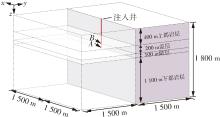
Fig.1
Schematic diagram of three-dimensional model"
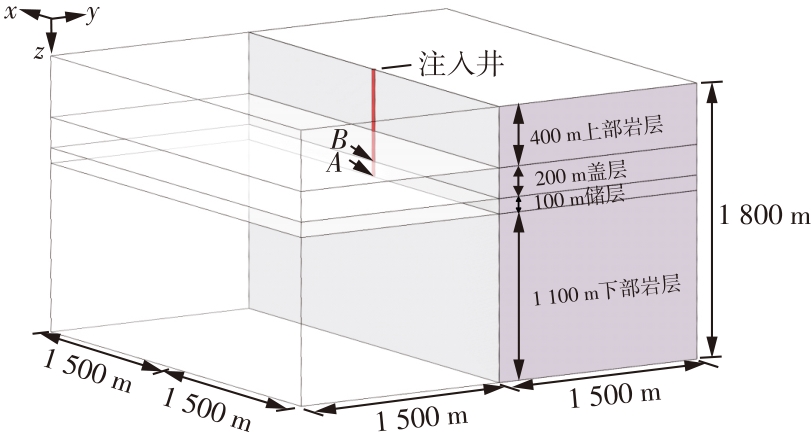
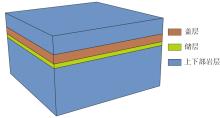
Fig.2
Schematic diagram of model meshing"

Table 1
Main parameters used in numerical model"
| 储盖组合 | 岩石密度/(kg/m3) | 盐度/% | 孔隙度/% | 渗透率/10-3 μm2 | 相对渗透率参数 | 毛管压力参数 | ||||||
|---|---|---|---|---|---|---|---|---|---|---|---|---|
| 0.01 | ||||||||||||
| 20 | ||||||||||||
| 0.10 | ||||||||||||
Table 2
Variable settings"
| 持续注入速率/(104 t/a) | 间歇注入周期 | 盖层渗透率/10-3 μm2 | 储层渗透率/10-3 μm2 | |
|---|---|---|---|---|
| 注入/d | 停注/d | |||
| 10 | 7 | 15 | 0.01 | 5 |
| 20 | 7 | 20 | 0.10 | 10 |
| 30 | 7 | 25 | 1.00 | 20 |
| 40 | 5 | 25 | 10.00 | 40 |
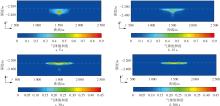
Fig.3
Plume migration at injection rate of 10×104 t/a"
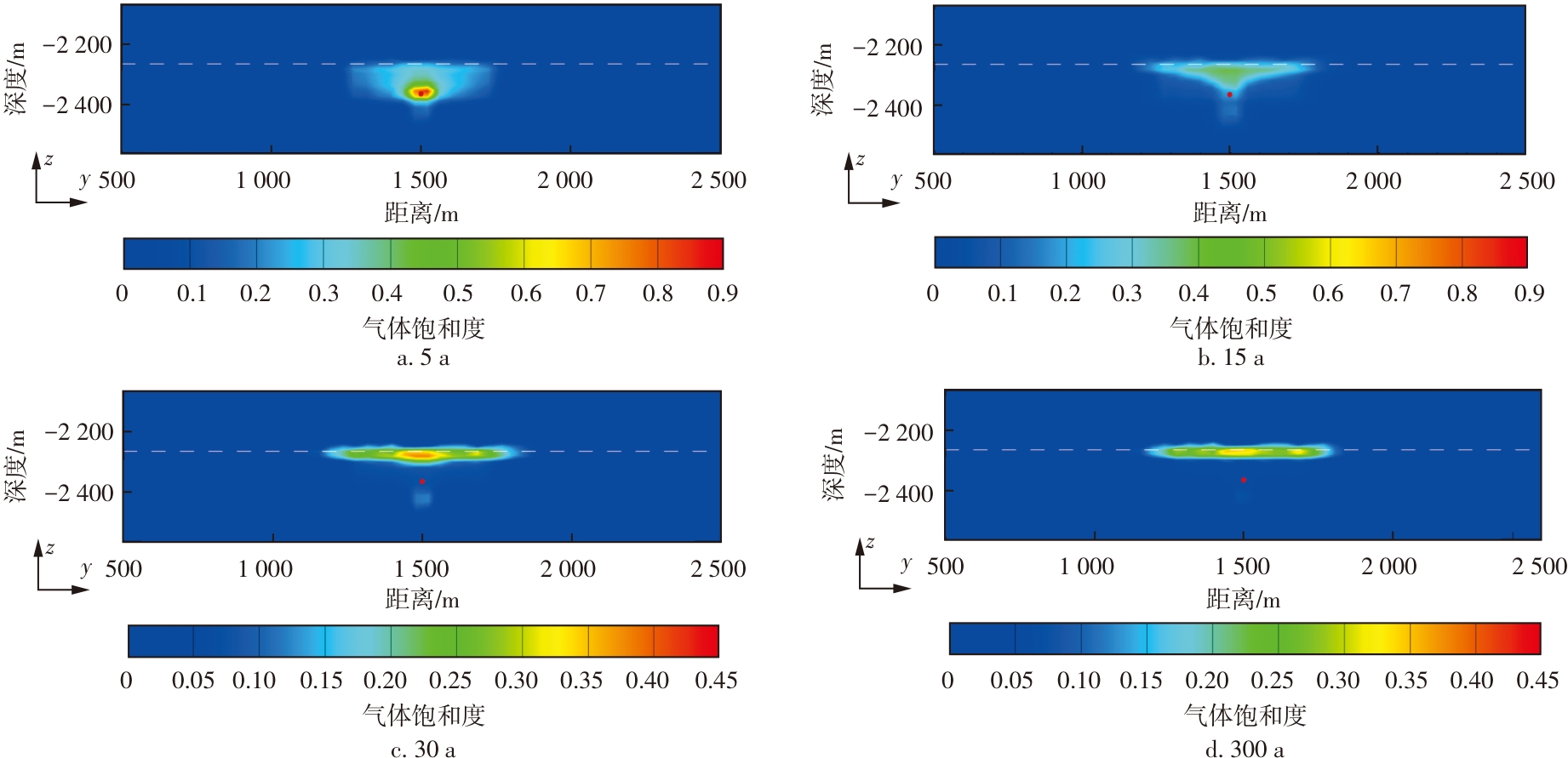
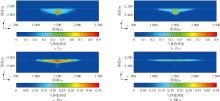
Fig.4
Plume migration at injection rate of 30×104 t/a"
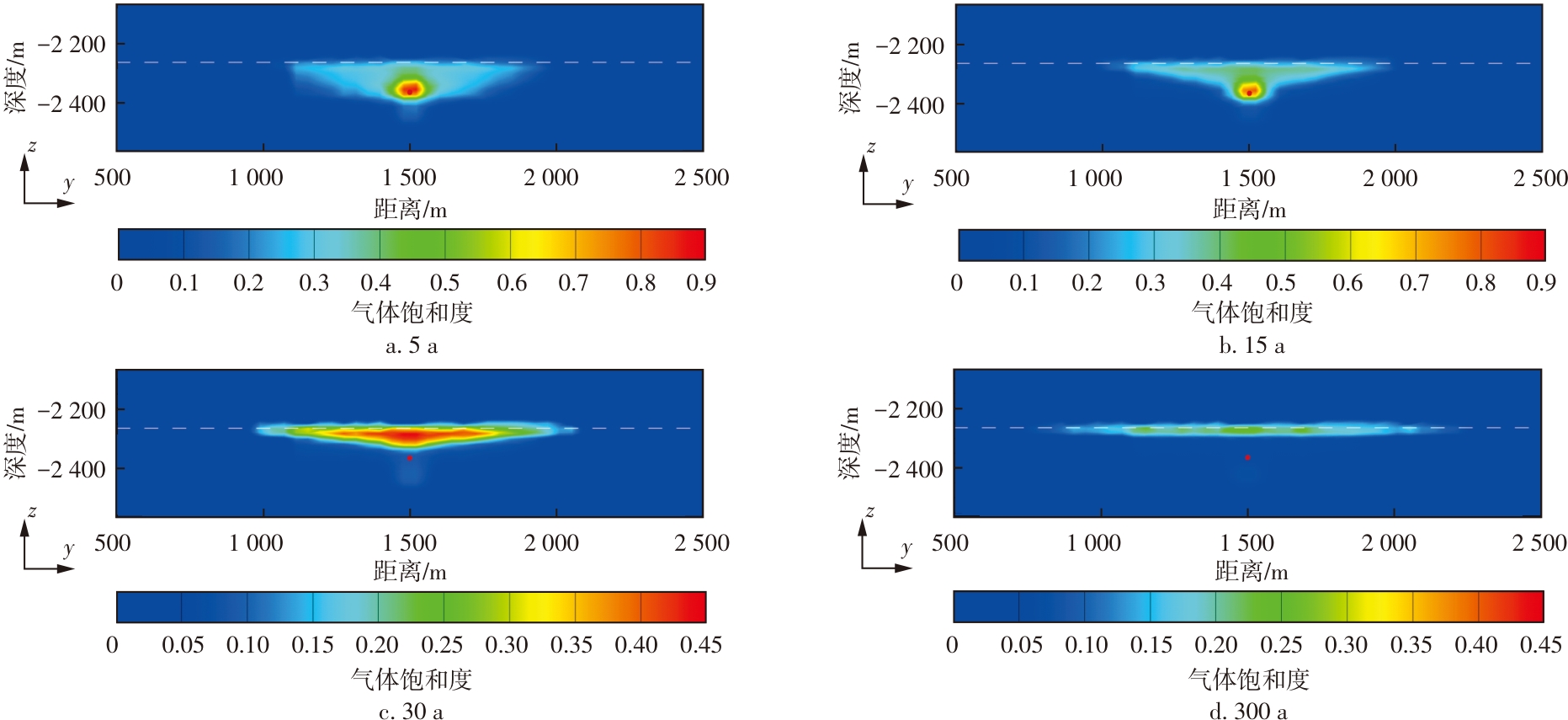
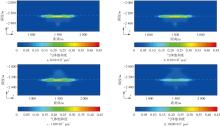
Fig.5
Plume migration under different caprock permeabilities (300 years)"
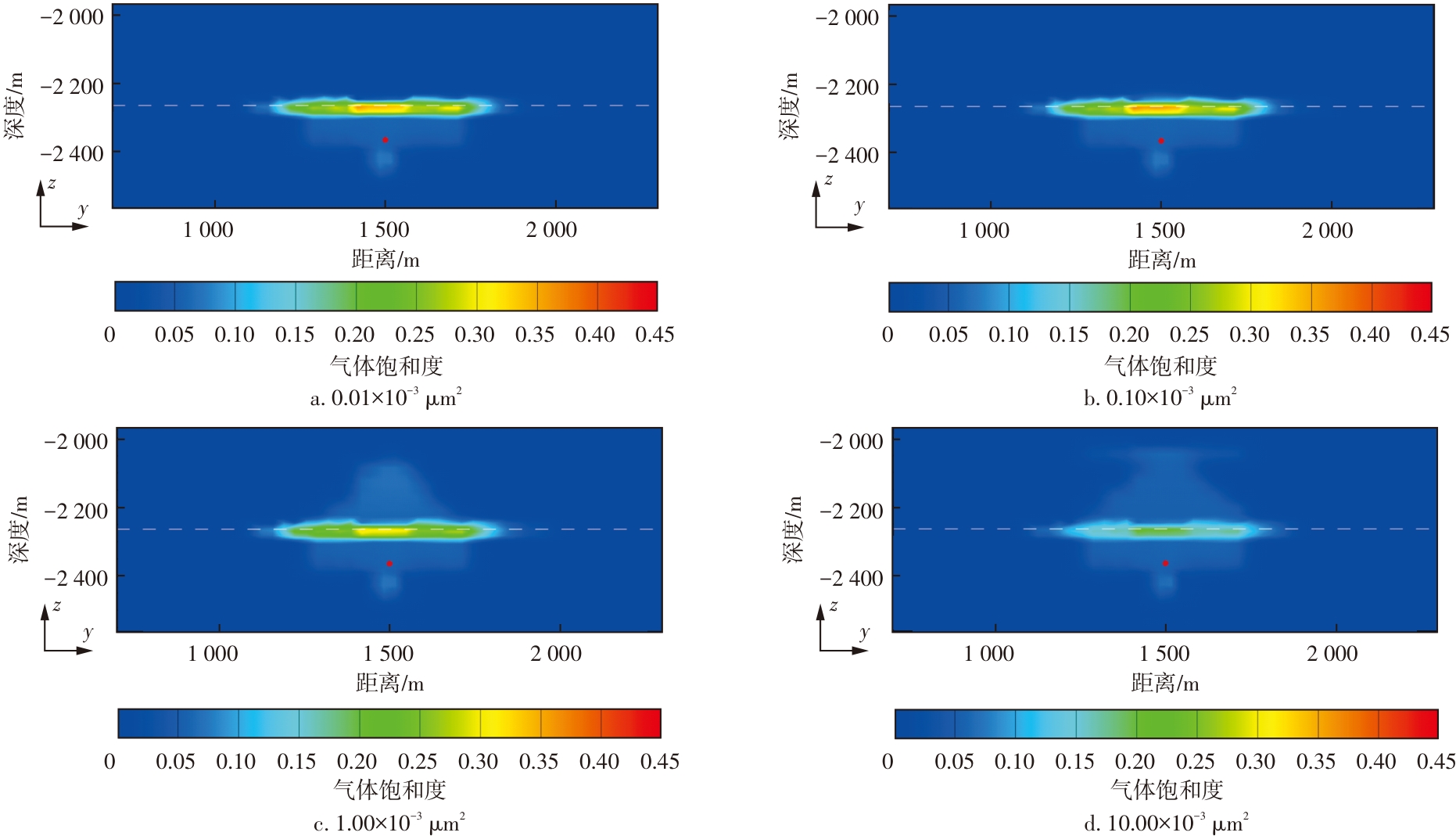
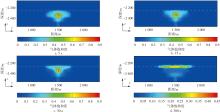
Fig.6
Plume migration with reservoir permeability of 5×10⁻³ μm2"
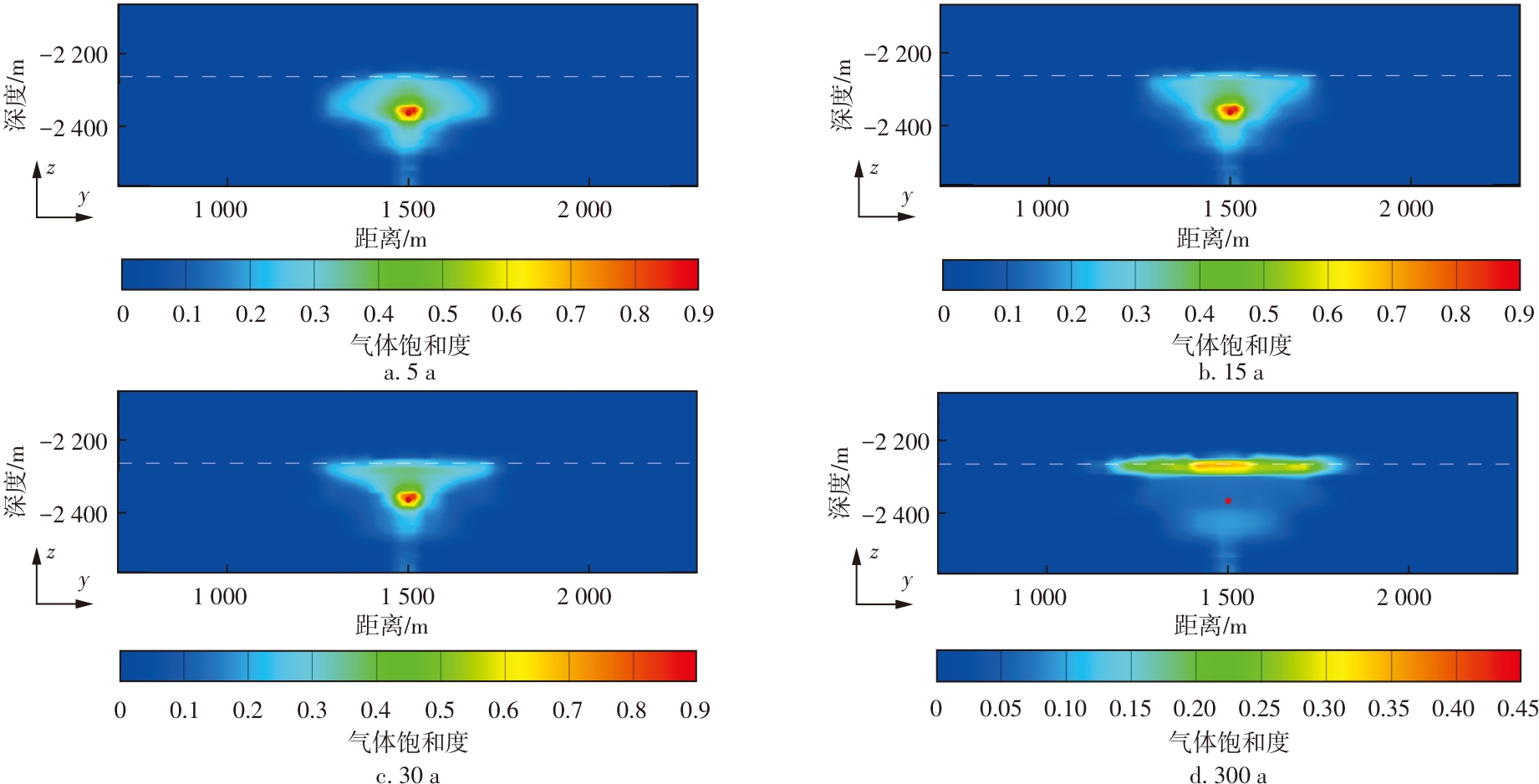
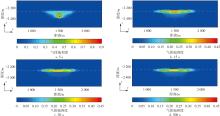
Fig.7
Plume migration with reservoir permeability of 40×10-3 μm2"
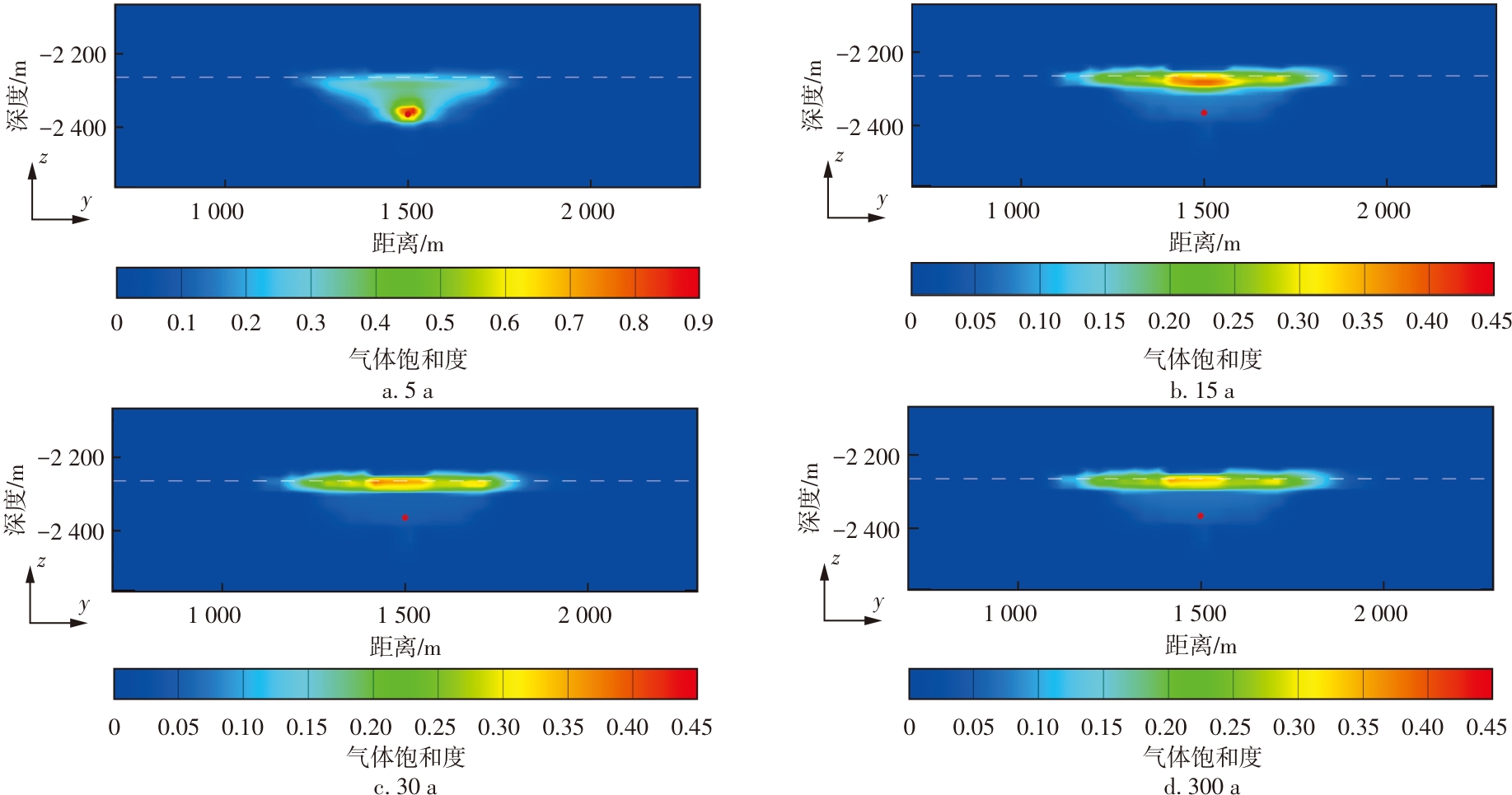
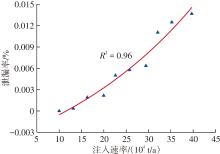
Fig.8
CO2 leakage rate under different injection rates"

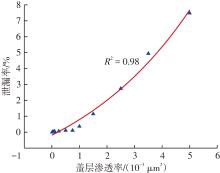
Fig.9
CO2 leakage rate under different caprock permeabilities"
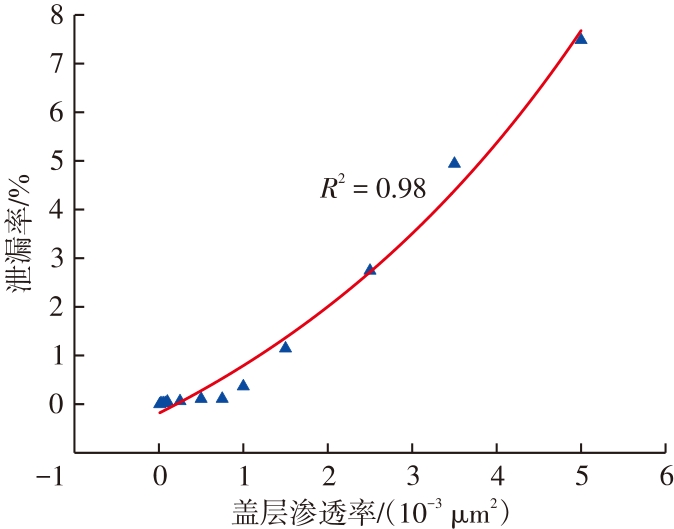
Fig.10
CO2 leakage rate under different reservoir permeabilities"
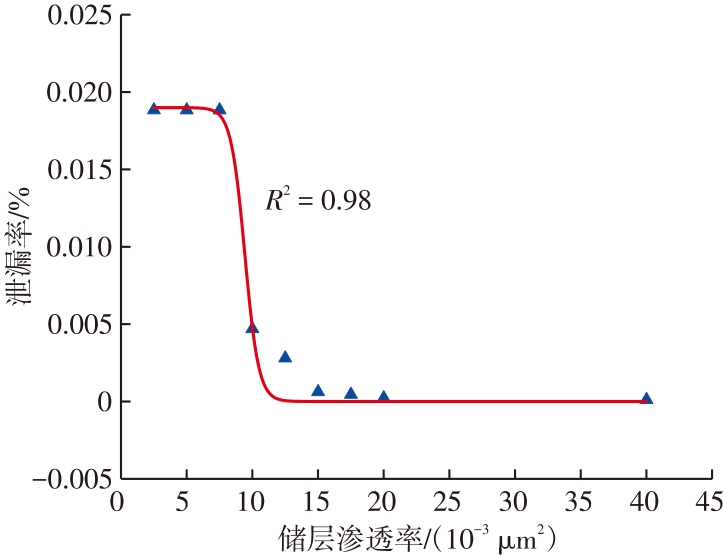
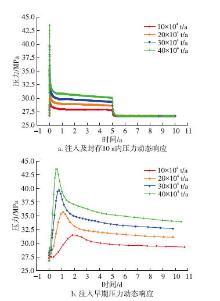
Fig.11
Pressure variation patterns at point A under different injection rates"
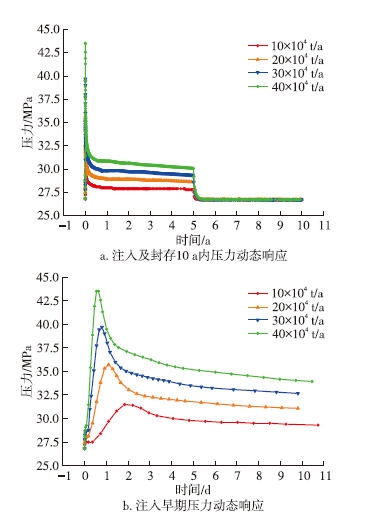
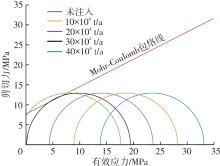
Fig.12
Stress and Mohr circle state at point A under different injection rates"
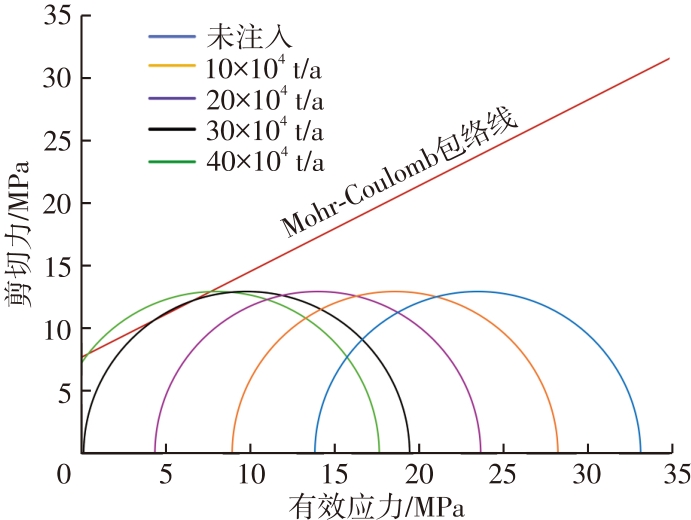
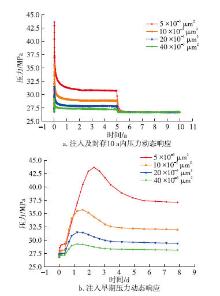
Fig.13
Pressure variation patterns at point A under different reservoir permeabilities"
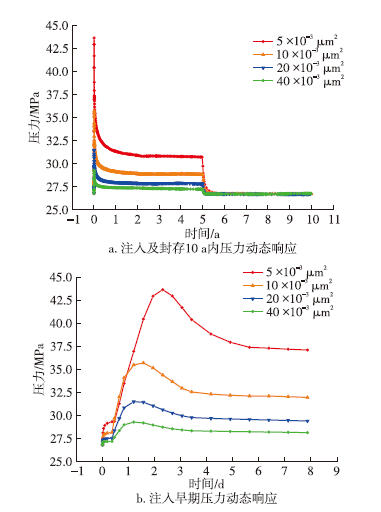
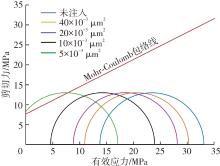
Fig.14
Stress and Mohr circle state at point A under different reservoir permeabilities"
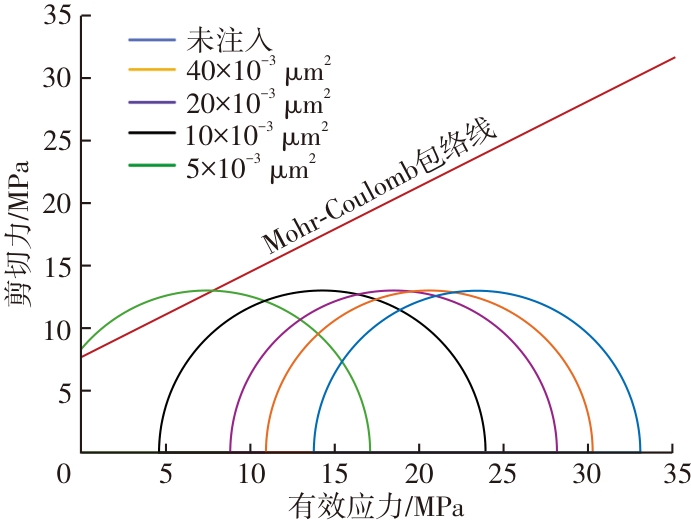
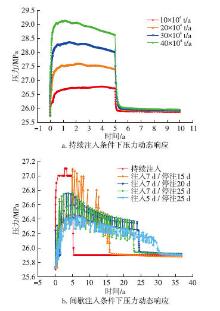
Fig.15
Pressure variation patterns at point B under different injection modes"
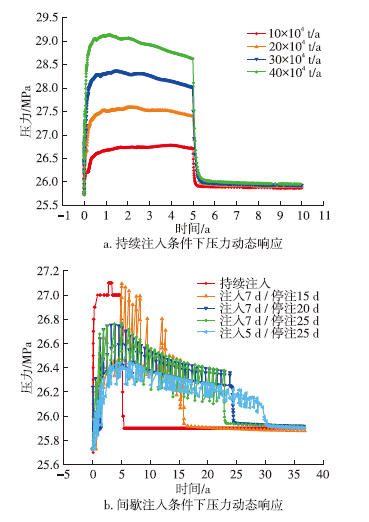
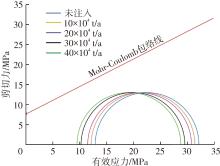
Fig.16
Stress and Mohr circle state at point B under different injection rates"
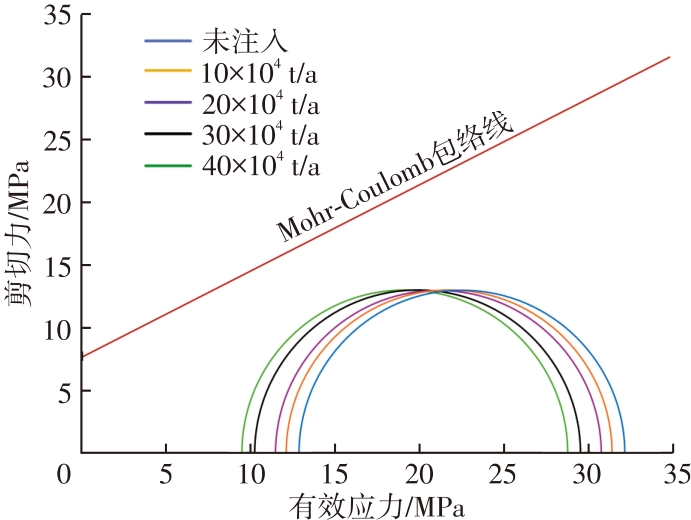
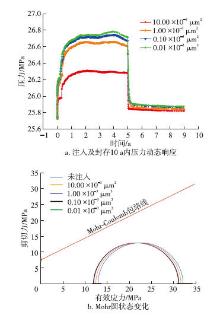
Fig.17
Stress and Mohr circle state at point B under different caprock permeabilities"
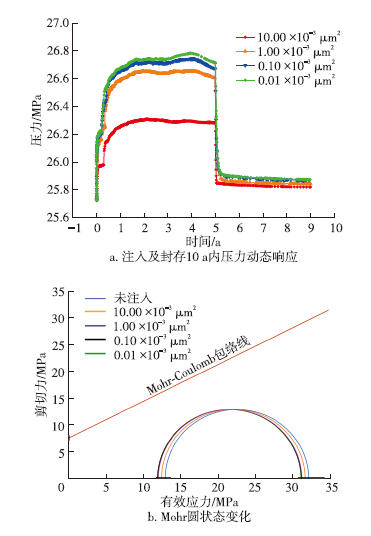
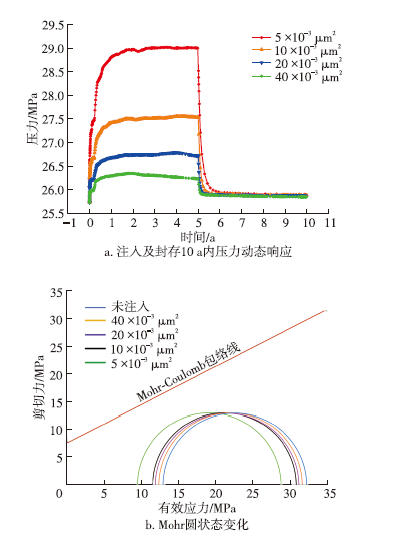
Fig.18
Stress and Mohr circle state at point B under different reservoir permeabilities"
| [1] | 清华大学碳中和研究院. 2024全球碳中和年度进展报告[R]. 北京: 清华大学碳中和研究院, 2024. |
| Institute for Carbon Neutrality of Tsinghua University. 2024 global carbon neutrality annual progress report[R]. Beijing: Institute for Carbon Neutrality of Tsinghua University, 2024. | |
| [2] | 吕昊东, 鲁玺, 张贤. 碳中和目标下CCUS技术部署在公正转型中的协同效益[J]. 洁净煤技术, 2024, 30(10): 138-146. |
| Haodong LYU, LU Xi, ZHANG Xian. Synergistic benefits of CCUS technology in the just transition towards carbon neutrality[J]. Clean Coal Technology, 2024, 30(10): 138-146. | |
| [3] | 杨川, 余才焌, 石庆, 等. CCUS井水泥环腐蚀预测模型及影响因素[J]. 石油与天然气化工, 2024, 53(3): 86-91. |
| YANG Chuan, YU Caijun, SHI Qing, et al. Prediction model and influencing factors of cement sheath corrosion in CCUS wells[J]. Chemical Engineering of Oil & Gas, 2024, 53(3): 86-91. | |
| [4] | 张传宝, 李宗阳, 张东, 等. CO2驱油藏工程研究进展及展望[J].油气地质与采收率, 2024, 31(5): 142-152. |
| ZHANG Chuanbao, LI Zongyang, ZHANG Dong, et al.Research progress and prospects of reservoir engineering by CO2 flooding[J].Petroleum Geology and Recovery Efficiency, 2024, 31(5): 142-152. | |
| [5] | 谭新, 罗大清, 宋欣和.考虑驱油与碳减排双重效益的CCUS-EOR经济性及发展模式分析与探讨[J].油气地质与采收率, 2024, 31(2): 70-78. |
| TAN Xin, LUO Daqing, SONG Xinhe.Analysis and discussion of CCUS-EOR economy and development model considering benefits of oil displacement and carbon reduction[J].Petroleum Geology and Recovery Efficiency, 2024, 31(2): 70-78. | |
| [6] | 姚红生, 邱伟生, 周德华, 等. 苏北盆地复杂断块油藏CCUS-EOR关键技术与实践[J]. 天然气工业, 2025, 45(9): 212-222. |
| YAO Hongsheng, QIU Weisheng, ZHOU Dehua, et al. Key technologies and practices of CCUS-EOR in complex fault-block reservoirs in the Subei Basin[J]. Natural Gas Industry, 2025, 45(9): 212-222. | |
| [7] | 葛世荣, 刘淑琴, 樊静丽, 等. 低碳化现代煤基能源开发关键技术体系[J]. 煤炭学报, 2024, 49(7): 2949-2972. |
| GE Shirong, LIU Shuqin, FAN Jingli, et al. Key technologies for low-carbon modern coal-based energy[J]. Journal of China Coal Society, 2024, 49(7): 2949-2972. | |
| [8] | 骆灵, 李义常, 魏立尧. 元宇宙技术群与量子计算赋能CCUS研究现状及趋势[J]. 新疆石油天然气, 2023, 19(3): 86-94. |
| LUO Ling, LI Yichang, WEI Liyao. Use of metaverse technology clusters and quantum computing in CCUS: Research status and trends[J]. Xinjiang Oil & Gas, 2023, 19(3): 86-94. | |
| [9] | 潘家华, 陈梦玫, 刘保留. 净零碳转型的主要路径及其优化集成[J]. 中国人口·资源与环境, 2023, 33(11): 1-12. |
| PAN Jiahua, CHEN Mengmei, LIU Baoliu. Main paths of the net-zero carbon transition and optimal integration[J]. China Population, Resources and Environment, 2023, 33(11): 1-12. | |
| [10] | 熊鹏飞, 方小宇, 乐文喜, 等. 北部湾盆地涠西南凹陷咸水层CO2地质封存储盖优选及潜力评估[J]. 煤炭学报, 2024, 49(5): 2405-2413. |
| XIONG Pengfei, FANG Xiaoyu, LE Wenxi, et al. Reservoir-cap combination optimization and potential evaluation of CO2 geological storage in saline aquifer, in Wenxinan sag of Beibu Gulf Basin[J]. Journal of China Coal Society, 2024, 49(5): 2405-2413. | |
| [11] | 董利飞, 董文卓, 张旗, 等. 咸水层中CO2溶解性能预测方法优选[J]. 油气藏评价与开发, 2024, 14(1): 35-41. |
| DONG Lifei, DONG Wenzhuo, ZHANG Qi, et al. Optimal prediction method for CO2 solubility in saline aquifers[J]. Petroleum Reservoir Evaluation and Development, 2024, 14(1): 35-41. | |
| [12] | 李万伦, 陈晶, 贾凌霄, 等. 玄武岩CO2地质封存研究进展[J]. 地质论评, 2022, 68(2): 648-657. |
| LI Wanlun, CHEN Jing, JIA Lingxiao, et al. Research progress of CO2 geological sequestration in basalts[J]. Geological Review, 2022, 68(2): 648-657. | |
| [13] | 李小春, 方志明. 中国CO2地质埋存关联技术的现状[J]. 岩土力学, 2007, 28(10): 2229-2233. |
| LI Xiaochun, FANG Zhiming. Status quo of connection technologies of CO2 geological storage in China[J]. Rock and Soil Mechanics, 2007, 28(10): 2229-2233. | |
| [14] | 吴秀章. 中国二氧化碳捕集与地质封存首次规模化探索[M]. 北京: 科学出版社, 2013. |
| WU Xiuzhang. Carbon dioxide capture and geological storage the first massive exploration in China[M]. Beijing: Science Press, 2013. | |
| [15] | 连威, 王能昊, 李军, 等. CO2地质封存泄漏机理与井筒完整性研究进展[J]. 华南师范大学学报(自然科学版), 2024, 56(5): 1-15. |
| LIAN Wei, WANG Nenghao, LI Jun, et al. Research progress on CO2 geological storage leakage mechanism and wellbore integrity[J]. Journal of South China Normal University (Natural Science Edition), 2024, 56(5): 1-15. | |
| [16] | 柯怡兵, 李义连, 张炜, 等. 岩盐沉淀对咸水层二氧化碳地质封存注入过程的影响: 以江汉盆地为例[J]. 地质科技情报, 2012, 31(3): 109-115. |
| KE Yibing, LI Yilian, ZHANG Wei, et al. Impact of halite precipitation on CO2 injection into saline aquifers: A case study of Jianghan Basin[J]. Geological Science and Technology Information, 2012, 31(3): 109-115. | |
| [17] | ZHANG K N, XIE J, LI C, et al. A full chain CCS demonstration project in northeast Ordos Basin, China: Operational experience and challenges[J]. International Journal of Greenhouse Gas Control, 2016, 50: 218-230. |
| [18] | 程丽媛, 贾小宝, 刘燕海. 基于储层多参数同时预测的煤层CO2运移监测方法研究[J]. 石油物探, 2025, 64(5): 970-978. |
| CHENG Liyuan, JIA Xiaobao, LIU Yanhai. Monitoring method of CO2 migration in coal seam based on simultaneous prediction of reservoir multi-parameters[J]. Geophysical Prospecting for Petroleum, 2025, 64(5): 970-978. | |
| [19] | RAHMAN M J, FAWAD M, MONDOL N H. Integrated containment risks assessment for subsurface CO2 storage: Overburden analysis and top seal integrity study, offshore Norway[J]. International Journal of Coal Geology, 2024, 282: 104440. |
| [20] | 牟建业, 闫骁伦, 张士诚, 等. 二氧化碳在致密储层基质中的作用距离研究[J]. 新疆石油天然气, 2024, 20(3): 64-71. |
| MOU Jianye, YAN Xiaolun, ZHANG Shicheng, et al. Research on CO2 matrix penetration distance in tight reservoirs[J]. Xinjiang Oil & Gas, 2024, 20(3): 64-71. | |
| [21] | 成建梅, 赵静, 张可霓, 等. 深部咸含水层CO2注入下压力抬升与流体迁移的大尺度模拟研究: 以松辽盆地为例[J]. 地质科技情报, 2012, 31(5): 162-170. |
| CHENG Jianmei, ZHAO Jing, ZHANG Keni, et al. Large-scale modeling of CO2 storage in deep saline aquifer of Songliao Basin: Pressure buildup and CO2 plume migration[J]. Geological Science and Technology Information, 2012, 31(5): 162-170. | |
| [22] | 雷宏武, 李佳琦, 许天福, 等. 鄂尔多斯盆地深部咸水层二氧化碳地质储存热-水动力-力学(THM)耦合过程数值模拟[J]. 吉林大学学报(地球科学版), 2015, 45(2): 552-563. |
| LEI Hongwu, LI Jiaqi, XU Tianfu, et al. Numerical simulation of coupled thermal-hydrodynamic-mechanical(THM) processes for CO2 geological sequestration in deep saline aquifers at Ordos Basin, China[J]. Journal of Jilin University (Earth Science Edition), 2015, 45(2): 552-563. | |
| [23] | 胡叶军, 王蔚, 任杰, 等. 深部咸水层CO2地质封存对地层压力环境的影响[J]. 河海大学学报(自然科学版), 2016, 44(6): 512-518. |
| HU Yejun, WANG Wei, REN Jie, et al. Effect of CO2 geological sequestration in deep saline aquifer on formation pressure environment[J]. Journal of Hohai University (Natural Sciences), 2016, 44(6): 512-518. | |
| [24] | WANG F G, PING S F, YUAN Y L, et al. Effects of the mechanical response of low-permeability sandstone reservoirs on CO2 geological storage based on laboratory experiments and numerical simulations[J]. Science of the Total Environment, 2021: 796. |
| [25] | BIRKHOLZER J T, ZHOU Q, CORTIS A, et al. A sensitivity study on regional pressure buildup from large-scale CO2 storage projects[J]. Energy Procedia, 2011, 4: 4371-4378. |
| [26] | PAVAN T N V, GOVINDARAJAN S K. Numerical investigations on performance of sc-CO2 sequestration associated with the evolution of porosity and permeability in low-permeable saline aquifers[J]. Geoenergy Science and Engineering, 2023, 225: 211681. |
| [27] | VILARRASA V, CARRERA J, OLIVELLA S. Two-phase flow effects on the CO2 injection pressure evolution and implications for the caprock geomechanical stability[J]. E3S Web of Conferences, 2016, 9: 04007. |
| [28] | LIU D Q, LI Y L, SONG S Y, et al. Simulation and analysis of lithology heterogeneity on CO2 geological sequestration in deep saline aquifer: A case study of the Ordos Basin[J]. Environmental Earth Sciences, 2016, 75(11): 962. |
| [29] | 张杰城, 杜鑫芳, 赫文豪, 等. 热-流耦合与热-流-固耦合作用下的水气交替及间歇注入对咸水层CO2溶解封存的影响[J]. 华南师范大学学报(自然科学版), 2024, 56(1): 9-17. |
| ZHANG Jiecheng, DU Xinfang, HAO Wenhao, et al. Impact of water alternating gas and intermittent injection on CO2 dissolution during CO2 sequestration in saline aquifers considering thermal-hydraulic coupling and thermal-hydraulic-mechanical coupling effects[J]. Journal of South China Normal University (Natural Science Edition), 2024, 56(1): 9-17. | |
| [30] | 徐付桥, 成建梅, 罗伟, 等. VG模型参数选择对咸水层CO2封存的影响研究[J]. 地质科技情报, 2014, 33(4): 185-190. |
| XU Fuqiao, CHENG Jianmei, LUO Wei, et al. Numerical study of the impacts of Van Genuchten model’s parameters selection on the CO2 sequestration in saline aquifers[J]. Geological Science and Technology Information, 2014, 33(4): 185-190. | |
| [31] | WEI X C, LI Q, LI X Y, et al. Impact indicators for caprock integrity and induced seismicity in CO2 geosequestration: Insights from uncertainty analyses[J]. Natural Hazards, 2016, 81: 1-21. |
| [32] | 刘漪雯, 付美龙, 王长权, 等. CO2驱不同注入方式对低渗透储层渗流能力的影响[J].油气地质与采收率, 2024, 31(2): 79-85. |
| LIU Yiwen, FU Meilong, WANG Changquan, et al.Influence of different injection methods of CO2 flooding on flow capacity of low permeability reservoirs[J].Petroleum Geology and Recovery Efficiency, 2024, 31(2): 79-85. | |
| [33] | GAO Y, LIN Q Y, BIJELJIC B, et al. Pore-scale dynamics and the multiphase Darcy law[J]. Physical Review Fluids, 2020, 5: 013801. |
| [34] | ASKAROVA A, MUKHAMETDINOVA A, MARKOVIC S, et al. An overview of geological CO2 sequestration in oil and gas reservoirs[J]. Energies, 2023, 16(6): 2821. |
| [35] | CIOTTA M, TASSINARI C C G. Defining geological viability criteria for CO2 and hydrogen storage in depleted oil and gas fields[J]. Research, Society and Development, 2024, 13(8): e5513846130. |
| [36] | KAMPMAN N, BUSCH A, BERTIER P. Observational evidence confirms modelling of the long-term integrity of CO2-reservoir caprocks[J]. Nature Communications, 2016, 7: 12268. |
| [37] | 陈勉, 金衍, 张广清. 石油工程岩石力学[M]. 北京: 科学出版社, 2008. |
| CHEN Mian, JIN Yan, ZHANG Guangqing. Rock mechanics on petroleum engineering[M]. Beijing: Science Press, 2008. | |
| [38] | 文冬光, 郭建强, 张森琦, 等. 中国二氧化碳地质储存研究进展[J]. 中国地质, 2014, 41(5): 1716-1723. |
| WEN Dongguang, GUO Jianqiang, ZHANG Senqi, et al. The progress in the research on carbon dioxide geological storage in China[J]. Geology in China, 2014, 41(5): 1716-1723. | |
| [39] | 甘满光, 雷宏武, 张力为, 等. 基于数值模拟的CO2地质封存项目井筒泄漏风险定量化评价方法[J]. 工程科学与技术, 2024, 56(1): 195-205. |
| GAN Manguang, LEI Hongwu, ZHANG Liwei, et al. Quantitative evaluation method of wellbore leakage risk of CO2 geological storage project based on numerical simulation[J]. Advanced Engineering Sciences, 2024, 56(1): 195-205. | |
| [40] | 周新桂, 张林炎, 范昆, 等. 鄂尔多斯盆地现今地应力测量及其在油气开发中的应用[J]. 西安石油大学学报(自然科学版), 2009, 24(3): 7-12. |
| ZHOU Xingui, ZHANG Linyan, FAN Kun, et al. Measurement of the present earth stress of Ordos Basin and its applications in oil and gas exploitation[J]. Journal of Xi’an Shiyou University (Natural Science Edition), 2009, 24(3): 7-12. | |
| [41] | 俞忠宝, 庄严, 何亚斌, 等. 鄂尔多斯盆地F区力学特征及地应力分析[J]. 科学技术与工程, 2020, 20(5): 1805-1811. |
| YU Zhongbao, ZHUANG Yan, HE Yabin, et al. Mechanical characteristics and crustal stress analysis of F block in Ordos Basin[J]. Science Technology and Engineering, 2020, 20(5): 1805-1811. | |
| [42] | FAN Z Q, EICHHUBL P, NEWELL P. Basement fault reactivation by fluid injection into sedimentary reservoirs: Poroelastic effects[J]. Journal of Geophysical Research: Solid Earth, 2019, 124(7): 7354-7369. |
| [43] | 陈小璐, 张雨菲, 罗伟疆, 等. 水平井体积压裂套管变形预测方法与防控措施[J]. 新疆石油天然气, 2025, 21(1): 61-68. |
| CHEN Xiaolu, ZHANG Yufei, LUO Weijiang, et al. Prediction method and prevention measures for casing deformation of horizontal well in volume fracturing[J]. Xinjiang Oil & Gas, 2025, 21(1): 61-68. | |
| [44] | BACHU S, ADAMS J J. Sequestration of CO2 in geological media in response to climate change: Capacity of deep saline aquifers to sequester CO2 in solution[J]. Energy Conversion and Management, 2003, 44(20): 3151-3175. |
| [45] | 凌璐璐, 许雅琴, 王永胜, 等. 数值模拟在CO2地质封存示范项目中的应用[J]. 岩土力学, 2013, 34(7): 2017-2022. |
| LING Lulu, XU Yaqin, WANG Yongsheng, et al. Application of numerical simulation to pilot project of CO2 geological sequestration[J]. Rock and Soil Mechanics, 2013, 34(7): 2017-2022. | |
| [46] | 贾善坡, 张辉, 林建品, 等. 含水层储气库泥质岩盖层封气能力定量评价研究: 以里坦凹陷D5区二叠系含水层构造为例[J]. 水文地质工程地质, 2016, 43(3): 79-86. |
| JIA Shanpo, ZHANG Hui, LIN Jianpin, et al. Quantitative assessment of the gas-sealing capacity of the Permian claystone caprock for the D5 aquifer gas storage in the Litan sag[J]. Hydrogeology & Engineering Geology, 2016, 43(3): 79-86. |
| [1] | YANG Long, XU Xun, GUO Liqiang, ZHANG Yizhong, WANG Kun, ZHENG Jingjing. Correction model for phase equilibrium parameters of CO2 geological storage in deep saline aquifers [J]. Petroleum Reservoir Evaluation and Development, 2026, 16(1): 61-73. |
| [2] | ZHAO Yong, FENG Qin, SUN Xin, WANG Qing. Investigation on risk of induced earthquakes for CO2 geological storage in X block, Xihu Sag, East China Sea [J]. Petroleum Reservoir Evaluation and Development, 2026, 16(1): 23-33. |
| [3] | LI Jingwei, PENG Bo, WANG Zeteng, CHEN Xiaoqian, ZHANG Zhenghao, LIU Jindong, LIU Shuangxing, LI Xiaofeng. CO2 storage potential assessment models and their practical progress in oil and gas reservoirs [J]. Petroleum Reservoir Evaluation and Development, 2026, 16(1): 141-152. |
| [4] | YANG Shugang, REN Jinman, CAI Mingyu, LIU Haotong, LIU Shuangxing, XUE Ming, ZHANG Kunfeng. Investigation on occurrence states of CO2 storage in formations with gas field produced water reinjection [J]. Petroleum Reservoir Evaluation and Development, 2025, 15(4): 656-663. |
| [5] | SUN Dongsheng, ZHANG Shunkang, WANG Zhilin, GE Zhengjun, LIN Bo. Calculation method for CO2 geological storage capacity of fault-block traps in Subei Basin based on safety considerations [J]. Petroleum Reservoir Evaluation and Development, 2025, 15(4): 641-645. |
|
||
