
Petroleum Reservoir Evaluation and Development ›› 2026, Vol. 16 ›› Issue (1): 118-127.doi: 10.13809/j.cnki.cn32-1825/te.2025202
• Field Application • Previous Articles Next Articles
MAO Zhenqiang( ), FAN Chao, LIU Saijun, YANG Zhikai, GAO Tong, WANG Yuanyuan
Received:2025-04-27
Online:2026-01-06
Published:2026-01-26
CLC Number:
MAO Zhenqiang,FAN Chao,LIU Saijun, et al. Research and application of key technologies for development of CCUS demonstration project in medium-deep reservoirs[J]. Petroleum Reservoir Evaluation and Development, 2026, 16(1): 118-127.

Table 1
Application status of CCUS projects domestically and internationally"
| 类别 | 油藏埋深/m | 地层温度/℃ | 地层原油黏度/(mPa·s) | 渗透率/10-3 μm2 | 孔隙度/% | 原始地层压力/MPa | 压力系数 | 混相压力/MPa | 驱替方式 | 注入方式 | CO2体积分数/% | 监测介质 | 提高采收率/% | 一次封存率/% | 注气规模/(104 t/a) |
|---|---|---|---|---|---|---|---|---|---|---|---|---|---|---|---|
| 国外技术情况(韦本油田) | 1 450 | 63 | 1.40 | 25.00 | 18.0 | 14.0 | 0.96 | 12.0 | 非混相驱 | 油管笼统注气 | 80 | 油井端气窜监测 | 7 | 55.0 | 100 |
| 国内技术情况(吉林油田) | 2 400 | 98 | 1.85 | 6.37 | 12.8 | 24.5 | 0.98 | 22.8 | 非混相驱 | 油管笼统注气 | 90 | CO2泄露监测 | 10 | 78.6 | 35 |
| 胜利百万吨CCUS | 2 800~3 350 | 126 | 1.59 | 0.50~10.00 | 12.5 | 39.2~46.0 | 1.40 | >29.0 | 高压混相驱 | 水气交替 | 99 | 土壤、大气、地下水环境介质监测 | 15 | 85.0 | 100 |
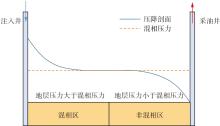
Fig. 1
Pressure profile of injection-production wells in low-permeability reservoir under miscible flooding"
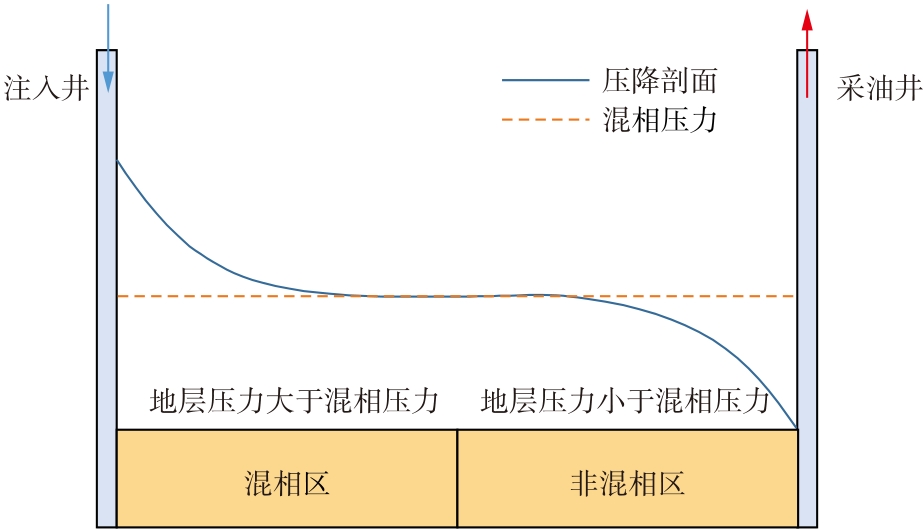
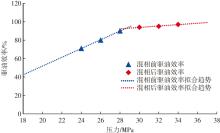
Fig. 2
Relationship between oil flooding efficiency and flooding pressure"
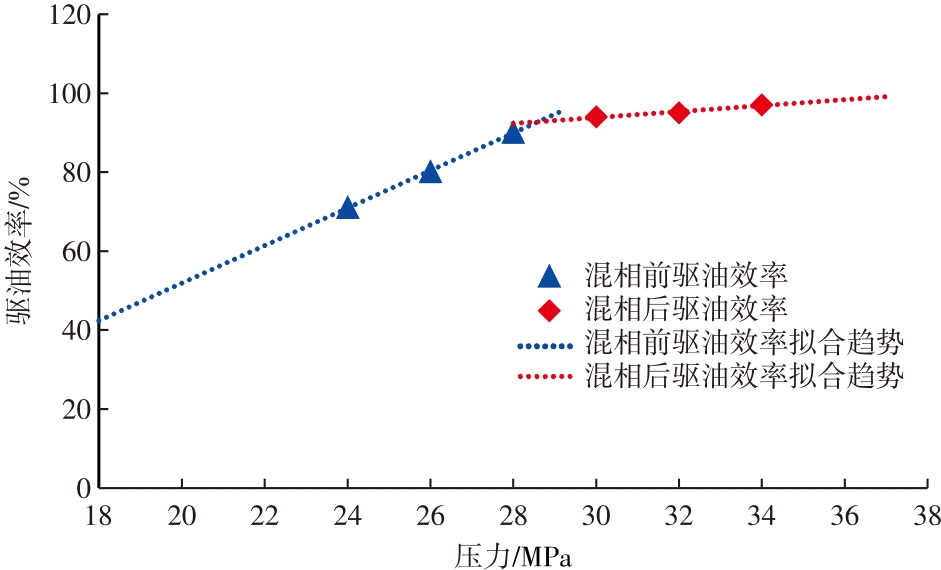
Fig.3
Gas intake profiles before and after miscible flooding in typical wells"
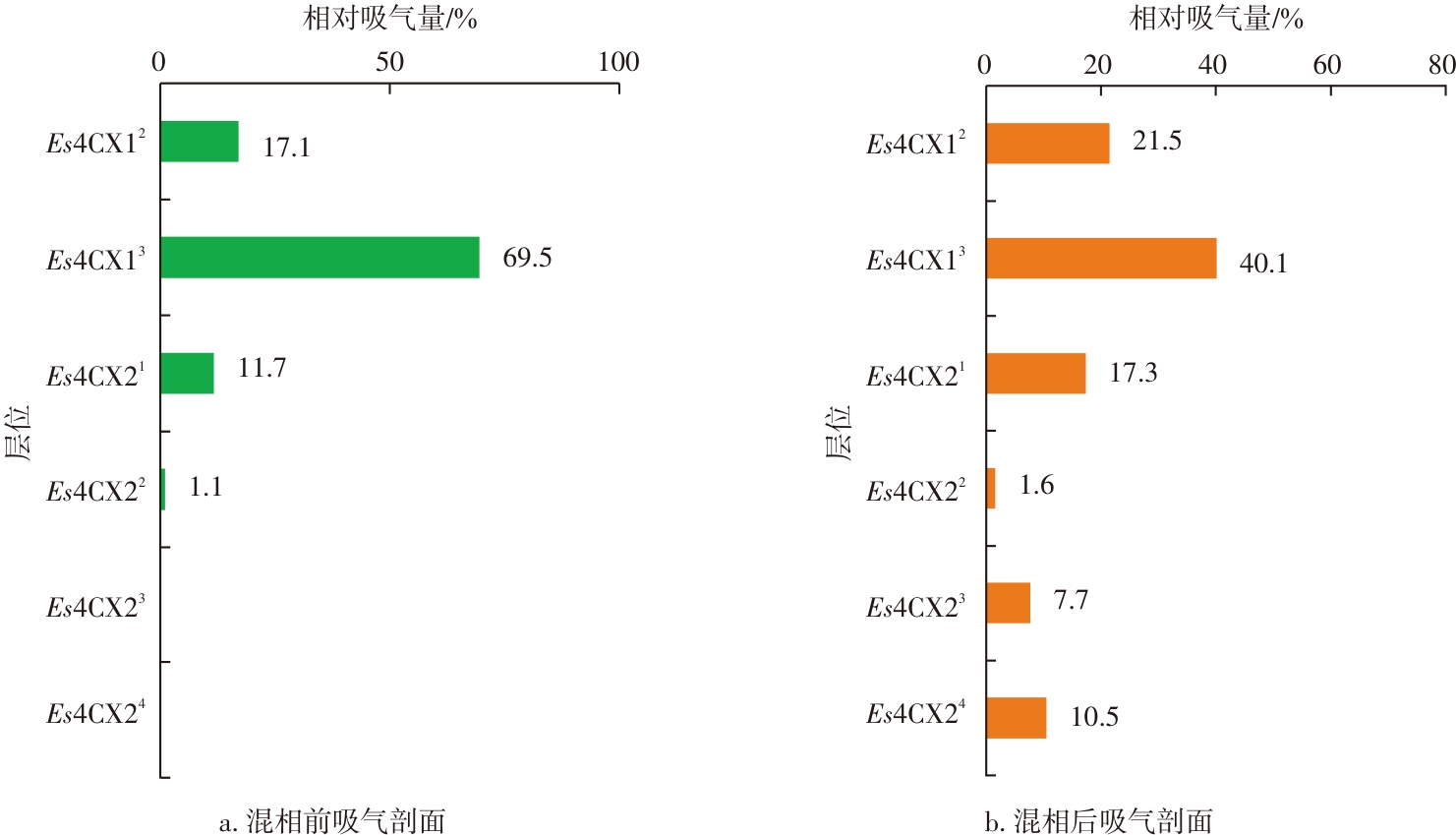
Fig.4
Distribution of CO2 components under different miscible pressures"
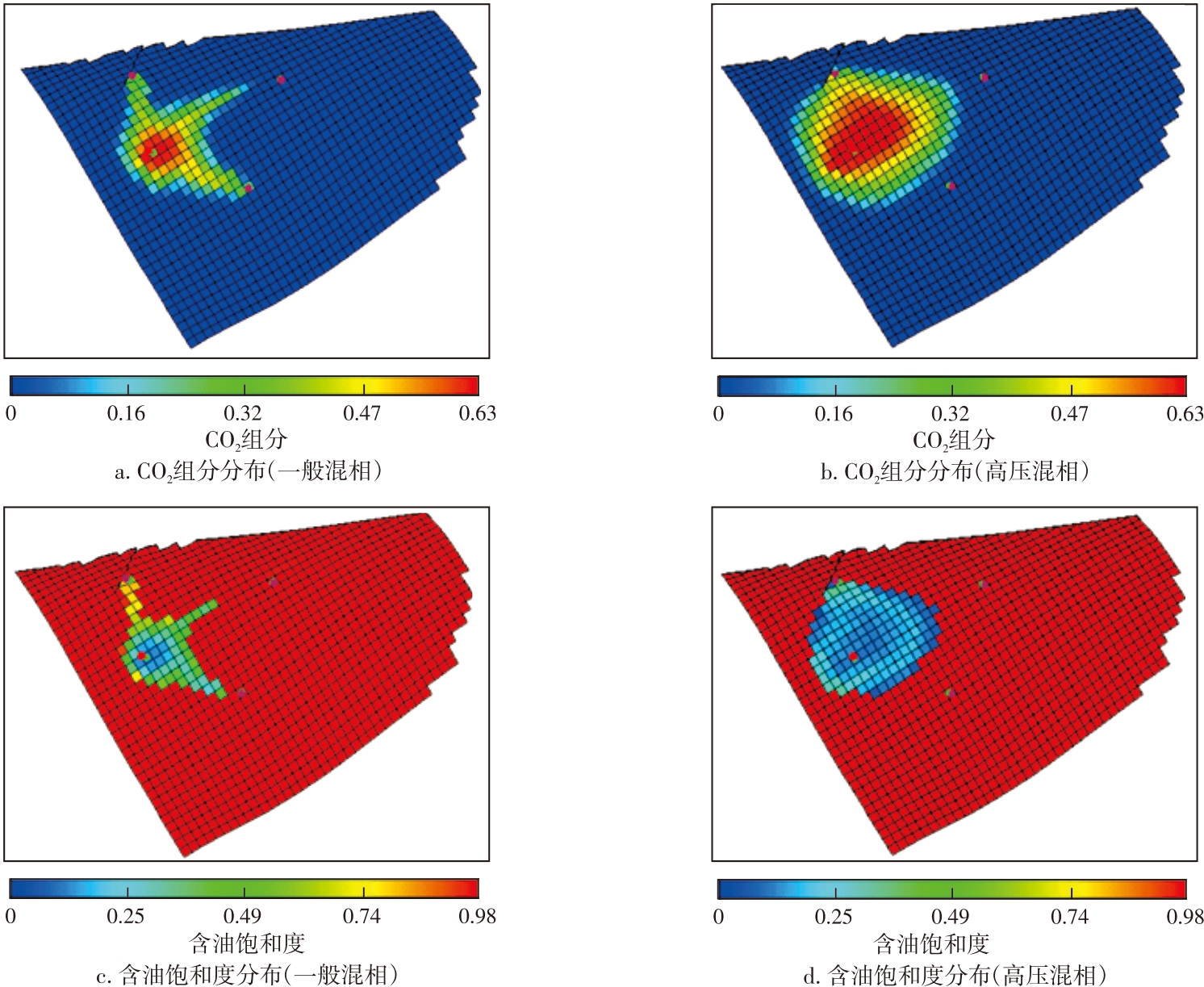
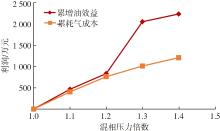
Fig.5
Benefits under different pressure holding levels"
Table 2
Energy-supplement miscible adaptation modes"
| 开发特点 | 主要补能措施 | 实施目标 | 优点 |
|---|---|---|---|
| 坝砂未达混相 | 持续水驱增能 | 超前补能,注水提压达近混相 | 成本低 |
| 滩砂低能量 | 压驱快速补能 | 注入难度大井区,压驱快速提能达混相 | 压力提升快 |
| 已达混相区 | 持续气驱提效率 | 持续注气,提驱替效率、控含水 | 提产、高产 |
| 高CO2井区 | 水气交替扩波及 | 地层压力高井区,优化交替参数保混相 | 稳产、提产 |
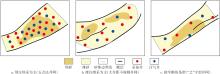
Fig.6
Well network adaptation model in demonstration zone"

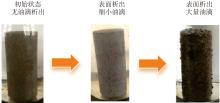
Fig.7
Spontaneous imbibition of crude oil flooding in cores"
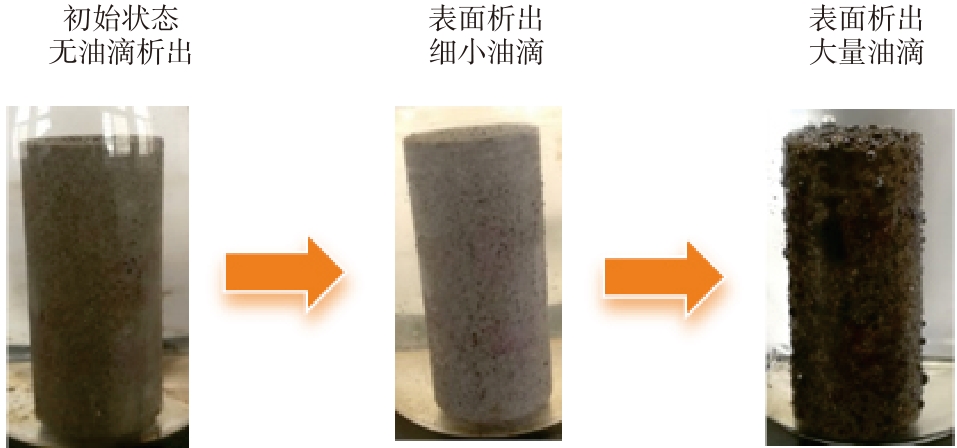
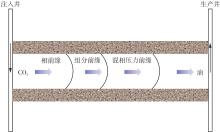
Fig.8
Schematic diagram of energy and medium propagation between injection and production wells"
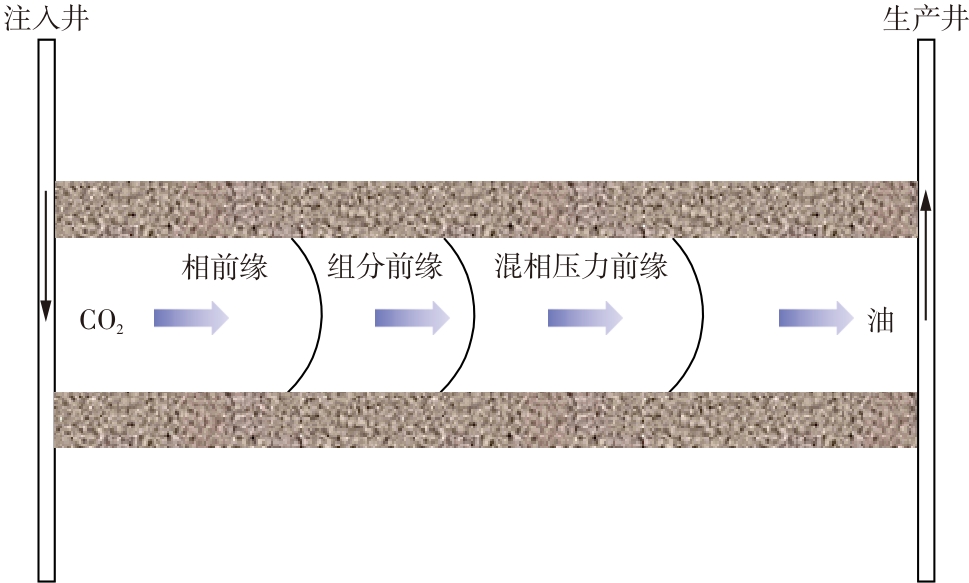
Table 3
Multi-factor analysis of phase front migration velocity"
| 影响因素 | 平方和 | 自由度 | 均方差 | F | Pci |
|---|---|---|---|---|---|
| 总体指标 | R2=0.99,Pci<0.05 | ||||
| 井网形式 | 0 | 3 | 0 | 0.247 | 0.861 |
| 井距大小 | 0 | 3 | 0 | 0.537 | 0.674 |
| 裂缝方向 | 0 | 3 | 0 | 1.126 | 0.410 |
| 渗透率 | 0.985 | 3 | 0.328 | 113 022.127 | 0 |
| 地层压力 | 0.006 | 3 | 0.002 | 739.124 | 0 |
| 注气速度 | 0.049 | 3 | 0.016 | 5 584.740 | 0 |
| 残差 | 0 | 6 | 0 | ||
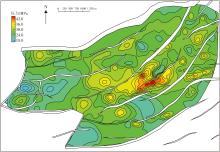
Fig.9
Pressure distribution of formation monitoring in demonstration zone"
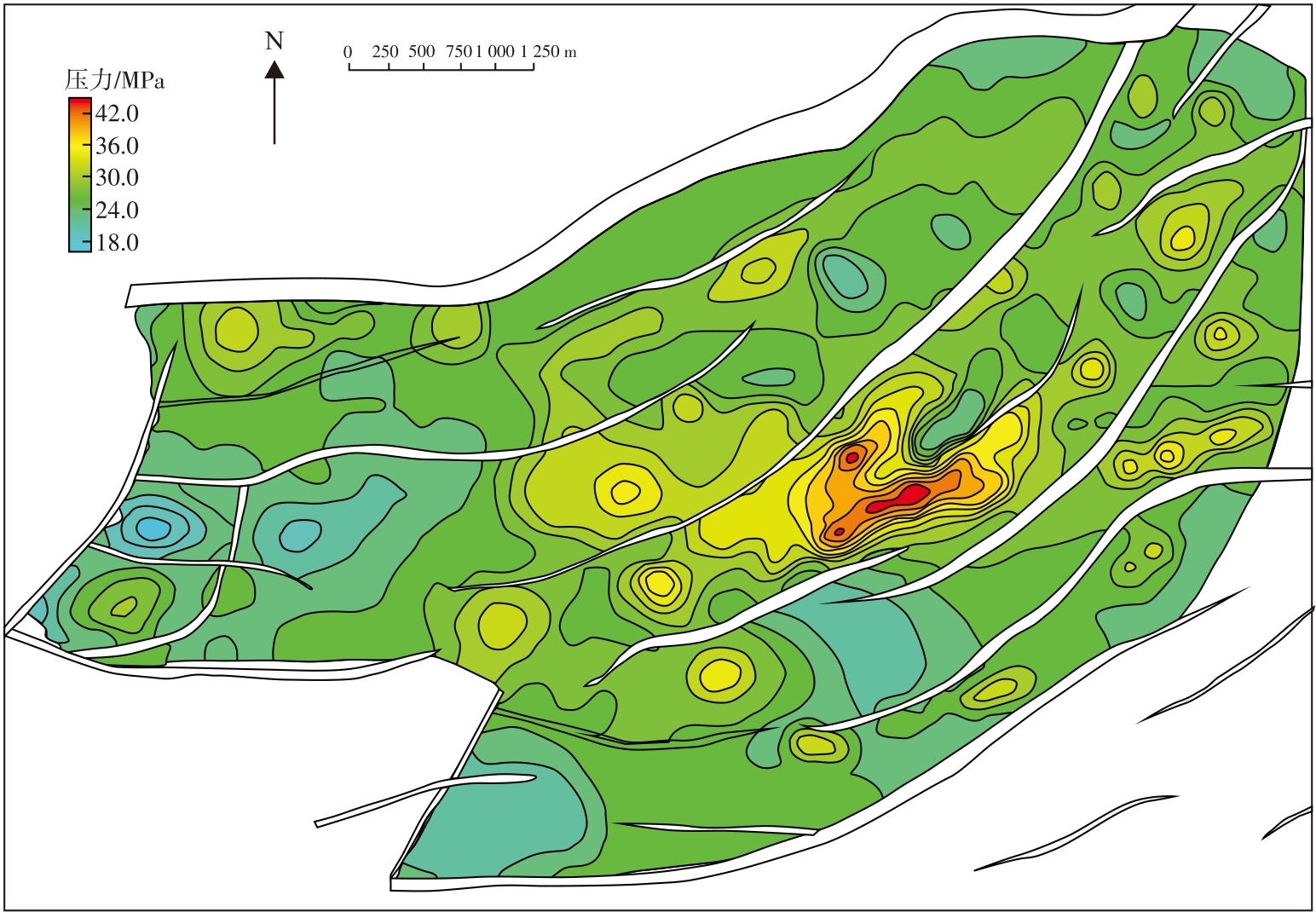
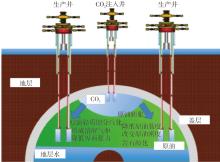
Fig.10
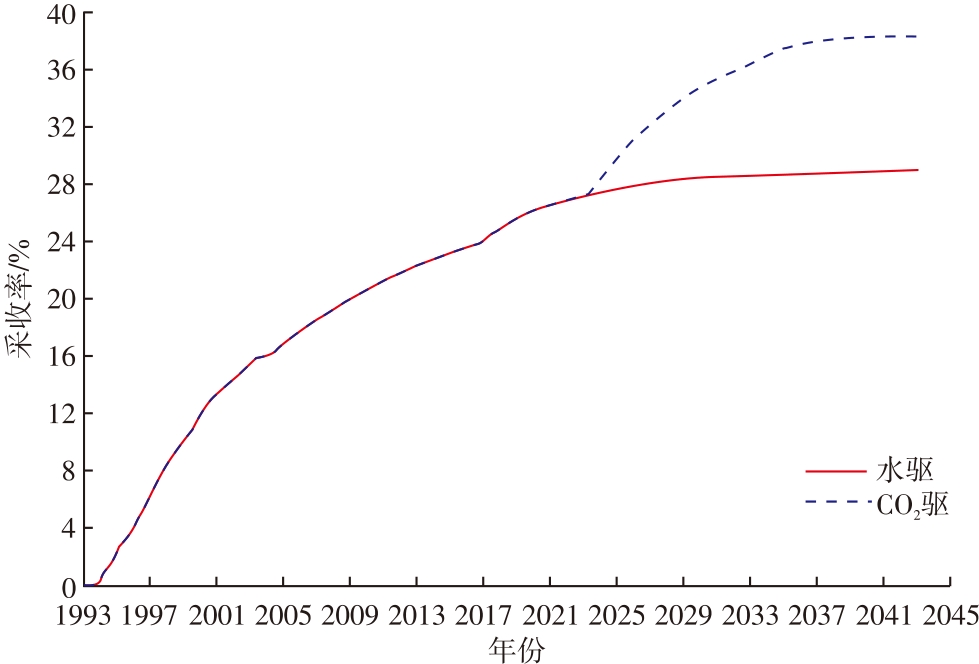
Gas-water dual-flooding storage mode in Zhengnan oil and gas reservoir"
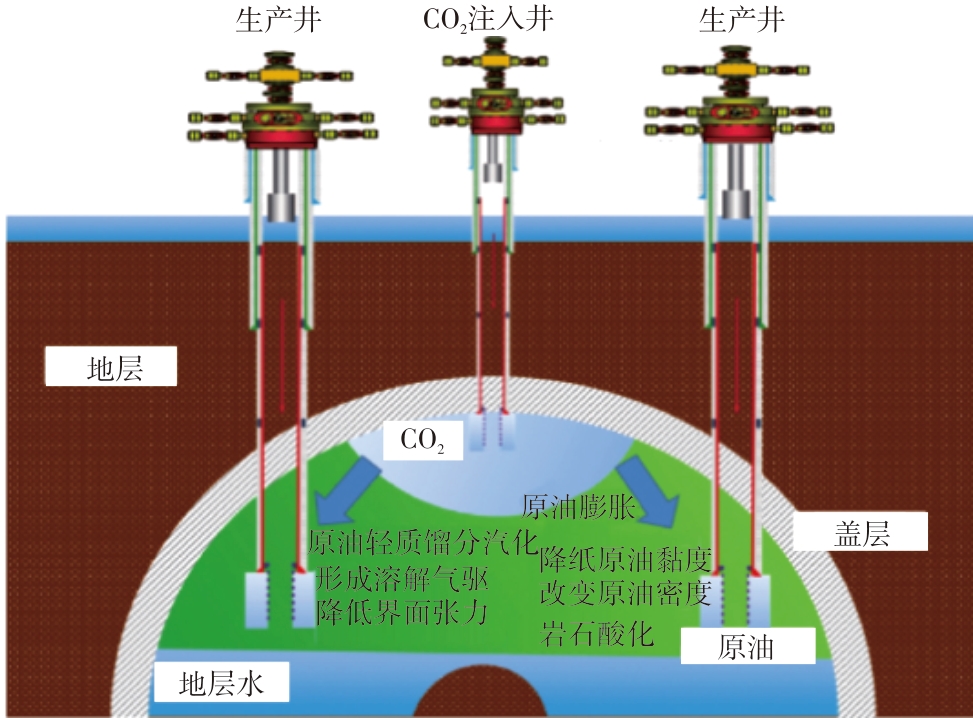
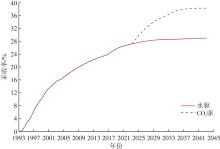
Fig.11
Simulation of enhanced oil recovery by gas-water dual-flooding in Zhengnan oil and gas reservoir"
| [1] | 叶晓东, 陈军, 陈曦, 等. “双碳”目标下的中国CCUS技术挑战及对策[J]. 油气藏评价与开发, 2024, 14(1): 1-9. |
| YE Xiaodong, CHEN Jun, CHEN Xi, et al. China’s CCUS technology challenges and countermeasures under “double carbon” target[J]. Petroleum Reservoir Evaluation and Development, 2024, 14(1): 1-9. | |
| [2] | 何志勇, 郭本帅, 汪东, 等. CO2捕集和利用技术的应用与研发进展[J]. 油气藏评价与开发, 2024, 14(1): 70-75. |
| HE Zhiyong, GUO Benshuai, WANG Dong, et al. Application and research progress of CO2 capture and utilization technology[J]. Petroleum Reservoir Evaluation and Development, 2024, 14(1): 70-75. | |
| [3] | 姚红生, 邱伟生, 周德华, 等. 苏北盆地复杂断块油藏CCUS-EOR关键技术与实践[J]. 天然气工业, 2025, 45(9): 212-222. |
| YAO Hongsheng, QIU Weisheng, ZHOU Dehua, et al. Key technologies and practices of CCUS-EOR in complex fault-block reservoirs in the Subei Basin[J]. Natural Gas Industry, 2025, 45(9): 212-222. | |
| [4] | 舒华文. 胜利油田百万吨级CCUS输注采关键工程技术[J]. 油气藏评价与开发, 2024, 14(1): 10-17. |
| SHU Huawen. Key engineering technologies of one-million-ton CCUS transportation-injection-extraction in Shengli Oilfield[J]. Petroleum Reservoir Evaluation and Development, 2024, 14(1): 10-17. | |
| [5] | 唐建东, 王智林, 葛政俊. 苏北盆地江苏油田CO2驱油技术进展及应用[J]. 油气藏评价与开发, 2024, 14(1): 18-25. |
| TANG Jiandong, WANG Zhilin, GE Zhengjun. CO2 flooding technology and its application in Jiangsu Oilfield in Subei Basin[J]. Petroleum Reservoir Evaluation and Development, 2024, 14(1): 18-25. | |
| [6] | 张烈辉, 韦棋, 廖广志, 等. 双碳背景下中国CCUS-EOR发展现状、思考与展望[J]. 钻采工艺, 2025, 48(5): 10-20. |
| ZHANG Liehui, WEI Qi, LIAO Guangzhi, et al. Current status, reflections and prospects of CCUS-EOR development in China under the dual-carbon goals[J]. Drilling and Production Technology, 2025, 48(5): 10-20. | |
| [7] | 窦立荣, 郜峰, 王曦, 等. 全球CCUS行业发展趋势及国际油公司业务发展模式[J]. 钻采工艺, 2025, 48(5): 21-29. |
| DOU Lirong, GAO Feng, WANG Xi, et al. Global trends in the CCUS industry and business development models of international oil companies[J]. Drilling and Production Technology, 2025, 48(5): 21-29. | |
| [8] | 朱浩楠, 曹成, 张烈辉, 等. CO2驱气提高采收率机理及发展方向[J]. 油气藏评价与开发, 2024, 14(6): 975-980. |
| ZHU Haonan, CAO Cheng, ZHANG Liehui, et al. Mechanism and development direction of CO2-EGR[J]. Petroleum Reservoir Evaluation and Development, 2024, 14(6): 975-980. | |
| [9] | 邓旭, 杨雯欣, 付美龙. “双碳”背景下CO2驱油数学模型研究现状与进展[J]. 化工管理, 2022, 30(25): 113-117. |
| DENG Xu, YANG Wenxin, FU Meilong. Current status and progress of research on carbon dioxide flooding mathematical model in the context of “double carbon”[J]. Chemical Enterprise Management, 2022, 30(25): 113-117. | |
| [10] | 杨勇, 张世明, 曹小朋, 等. 胜利油田CO2高压混相驱油与封存理论技术及矿场实践[J]. 石油勘探与开发, 2024, 51(5): 1080-1091. |
| YANG Yong, ZHANG Shiming, CAO Xiaopeng, et al. CO2 high-pressure miscible flooding and storage technology and its application in Shengli Oilfield, East China[J]. Petroleum Exploration and Development, 2024, 51(5): 1080-1091. | |
| [11] | 潘毅, 赵秋霞, 孙雷, 等. CO2驱最小混相压力预测模型研究[J]. 油气藏评价与开发, 2022, 12(5): 748-753. |
| PAN Yi, ZHAO Qiuxia, SUN Lei, et al. Prediction model of minimum miscible pressure in CO2 flooding[J]. Petroleum Reservoir Evaluation and Development, 2022, 12(5): 748-753. | |
| [12] | 高冉, 吕成远, 伦增珉. CO2驱油-埋存一体化评价方法[J]. 热力发电, 2021, 50(1): 115-122. |
| GAO Ran, Chengyuan LYU, Zengmin LUN. Integrated evaluation method of CO2 flooding and storage[J]. Thermal Power Generation, 2021, 50(1): 115-122. | |
| [13] | 毛振强, 高同, 董平志, 等. 低渗透油藏CO2驱前缘移动规律及主控因素研究[J]. 科学技术创新, 2023, 27(11): 47-53. |
| MAO Zhenqiang, GAO Tong, DONG Pingzhi, et al. Study on CO2 Flooding Fronts Movement Law and Primary Control Factors in Low Permeability Reservoirs[J]. Scientific and Technological Innovation, 2023, 27(11): 47-53. | |
| [14] | 饶志华, 张伟国, 邓成辉, 等. 浅层大位移CO2回注井固井防腐水泥浆体系构建与工程应用[J]. 中国海上油气, 2025, 37(3): 187-193. |
| RAO Zhihua, ZHANG Weiguo, DENG Chenghui, et al. Construction and engineering application of corrosion-resistant cement slurry system for shallow extended-reach CO2 injection well cementing[J]. China Offshore Oil and Gas, 2025, 37(3): 187-193. | |
| [15] | 高春宁, 赵海峰, 于九政, 等. 低渗透油藏重力辅助CO2驱油技术研究与试验[J]. 钻采工艺, 2025, 48(5): 67-75. |
| GAO Chunning, ZHAO Haifeng, YU Jiuzheng, et al. Research and eor practice on gravity-assisted CO2 flooding technology for low-permeability oil reservoirs[J]. Drilling and Production Technology, 2025, 48(5): 67-75. | |
| [16] | LIU S Y, AGARWAL R, SUN B J, et al. Numerical simulation and optimization of injection rates and wells placement for carbon dioxide enhanced gas recovery using a genetic algorithm[J]. Journal of Cleaner Production, 2021, 280: 124512. |
| [17] | KHAN M Y, MANDAL A. Analytical model of incremental oil recovery as a function of WAG ratio and tapered WAG ratio benefits over uniform WAG ratio for heterogeneous reservoir[J]. Journal of Petroleum Science and Engineering, 2022, 209:109955. |
| [18] | 李蕾, 郑自刚, 杨承伟, 等. 超低渗油藏超临界CO2驱油特征及原油动用能力[J]. 科学技术与工程, 2021, 21(29): 12551-12558. |
| LI Lei, ZHENG Zigang, YANG Chengwei, et al. Displacement characteristics and capacity of supercritical CO2 flooding in ultra-low permeability reservoirs[J]. Science Technology and Engineering, 2021, 21(29): 12551-12558. | |
| [19] | 尚庆华, 王玉霞, 黄春霞, 等. 致密砂岩油藏超临界与非超临界CO2驱油特征[J]. 岩性油气藏, 2018, 30(3): 153-158. |
| SHANG Qinghua, WANG Yuxia, HUANG Chunxia, et al. Supercritical and non-supercritical CO2 flooding characteristics in tight sandstone reservoir[J]. Lithologic Reservoirs, 2018, 30(3): 153-158. | |
| [20] | 张丽雅, 宋兆杰, 马平华, 等. 稠油油藏注超临界二氧化碳驱油影响因素分析[J]. 地质与勘探, 2017, 53(4): 801-806. |
| ZHANG Liya, SONG Zhaojie, MA Pinghua, et al. Analysis on influential factors of supercritical carbon dioxide flooding in heavy-oil reservoirs[J]. Geology and Exploration, 2017, 53(4): 801-806. | |
| [21] | 徐崇军, 刘佳幸, 许亮, 等. 砾岩油藏水气交替辅助二氧化碳驱油特征[J]. 油田化学, 2025, 42(3): 489-495. |
| XU Chongjun, LIU Jiaxing, XU Liang, et al. Performance of water-alternating-gas assisted CO2 flooding in conglomerate reservoirs[J]. Oilfield Chemistry, 2025, 42(3): 489-495. | |
| [22] | 张蕊, 李新强, 李馨语, 等. 低渗透非均质多层储层CO2驱油效果评价及储层伤害特征[J]. 油气地质与采收率, 2022, 29(3): 121-127. |
| ZHANG Rui, LI Xinqiang, LI Xinyu, et al. Evaluation of CO2 flooding effect and damage characteristics in low permeability heterogeneous multi-layer reservoirs[J]. Petroleum Geology and Recovery Efficiency, 2022, 29(3): 121-127. | |
| [23] | 程海贺. 低渗透油藏CO2驱油开发模式分析[J]. 化工管理, 2021(26): 193-194. |
| CHENG Haihe. Analysis of CO2 oil drive development mode of low-permeability oil reservoir[J]. Chemical Enterprise Management, 2021(26): 193-194. | |
| [24] | 周锋, 高伟, 李晓明, 等. 二维多孔介质CO2混相驱油质量浓度分布[J]. 断块油气田, 2021, 28(1): 120-123. |
| ZHOU Feng, GAO Wei, LI Xiaoming, et al. Mass concentration distribution of CO2 miscible flooding in 2-D porous media[J]. Fault-Block Oil & Gas Field, 2021, 28(1): 120-123. | |
| [25] | RIAZI M, RIAZI M, JAMIOLAHMADY M, et al. Direct observation of CO2 transport and oil displacement mechanisms in CO2/water/oil systems[C]//15th European Symposium on Improved Oil Recovery (IOR 2009). European Association of Geoscientists & Engineers, 2009: 123-134. |
| [26] | 韩波, 翟志伟, 于伟东, 等. 油藏CO2驱过程中最小混相压力的动态变化及其影响因素分析[J]. 非常规油气, 2022, 9(1): 98-104. |
| HAN Bo, ZHAI Zhiwei, YU Weidong, et al. Dynamic analysis of minimum miscibility pressure during CO2 flooding reservoirs and its influencing factors[J]. Unconventional Oil & Gas, 2022, 9(1): 98-104. | |
| [27] | MEADOWS M. Time-lapse seismic modeling and inversion of CO2 saturation for storage and enhanced oil recovery[J]. The Leading Edge, 2008, 27(4): 506-516. |
| [28] | 吴华, 王小琼, 葛洪魁, 等. 超临界CO2对页岩断裂裂缝形态的影响[J]. 石油机械, 2025, 53(6): 130-140. |
| WU Hua, WANG Xiaoqiong, GE Hongkui, et al. Experimental study on the influence of supercritical CO2 on shale fracture morphology[J]. China Petroleum Machinery, 2025, 53(6): 130-140. | |
| [29] | 马英文, 曹砚锋, 邱浩, 等. 中国海油中深层油气田完井技术现状及展望[J]. 中国海上油气, 2024, 36(5): 146-156. |
| MA Yingwen, CAO Yanfeng, QIU Hao, et al. Status and prospects of well completion technologies for middle-to-deep oil and gas fields of CNOOC[J]. China Offshore Oil and Gas, 2024, 36(5): 146-156. | |
| [30] | 侯向前, 卢拥军, 张福祥, 等. CO2在非常规油气增产领域应用研究进展[J]. 油田化学, 2023, 40(2): 356-362. |
| HOU Xiangqian, LU Yongjun, ZHANG Fuxiang, et al. Research progress on application of CO2 in unconventional oil and gas stimulation[J]. Oilfield Chemistry, 2023, 40(2): 356-362. | |
| [31] | 赵博文. 裂缝对低渗透油藏CO2驱油影响的可视化实验研究[J]. 非常规油气, 2022, 9(6): 87-93. |
| ZHAO Bowen. Visual experimental study on the effect of fractures on CO2 flooding in low permeability reservoirs[J]. Unconventional Oil & Gas, 2022, 9(6): 87-93. | |
| [32] | 黄导武, 黄召, 段冬平, 等. 西湖凹陷深层低渗砂岩气藏高效开发关键技术及应用成效[J]. 中国海上油气, 2025, 37(1): 103-115. |
| HUANG Daowu, HUANG Zhao, DUAN Dongping, et al. Key technologies for efficient development of deep low-permeability sandstone gas reservoirs and their application effectiveness in Xihu Sag[J]. China Offshore Oil and Gas, 2025, 37(1): 103-115. | |
| [33] | 叶航, 刘琦, 彭勃. 基于二氧化碳驱油技术的碳封存潜力评估研究进展[J]. 洁净煤技术, 2021, 27(2): 107-116. |
| YE Hang, LIU Qi, PENG Bo. Research progress in evaluation of carbon storage potential based on CO2 flooding technology[J]. Clean Coal Technology, 2021, 27(2): 107-116. | |
| [34] | 唐涛, 何龙, 欧彪, 等. 川西深层致密砂岩水平井钻井提速技术[J]. 石油机械, 2025, 53(5): 30-38. |
| TANG Tao, HE Long, Biao Ou, et al. ROP improving technology for horizontal well drilling in deep tight sandstone in Western Sichuan Basin[J]. China Petroleum Machinery, 2025, 53(5): 30-38. | |
| [35] | 刘思雨, 杨国栋, 黄冕, 等. 人工裂缝参数对CO2-ESGR中CO2封存和CH4开采的影响[J]. 石油与天然气化工, 2024, 53(2): 94-100. |
| LIU Siyu, YANG Guodong, HUANG Mian, et al. Effects of artificial fracture parameters on CO2 sequestration and CH4 production in CO2-ESGR[J]. Chemical Engineering of Oil & Gas, 2024, 53(2): 94-100. | |
| [36] | 王欢, 季秉玉, 赵淑霞, 等. 复杂断块致密油藏CO2驱油和埋存可行性研究[J]. 陕西科技大学学报, 2022, 40(3): 115-122. |
| WANG Huan, JI Bingyu, ZHAO Shuxia, et al. Feasibility study on the CO2 flooding and storage in the complex fault-block tight oil reservoirs[J]. Journal of Shaanxi University of Science & Technology, 2022, 40(3): 115-122. | |
| [37] | 吴公益, 孙宇新, 孙晓飞, 等. 基于改进饥饿游戏搜索算法的CO2水气交替驱注入参数优化[J]. 油气藏评价与开发, 2025, 15(3): 500-507. |
| WU Gongyi, SUN Yuxin, SUN Xiaofei, et al. Optimization of CO2 water-alternating-gas injection parameters based on an improved hunger game search algorithm[J]. Petroleum Reservoir Evaluation and Development, 2025, 15(3): 500-507. | |
| [38] | 米凯夫, 申朋玉, 乔士航, 等. 深层页岩气测试与采气一体化技术及现场应用[J]. 石油机械, 2025, 53(10): 48-55. |
| MI Kaifu, SHEN Pengyu, QIAO Shihang, et al. Development and Application of Integrated Deep Shale Gas Testing and Production Technology[J]. China Petroleum Machinery, 2025, 53(10): 48-55. | |
| [39] | 丁琳, 傅筱涵, 李晓艳, 等. 珠江口盆地深层低渗储层成岩相及可压裂性分析: 以惠州-陆丰地区文昌组为例[J]. 中国海上油气, 2025, 37(1): 26-38. |
| DING Lin, FU Xiaohan, LI Xiaoyan, et al. Diagenetic facies and fracturability analysis of deeply buried low-permeability reservoirs in Pearl River Mouth Basin: A case study of Wenchang Formation in Huizhou-Lufeng area[J]. China Offshore Oil and Gas, 2025, 37(1): 26-38. |
| [1] | LI Yang, WANG Rui, CHEN Zuhua, ZHANG Yao, JI Hongming, LIU Yunfeng, ZHAO Qingmin. Characteristics and development practices of CO2 flooding in deep low-permeability reservoirs [J]. Petroleum Reservoir Evaluation and Development, 2026, 16(1): 1-10. |
| [2] | LIN Qianguo, WANG Jixing. Review and prospects of simulation studies on leakage, migration, and transformation of geological CO2 storage [J]. Petroleum Reservoir Evaluation and Development, 2026, 16(1): 11-22. |
| [3] | BI Yongbin, MA Xiaoli, ZHONG Huiying, JIANG Mingjie, GU Xiao, CHEN Shaoyong. Research on migration characteristics of CO2 miscible fronts and microscopic mobilization mechanisms in deep low-permeability oil reservoirs [J]. Petroleum Reservoir Evaluation and Development, 2026, 16(1): 34-42. |
| [4] | JIANG Beibei, LIU Jiabo, ZHANG Guoqiang, WANG Dong, LI Ying, LUO Hongwen, ZHOU Lang. Research on sealing performance evaluation of CO2 storage in salt-gypsum caprocks of depleted gas reservoirs [J]. Petroleum Reservoir Evaluation and Development, 2025, 15(4): 646-655. |
| [5] | JIA Junhong, YU Guangming, LI Shuman, XIE Zhen, PENG Rong, TANG Yong. Analysis of key controlling factors for water injection deficiency in low-permeability oil reservoirs: A case study of Chang-8 reservoir in Ordos Basin [J]. Petroleum Reservoir Evaluation and Development, 2024, 14(6): 892-898. |
| [6] | TANG Jiandong, WANG Zhilin, GE Zhengjun. CO2 flooding technology and its application in Jiangsu Oilfield in Subei Basin [J]. Petroleum Reservoir Evaluation and Development, 2024, 14(1): 18-25. |
| [7] | WANG Jianmeng,CHEN Jie,JI Lidong,LIU Ronghe,ZHANG Qian,HUANG Dongjie,YAN Ping. Research progress and prospect of state equation in CO2 storage [J]. Petroleum Reservoir Evaluation and Development, 2023, 13(3): 305-312. |
| [8] | YANG Yu,XU Qilin,LIU Ronghe,HUANG Dongjie,YAN Ping,WANG Jianmeng. Phase equilibrium law of CO2 storage in depleted gas reservoirs [J]. Petroleum Reservoir Evaluation and Development, 2023, 13(3): 280-287. |
| [9] | ZHANG Lisong,JIANG Menggang,LI Wenjie,ZHANG Shiyan,CHEN Shaoying,WANG Wei,SUN Zhixue. Mathematical model and numerical analysis for leakage of fluid along geological fault during CO2 storage [J]. Petroleum Reservoir Evaluation and Development, 2022, 12(5): 754-763. |
| [10] | ZHANG Zonglin,LYU Guangzhong,WANG Jie. CCUS and its application in Shengli Oilfield [J]. Petroleum Reservoir Evaluation and Development, 2021, 11(6): 812-822. |
| [11] | ZHU Shijie,SHI Leiting,ZHANG Jian,LI YanLi,WANG Gang,XUE Xinsheng,YE Zhongbin. Application method of determining polymer injection timing with relative permeability curves [J]. Reservoir Evaluation and Development, 2020, 10(2): 128-134. |
|
||
