
Petroleum Reservoir Evaluation and Development ›› 2026, Vol. 16 ›› Issue (1): 61-73.doi: 10.13809/j.cnki.cn32-1825/te.2025313
• Methodological Theory • Previous Articles Next Articles
YANG Long1,2,3( ), XU Xun1,3(), GUO Liqiang1,3, ZHANG Yizhong4, WANG Kun1,3, ZHENG Jingjing1,3
Received:2025-07-07
Online:2026-01-06
Published:2026-01-26
CLC Number:
YANG Long,XU Xun,GUO Liqiang, et al. Correction model for phase equilibrium parameters of CO2 geological storage in deep saline aquifers[J]. Petroleum Reservoir Evaluation and Development, 2026, 16(1): 61-73.
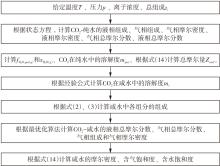
Fig.1
Flowchart of CO2-brine phase equilibrium calculation"

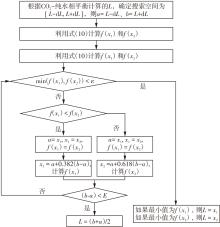
Fig.2
Flowchart of L calculation using golden-section search method"
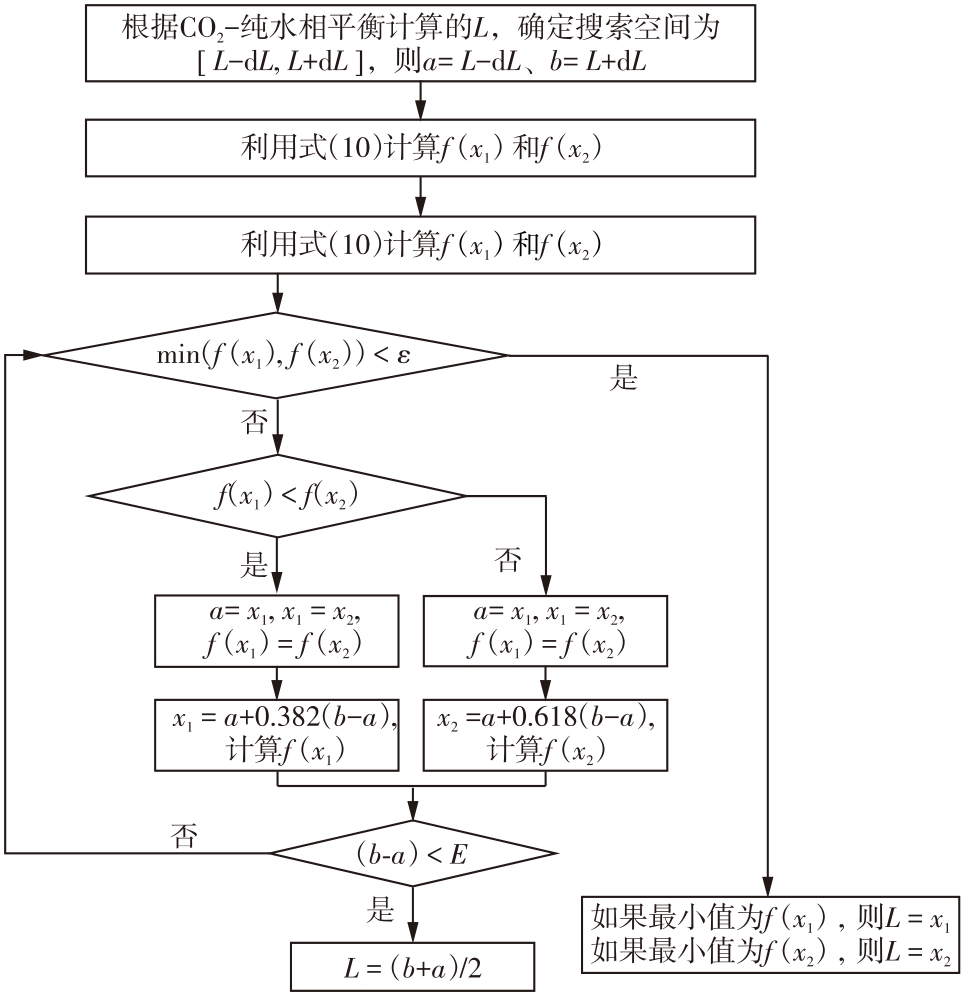

Table 1
Empirical parameters for calculating CO2 solubility in brine"
| 参数 | 值 | 参数 | 值 | 参数 | 值 |
|---|---|---|---|---|---|
| a1 | 0.039 394 508 | b1 | 1.451 202 619 | αSO₄ | 0.141 383 311 |
| a2 | 0.135 713 591 | b2 | -0.674 455 161 | βNa | 1.000 000 000 |
| a3 | -0.712 527 769 | b3 | -1.307 789 474 | βK | 0.493 470 401 |
| a4 | 0.026 383 234 | b4 | 0.110 484 625 | βCa | 2.417 927 979 |
| a5 | 0.684 871 035 | b5 | 0.414 800 056 | βMg | 2.303 224 888 |
| a6 | -0.685 118 723 | b6 | 0.124 922 088 | ||
| a7 | 0.246 235 689 | b7 | -0.044 053 682 | ||
| a8 | 0.676 925 539 | b8 | -0.117 540 325 | ||
| a9 | -0.226 694 802 | b9 | 0.036 097 248 | ||
| a10 | -0.000 807 745 | b10 | 0.000 015 978 | ||
Table 2
Sources of experimental data for CO2 solubility in brine"
| 体系 | 温度/K | 压力/MPa | 质量摩尔浓度/(mol/kg) | 数据点数 | 参考来源 |
|---|---|---|---|---|---|
| CO2-H2O-CaCl2 | 323.15~423.15 | 6.5~59.5 | 0.73~2.75 | 43 | 文献[ |
| CO2-H2O-KCl | 323.15~423.15 323.15~423.15 | 8.2~55.0 15.0 | 1.49~3.78 0.50~4.50 | 26 18 | 文献[ 文献[ |
| CO2-H2O-MgCl2 | 323.15~423.15 323.15~423.15 | 8.2~55.0 15.0 | 0.75~4.29 0.33~2.00 | 35 18 | 文献[ 文献[ |
| CO2-H2O-Na2SO4 | 313.15~433.15 | 0.4~9.7 | 1.01~2.01 | 98 | 文献[ |
| CO2-H2O-NaCl | 303.15~333.15 323.15~423.15 423.00~723.00 | 10.0~20.0 15.0 10.0~140.0 | 0.17~0.53 1.00~6.00 0~4.28 | 36 18 123 | 文献[ 文献[ 文献[ |
| CO2-H2O-NaCl-KCl | 308.15~425.15 | 1.0~17.5 | 0.90NaCl~0.14KCl | 14 | 文献[ |
| CO2-H2O-NaCl-CaCl2 | 323.00~423.00 | 10.0~17.5 | 2.99NaCl~0.67CaCl2 | 12 | 文献[ |
Table 3
Comparison of calculation results for CO2 solubility in brine"
| 体系 | 相关系数 | 最大偏差/% | 最小偏差/% | 平均偏差/% |
|---|---|---|---|---|
| 平均值 | 0.985 1 | 12.12 | 0.13 | 3.19 |
| CO2-H2O-CaCl2 | 0.970 5 | 14.58 | 0 | 4.29 |
| CO2-H2O-KCl | 0.958 7 | 11.30 | 0.32 | 3.89 |
| CO2-H2O-MgCl2 | 0.983 8 | 13.54 | 0.05 | 3.68 |
| CO2-H2O-Na2SO4 | 0.998 4 | 17.58 | 0.02 | 2.01 |
| CO2-H2O-NaCl | 0.991 7 | 9.88 | 0.31 | 3.42 |
| CO2-H2O-NaCl-KCl | 0.995 6 | 13.77 | 0.11 | 3.64 |
| CO2-H2O-NaCl-CaCl2 | 0.997 3 | 4.18 | 0.10 | 1.43 |
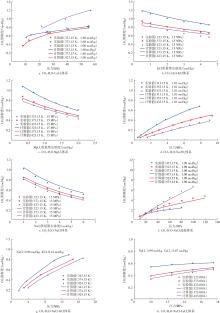
Fig.3
Comparison between calculated and experimental CO2 solubility in brine"

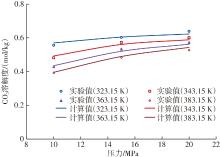
Fig.4
Comparison between calculated and experimental CO2 solubility in formation water of Dongpu mature area, Zhongyuan oilfield"
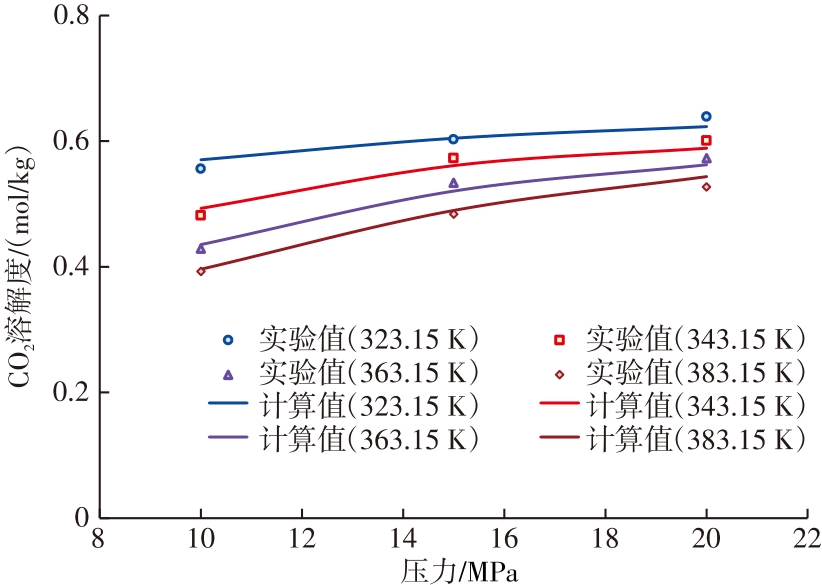
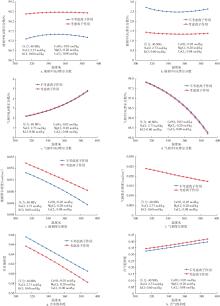
Fig.5
Comparison between calculated and experimental CO2 solubility at different temperatures"

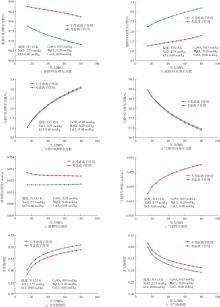
Fig.6
Comparison between calculated and experimental CO2 solubility at different pressures"
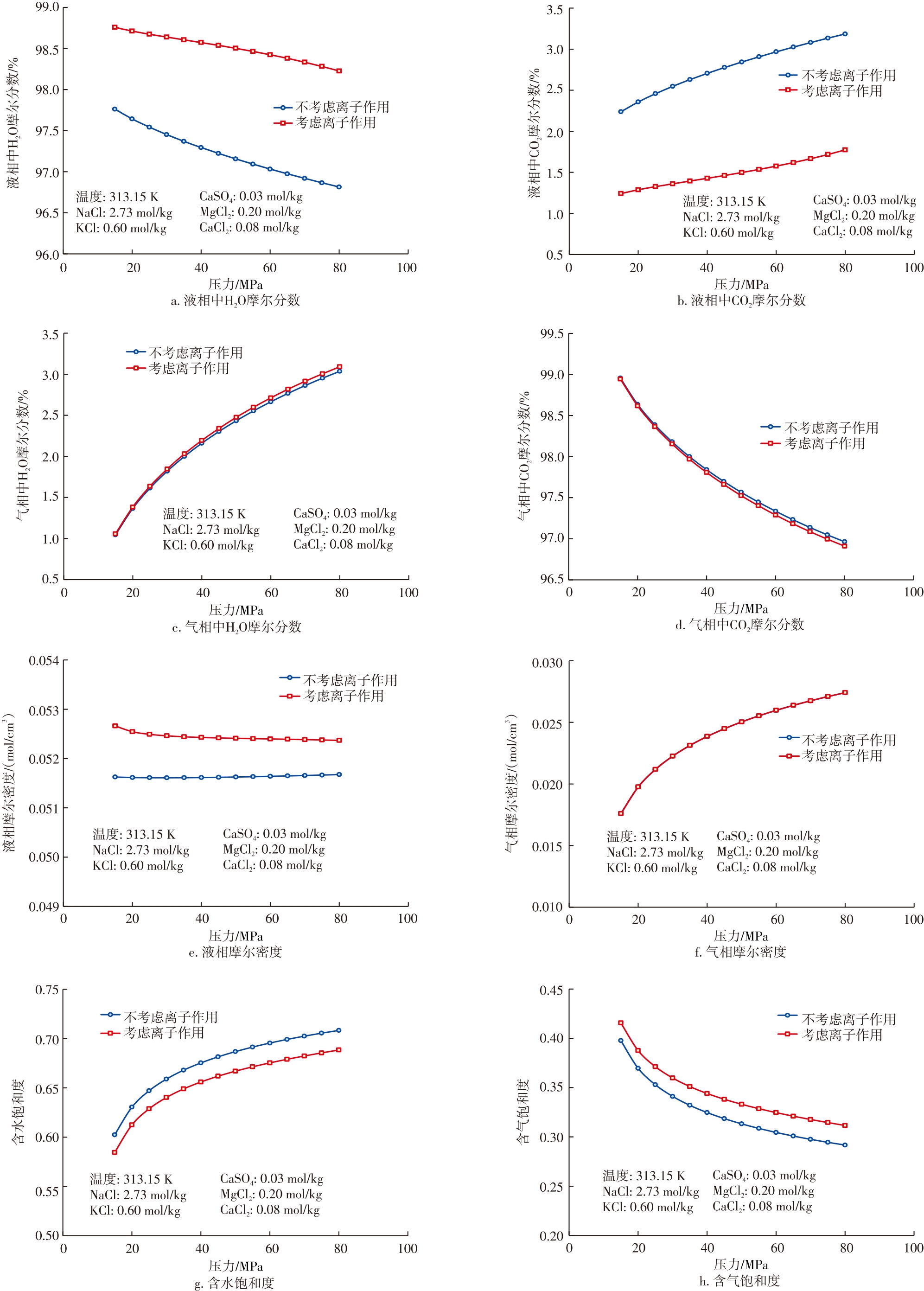
Fig.7
Comparison between calculated and experimental CO2 solubility at different salt molalities"
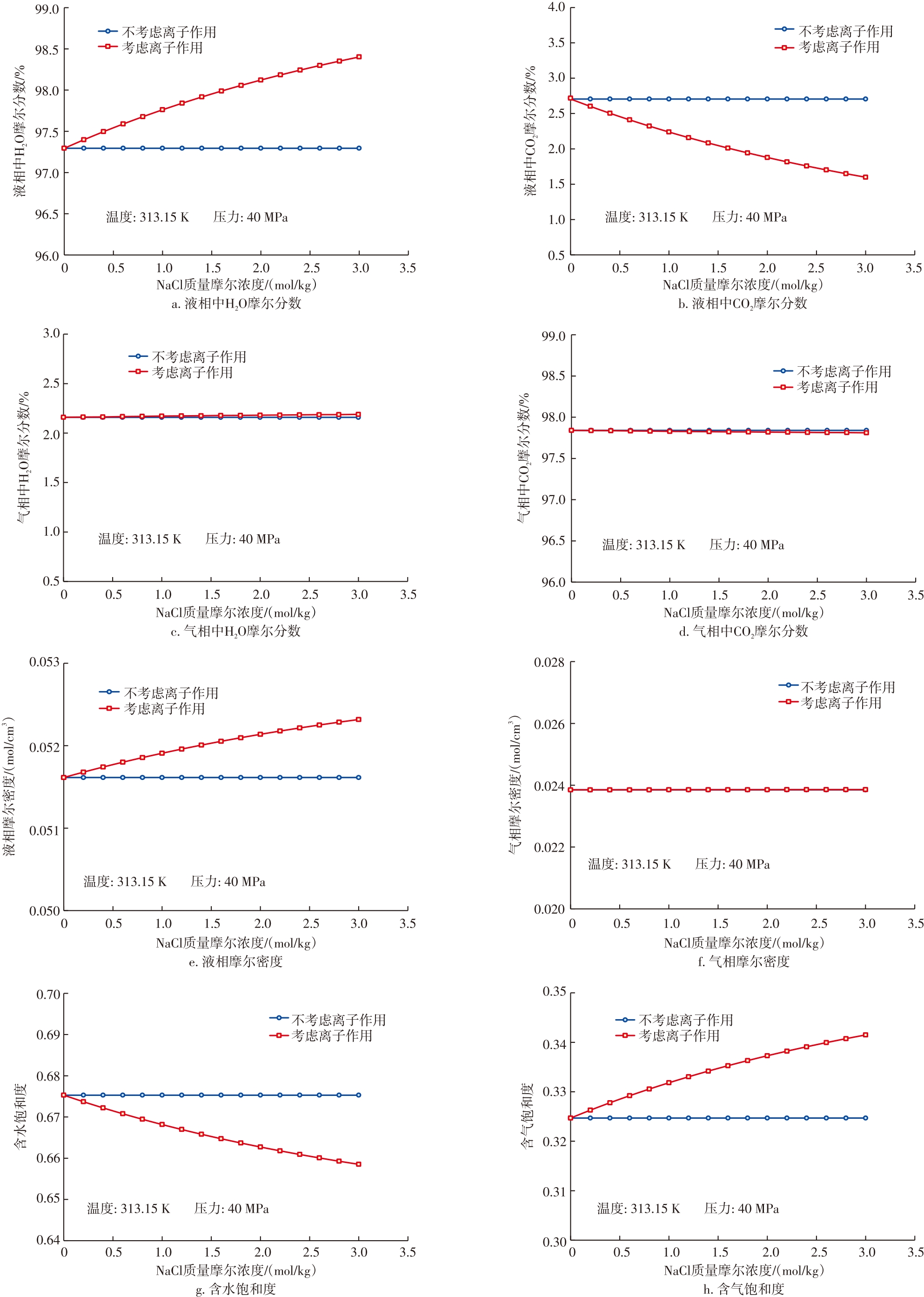
Fig.8
Comparison between calculated and experimental CO2 solubility at different salt compositions"

| [1] | DONG H J, DAI H C, DONG L, et al. Pursuing air pollutant co-benefits of CO2 mitigation in China: A provincial leveled analysis[J]. Applied Energy, 2015, 144: 165-174. |
| [2] | 叶晓东, 陈军, 陈曦, 等. “双碳”目标下的中国CCUS技术挑战及对策[J]. 油气藏评价与开发, 2024, 14(1): 1-9. |
| YE Xiaodong, CHEN Jun, CHEN Xi, et al. China’s CCUS technology challenges and countermeasures under “double carbon” target[J]. Petroleum Reservoir Evaluation and Development, 2024, 14(1): 1-9. | |
| [3] | 何志勇, 郭本帅, 汪东, 等. CO2捕集和利用技术的应用与研发进展[J]. 油气藏评价与开发, 2024, 14(1): 70-75. |
| HE Zhiyong, GUO Benshuai, WANG Dong, et al. Application and research progress of CO2 capture and utilization technology[J]. Petroleum Reservoir Evaluation and Development, 2024, 14(1): 70-75. | |
| [4] | 芮振华, 邓海洋, 胡婷. 基于混合物理数据驱动的油藏地质体CO2利用与封存代理模型研究[J]. 钻采工艺, 2025, 48(1): 190-198. |
| RUI Zhenhua, DENG Haiyang, HU Ting. Study on CO2 utilization and storage proxy model for reservoir geobodies based on hybrid physics-data driven[J]. Drilling and Production Technology,2025, 48(1): 190-198. | |
| [5] | 张烈辉, 韦棋, 廖广志, 等. 双碳背景下中国CCUS-EOR发展现状、思考与展望[J]. 钻采工艺, 2025, 48(5): 10-20. |
| ZHANG Liehui, WEI Qi, LIAO Guangzhi, et al. Current status, reflections and prospects of CCUS-EOR development in China under the dual-carbon goals[J]. Drilling and Production Technology, 2025, 48(5): 10-20. | |
| [6] | 姚红生, 邱伟生, 周德华, 等. 苏北盆地复杂断块油藏CCUS-EOR关键技术与实践[J]. 天然气工业, 2025, 45(9): 212-222. |
| YAO Hongsheng, QIU Weisheng, ZHOU Dehua, et al. Key technologies and practices of CCUS-EOR in complex fault-block reservoirs in the Subei Basin[J]. Natural Gas Industry, 2025, 45(9): 212-222. | |
| [7] | 谢玉洪, 王建花, 袁全社. 中国海洋深水区油气地球物理勘探技术进展[J]. 石油物探, 2025, 64(3): 397-415. |
| XIE Yuhong, WANG Jianhua, YUAN Quanshe. Advances in deepwater hydrocarbon geophysical exploration technologies in China[J]. Geophysical Prospecting for Petroleum, 2025, 64(3): 397-415. | |
| [8] | BICKLE M J. Geological carbon storage[J]. Nature Geoscience, 2009, 2(12): 815-818. |
| [9] | MATTER J M, KELEMEN P B. Permanent storage of carbon dioxide in geological reservoirs by mineral carbonation[J]. Nature Geoscience, 2009, 2(12): 837-841. |
| [10] | 柴愈坤, 任旭, 戴建文, 等. 海上咸水层CO2封存断层侧向封闭性评价: 以珠江口盆地恩平凹陷恩平A油田为例[J]. 石油实验地质, 2025, 47(5): 1185-1197. |
| CHAI Yukun, REN Xu, DAI Jianwen, et al. Evaluation of fault lateral sealing for CO2 storage in offshore saline aquifers: A case study of Enping A Oilfield in Enping Sag, Pearl River Mouth Basin[J]. Petroleum Geology & Experiment, 2025, 47(5): 1185-1197. | |
| [11] | TRUCHE L, BAZARKINA E F, BERGER G, et al. Direct measurement of CO2 solubility and pH in NaCl hydrothermal solutions by combining in situ potentiometry and Raman spectroscopy up to 280 ℃ and 150 bar[J]. Geochimica et Cosmochimica Acta, 2016, 177: 238-253. |
| [12] | GUO J J, XIONG W, HU Q Y, et al. Stability analysis and two-phase flash calculation for confined fluids in nanopores using a novel phase equilibrium calculation framework[J]. Industrial & Engineering Chemistry Research, 2022, 61(5): 2306-2322. |
| [13] | DUAN Z, SUN R. An improved model calculating CO2 solubility in pure water and aqueous NaCl solutions from 273 to 533 K and from 0 to 2 000 bar[J]. Chemical Geology, 2003, 193(3/4): 257-271. |
| [14] | DUAN Z, SUN R, ZHU C, et al. An improved model for the calculation of CO2 solubility in aqueous solutions containing Na+, K+, Ca2+, Mg2+, Cl-, and SO4 2- [J]. Marine Chemistry, 2006, 98(2/3/4): 131-139. |
| [15] | WANG L, SHEN Z, HU L, et al. Modeling and measurement of CO2 solubility in salty aqueous solutions and application in the Erdos Basin[J]. Fluid Phase Equilibria, 2014, 377: 45-55. |
| [16] | ZHAO H, FEDKIN M V, DILMORE R M, et al. Carbon dioxide solubility in aqueous solutions of sodium chloride at geological conditions: Experimental results at 323. 15, 373. 15, and 423. 15 K and 150 bar and modeling up to 573. 15 K and 2 000 bar[J]. Geochimica et Cosmochimica Acta, 2015, 149: 165-189. |
| [17] | 张路. 混合气体—卤水体系的密度和气体溶解度计算模型[D]. 西安:西北大学, 2016. |
| ZHANG Lu. Thermodynamic models for accurate calculations of densities of brines and solubilities of gas mixtures in brines[D]. Xi’an: Northwest University, 2016. | |
| [18] | ZHANG Y Z. Study on the binary interactions of gas, brine and reservoir porous media[D]. Regina: University of Regina, 2021. |
| [19] | 龙震宇, 王长权, 石立红, 等. 基于核岭回归算法的地层水中CO2溶解度模型研究[J]. 西安石油大学学报(自然科学版), 2023, 38(1): 95-101. |
| LONG Zhenyu, WANG Changquan, SHI Lihong, et al. Study on CO2 solubility model in formation water based on kernel ridge regression algorithm[J]. Journal of Xi’an Shiyou University (Natural Science Edition), 2023, 38(1): 95-101. | |
| [20] | 董利飞, 董文卓, 张旗, 等. 咸水层中CO2溶解性能预测方法优选[J]. 油气藏评价与开发, 2024, 14(1): 35-41. |
| DONG Lifei, DONG Wenzhuo, ZHANG Qi, et al. Optimal prediction method for CO2 solubility in saline aquifers[J]. Petroleum Reservoir Evaluation and Development, 2024, 14(1): 35-41. | |
| [21] | 张卫. 基于机器学习的深部咸水中CO2溶解度预测研究[D]. 重庆: 重庆科技学院, 2024. |
| ZHANG Wei. A machine learning-based method to predict CO2 solubility in deep brines [D]. Chongqing: Chongqing University of Science and Technology, 2024. | |
| [22] | 阎凤元, 雷海申, 王睿, 等. 基于机理分析与数据驱动的CO2溶解度计算方法[J]. 石油与天然气化工, 2025, 54(2): 51-61. |
| YAN Fengyuan, LEI Haishen, WANG Rui, et al. Calculation method of CO2 solubility based on mechanism analysis and data driven[J]. Chemical Engineering of Oil & Gas, 2025, 54(2): 51-61. | |
| [23] | SPYCHER N, PRUESS K. A phase-partitioning model for CO2-brine mixtures at elevated temperatures and pressures: Application to CO2-enhanced geothermal systems[J]. Transport in Porous Media, 2010, 82(1): 173-196. |
| [24] | ZIRRAHI M, AZIN R, HASSANZADEH H, et al. Mutual solubility of CH4, CO2, H2S, and their mixtures in brine under subsurface disposal conditions[J]. Fluid Phase Equilibria, 2012, 324: 80-93. |
| [25] | BIAN X Q, XIONG W, KASTHURIARACHCHI D T K, et al. Phase equilibrium modeling for carbon dioxide solubility in aqueous sodium chloride solutions using an association equation of state[J]. Industrial & Engineering Chemistry Research, 2019, 58(24): 10570-10578. |
| [26] | SUN R, DUBESSY J. Prediction of vapor-liquid equilibrium and PVTx properties of geological fluid system with SAFT-LJ EOS including multi-polar contribution. Part II: Application to H2O-NaCl and CO2-H2O-NaCl System[J]. Geochimica et Cosmochimica Acta, 2012, 88: 130-145. |
| [27] | 周建堂, 康丽侠, 杨立国, 等. 基于GE混合规则的SRK-CPA状态方程预测CO2在地层水中的溶解度[J]. 石油化工, 2021, 50(12): 1274-1279. |
| ZHOU Jiantang, KANG Lixia, YANG Liguo, et al. Prediction of the solubility of CO2 in formation water using SRK-CPA equation based on GE mixing rule[J]. Petrochemical Technology, 2021, 50(12): 1274-1279. | |
| [28] | XIONG W, ZHANG L H, TIAN Y, et al. Phase equilibrium modeling for carbon dioxide capture and storage (CCS) fluids in brine using an electrolyte association equation of state[J]. Chemical Engineering Science, 2023, 275: 118723. |
| [29] | SPYCHER N, PRUESS K, ENNIS-KING J. CO2-H2O mixtures in the geological sequestration of CO2. I. Assessment and calculation of mutual solubilities from 12 to 100 ℃ and up to 600 bar[J]. Geochimica et Cosmochimica Acta, 2003, 67(16): 3015-3031. |
| [30] | DUAN Z, MAO S. A thermodynamic model for calculating methane solubility, density and gas phase composition of methane-bearing aqueous fluids from 273 to 523 K and from 1 to 2 000 bar[J]. Geochimica et Cosmochimica Acta, 2006, 70(13): 3369-3386. |
| [31] | PITZER K S, PEIPER J C, BUSEY R H. Thermodynamic properties of aqueous sodium chloride solutions[J]. Journal of Physical and Chemical Reference Data, 1984, 13(1): 1-102. |
| [32] | TEYMOURI M B, RAMIN S. Phase equilibria measurements and modelling of CO2–rich fluids/brine systems[D]. Edinburgh: Heriot-Watt University, 2017. |
| [33] | ZHAO H, DILMORE R M, LVOV S N. Experimental studies and modeling of CO2 solubility in high temperature aqueous CaCl2, MgCl2, Na2SO4, and KCl solutions[J]. AIChE Journal, 2015, 61(7): 2286-2297. |
| [34] | RUMPF B, MAURER G. An experimental and theoretical investigation on the solubility of carbon dioxide in aqueous solutions of strong electrolytes[J]. Berichte der Bunsengesellschaft Für Physikalische Chemie, 1993, 97(1): 85-97. |
| [35] | BANDO S, TAKEMURA F, NISHIO M, et al. Solubility of CO2 in aqueous solutions of NaCl at (30 to 60) ℃ and (10 to 20) MPa[J]. Journal of Chemical & Engineering Data, 2003, 48(3): 576-579. |
| [36] | TAKENOUCHI S, KENNEDY G C. The solubility of carbon dioxide in NaCl solutions at high temperatures and pressures[J]. American Journal of Science, 1965, 263(5): 445-454. |
| [37] | TONG D, MARTIN TRUSLER J P, VEGA-MAZA D. Solubility of CO2 in aqueous solutions of CaCl2 or MgCl2 and in a synthetic formation brine at temperatures up to 423 K and pressures up to 40 MPa[J]. Journal of Chemical & Engineering Data, 2013, 58(7): 2116-2124. |
| [38] | 刘思雨, 杨国栋, 黄冕, 等. 人工裂缝参数对CO2-ESGR中CO2封存和CH4开采的影响[J]. 石油与天然气化工, 2024, 53(2): 94-100. |
| LIU Siyu, YANG Guodong, HUANG Mian, et al. Effects of artificial fracture parameters on CO2 sequestration and CH4 production in CO2-ESGR[J]. Chemical Engineering of Oil & Gas, 2024, 53(2): 94-100. | |
| [39] | 张烈辉, 熊伟, 赵玉龙, 等. 衰竭底水气藏注CO2提高天然气采收率与碳封存机理[J]. 天然气工业, 2024, 44(4): 25-38. |
| ZHANG Liehui, XIONG Wei, ZHAO Yulong, et al. Mechanism of CO2 injection to enhance gas recovery and carbon storage in depleted bottom-water gas reservoirs[J]. Natural Gas Industry, 2024, 44(4): 25-38. |
| [1] | ZHAO Yong, FENG Qin, SUN Xin, WANG Qing. Investigation on risk of induced earthquakes for CO2 geological storage in X block, Xihu Sag, East China Sea [J]. Petroleum Reservoir Evaluation and Development, 2026, 16(1): 23-33. |
| [2] | WANG Nenghao, LIAN Wei, LI Jun, LI Jiaqi. Study on plume evolution and influencing factors of reservoir and caprock integrity in CO2 deep saline aquifer storage: A case study of Shenhua CCS project [J]. Petroleum Reservoir Evaluation and Development, 2026, 16(1): 128-140. |
| [3] | LI Jingwei, PENG Bo, WANG Zeteng, CHEN Xiaoqian, ZHANG Zhenghao, LIU Jindong, LIU Shuangxing, LI Xiaofeng. CO2 storage potential assessment models and their practical progress in oil and gas reservoirs [J]. Petroleum Reservoir Evaluation and Development, 2026, 16(1): 141-152. |
| [4] | YANG Shugang, REN Jinman, CAI Mingyu, LIU Haotong, LIU Shuangxing, XUE Ming, ZHANG Kunfeng. Investigation on occurrence states of CO2 storage in formations with gas field produced water reinjection [J]. Petroleum Reservoir Evaluation and Development, 2025, 15(4): 656-663. |
| [5] | SUN Dongsheng, ZHANG Shunkang, WANG Zhilin, GE Zhengjun, LIN Bo. Calculation method for CO2 geological storage capacity of fault-block traps in Subei Basin based on safety considerations [J]. Petroleum Reservoir Evaluation and Development, 2025, 15(4): 641-645. |
|
||
